


The Hyacinth Tree, a Symbol of Forgotten Altruism
21 September, 2025
Portsudan (Sudanow)_ The tree we are discussing today has several reasons, the most important of which is that the first prime minister after Sudan's independence, Ismail al-Azhari, nominated it as Sudan's post-independence emblem, as a symbol of altruism. However, at the last minute, it was rejected, and the hyacinth was chosen. If this indicates anything, it indicates its importance and great benefit, and thus its closeness to the Sudanese people's conscience for multiple reasons.

That tree is the hyacinth tree, and Dr. Abdul Azim Mirghani, an expert in the field of trees and former director of the National Forestry Corporation in Sudan, is best known for discussing it. He began his talk by saying:
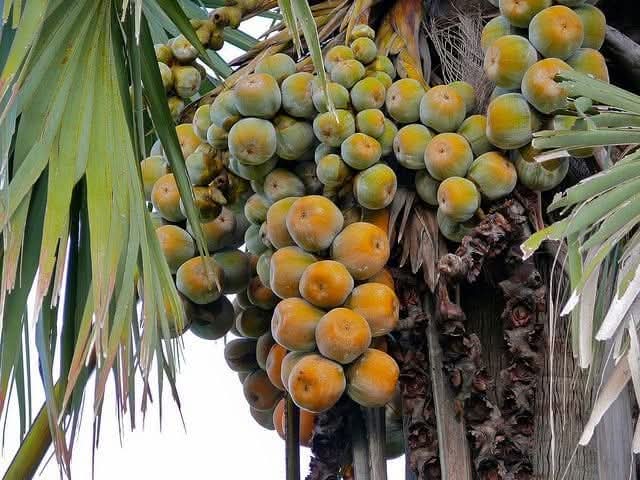
"The hyacinth tree (Borassus aethiopum) is known in Sudan and Africa in general as the Palmyra palm or African fan palm. It is native to the tropical and subtropical regions of Africa, where it is found from Senegal in the west to Sudan, Uganda, and Tanzania in the east."
In Sudan, the sycamore tree is primarily found in the Sudanese savannah belt, particularly in the states of White Nile, Blue Nile, Sennar, Kordofan, and Darfur, where it is found near valleys, seasonal watercourses, and areas with sufficient rainfall. The presence of the sycamore tree in local locations, such as Khor al-Dilib in South Darfur, also indicates its traditional presence in some areas.
Dr. Abdul Azim Mirghani continues his testimony to Sudanow magazine, saying:
"The sycamore tree has a straight, unbranched trunk. It typically reaches a height of (20–25) meters, sometimes exceeding 30 meters, and its diameter at the base is about one meter. Its leaves are large, fan-shaped, and can reach a length of (3 meters) or more. They provide shade relatively far from its source, the tree itself. Hence the Sudanese proverb: 'Like the sycamore's shade,' which describes a person who benefits those far away, but not those close to them."
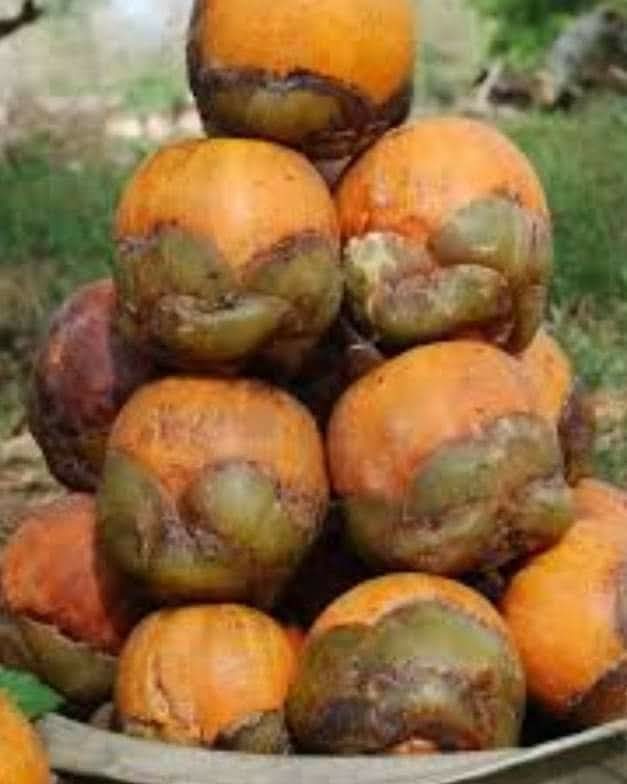
As for the fruits, according to Dr. Abdel Azim, they are large and nearly round, ranging in diameter from (12–18 cm), and orange to brown when ripe. They are rich in fiber, and their flesh is fibrous in taste, resembling mango pulp to some.
The expert adds that comparing their taste to mango is a personal assessment that varies from person to person, rather than a scientific fact. He also confirms that the fruit can be eaten fresh or cooked, or cooked with rice in some areas.
Dr. Abdel Azim Mirghani adds:
"The duleb fruit also has uses in Sudanese folk medicine, such as treating constipation, some types of ulcers, and stomach ailments."
In some detail and precision, the agricultural expert explains:
"The fruit has a strong, pungent aroma, and its production varies in quantity depending on conditions, such as soil type, rainfall, and other factors. However, in general, some trees bear 50 fruits, while others bear as many as 300 fruits per season."
Regarding other uses for this tree, Dr. Abdul Azim Mirghani notes that its buds are edible, similar to other palm trees. The sap can also be fermented to make local beverages (such as vinegar or wine). Its leaves are used in traditional handicrafts, such as brooches, tabaks, and fly-repellent nets. Its trunk is highly beneficial, especially in perennial trees. Its dark brown color makes it a strong and resilient natural wood, used in building construction, bridges, telephone poles, boats, and drums.
It is worth noting that the word "daleeb" in Sudanese colloquial Arabic is used to denote a big lie, likening it to the loud sound of a daleeb fruit falling to the ground. People even avoid walking under it for fear of the fruit hitting the ground. The sound of the fruit hitting the ground has become a popular African rhythm known as "daleeb."
The sycamore tree is also used to describe the lack of benefit for those who tend it, as its shade does not reach its owner, but rather extends to those far away due to its long trunk. It is said, "So-and-so is like the shade of the sycamore tree."
Post your comments
Photo of the Week

Dinder – SUNA – SUDANOW As part of international cooperation programs in wildlife conservation and the implementation of international conventions governing wildlife protection in Sudan, the Federal Dinder National Park authorities received a Nile crocodile on the banks of the Dinder River this morning. The crocodile was transported from Jordan to Sudan as part of jo...
More-

30 August, 2026
Stories from the Heart of the Battlefield From a University of Khartoum Professor to a Vegetable Seller in Cairo
Cairo (Sudanow) In one of Cairo’s neighborhoods, where the stories of passersby intersect with the details of everyday life, the story began with a quiet-faced Sudanese man standing behind a small vegetable stall. He carefully arranged tomatoes and greens, selling them with a smile. Few of those passing by knew that the man they addressed so simply had spent years of his life in lecture halls and scientific research labor...

Contact Us

Address: Sudan News Agency (SUNA) Building, Jamhoria Street, Khartoum - Sudan
Mobile:+249 909220011 / +249 912307547