


Home Farming: An Opportunity for Self-Sufficiency and Investment
01 October, 2025
Portsudan, (Sudanow)_ More than two years have passed since the outbreak of the devastating war, which has created unprecedented economic challenges.
Sudanese people have not surrendered to these circumstances. Instead, they have been searching for various ways to achieve self-sufficiency in vegetables, fruits, and legumes, and to improve their financial income. Many citizens have turned to what is known as home farming.
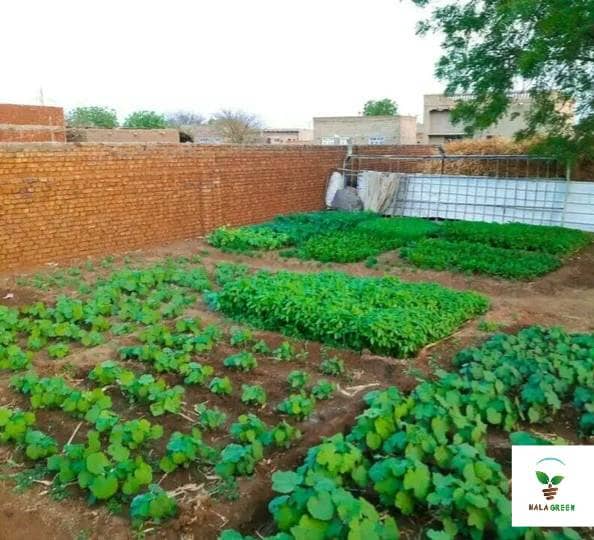
Sudanese homes are characterized by spacious yards and fertile soil, along with the availability of water, seeds, and a suitable climate. The crops grown at home include vegetables, fruits, and legumes.

In this regard, Sudanow spoke with Mohamed Khalid Al-Mahi, a 35-year-old citizen who supports his wife, his four daughters, his mother, and his sister. Before the war, he lived in Village 38 in Um Al-Qura locality, but he was displaced to Al-Sabagh area in Al-Butana as a result of the conflict.
Mohamed told Sudanow about his experience with home farming.
Before the War,
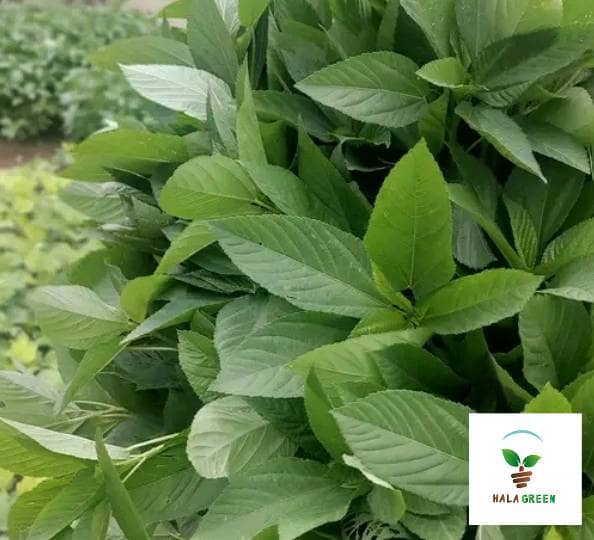
He said: it was a source of income for him and his family. The area he used for farming inside his home was small, only 7 square meters, but it was enough to grow various crops such as squash, watermelon, purslane, arugula, jute mallow, sesame, hibiscus, and okra. He added: what distinguishes his crops is his use of organic fertilizers.
His Experience After the War:
Mohamed said that he has started over in Al-Sabagh area, despite the insufficient availability of water. He has not given up, and now he is producing jute mallow, okra, arugula, squash, and cucumber.

Mohamed added that he encourages everyone who wants to farm at home for self-sufficiency and to improve their income. He said that the community of farmers helps each other by exchanging seeds and seedlings for free.
In the same context, Sudanow spoke with Mr. Fahmi Al-Sayed, a resident of Al-Saliha, most of whose residents have been displaced to areas under the control of the brave armed forces. His family, except for him and his two brothers, were among those displaced. He said they focused on growing crops that suited the needs of the current phase, which is self-sufficiency in vegetables, especially jute mallow, okra, and purslane. They were successful in this and even surpassed the self-sufficiency stage, by selling jute mallow and purslane, and have saved the okra to use for longer periods.
Mr. Fahmi added, "We did not have sufficient knowledge of farming, but most of our neighbors in the area work in agriculture. We consulted them, and so the farming was successful and produced an abundant yield."

He added that the people of Al-Saliha have grown all the possible vegetables except for potatoes and tomatoes, which require specific soil and climate conditions.
He said that Al-Saliha went through a period similar to a siege, as it was difficult to reach large markets. Home farming was the saving refuge, and local neighborhood markets were filled with home-grown vegetables and seeds.
Fahmi added that they did not have enough space in their home for farming, so they farmed in the house of a family that had been displaced to another area. They fully benefited from the availability of electricity and water throughout the two years of the war, but in the last two months, due to clashes, the electricity was cut off and consequently the water stopped. As a result, their plants dried up and they began to think about displacement, especially after the appearance of many diseases.
Sudanow also met with Mr. Abdullah Idris, a resident of Khartoum city. He was displaced twice due to the war: first to Al-Jazirah state and the second time to Northern state. Both times, he relied on home farming for several reasons, including filling the time of separation and his love for agriculture. However, the main reason that prompted him to take this step, he said, was financial hardship. His first experience was in Al-Eraibab village in Al-Jazirah state, where he began by planting 18 square in the home's courtyard with mint, jute mallow, okra, squash, hibiscus, tomatoes, and arugula. The main purpose was for home consumption.
Mr. Abdullah added that his second experience with home farming was in Northern state, and it was more refined due to the experience he had gained from his farming in Al-Eraibab village.
He added that there are moral benefits to home farming, including a feeling of rejuvenation and a different taste for vegetables because they are the result of a personal effort. He added that his daughters helped him with this, and their participation improved their psychological state, which had been affected by thinking about the war. And home farming filled their free time. Mr. Abdullah considers this experience to be very enjoyable and wonderful.
There are many initiatives that support home farming in Sudan, demonstrating the spirit of social solidarity by providing seeds, fertilizers, and free consultations.
In this regard, Sudanow spoke to Ms. Furqan Al-Daw Al-Sharif, the director of Hala Green Home Farming project. She said that home farming has a great economic importance because it helps to reduce family expenses by providing fresh vegetables and fruits from inside the home instead of buying them from markets.
It can also create opportunities to increase family income by selling the surplus to neighbors or in local markets.
Additionally, it is an effective way to contribute to food security and to use small spaces productively. It is considered an important entry point for encouraging small projects, especially for women and youth, and thus supports the local economy and relieves pressure on imports.
Ms. Furqan added that through their monitoring and interaction with the public in Hala Green project, they find widespread interest in home farming, especially in Khartoum state due to its population density and limited spaces, as well as in Al-Jazirah, River Nile, Northern, and Al-Qadarif states due to the abundance of water and the awareness of families about the importance of farming.
In addition, in Kordofan states, there has also been clear interest in farming in residential neighborhoods as a means to support food security and reduce reliance on the market.
The Sudanese government is working tirelessly to restore life to normal, and the citizens are making the same effort to fill the gaps and support their government in alleviating the burdens of life, through various methods, including home farming.
Post your comments
Photo of the Week

Khartoum (Sudanow) — Sudan was deeply saddened today by the passing of one of its most distinguished scholars. Academic and research circles mourned the death of Professor Mohammed Al-Hassan Shayoub, who passed away in Cairo at dawn on Monday, June 8. With his departure, the scientific community has lost a towering academic figure and one of the nation’s most respecte...
More-

08 June, 2026
On the Hearths of the Community Kitchens, the Meaning of Homeland Was Forged
In Arabic, the word Takia originally denotes a place of support and refuge. Historically, it has also referred to spaces dedicated to hospitality, where food is offered to the needy and to travelers. Yet some words outgrow their dictionary definitions, acquiring deeper meanings shaped by extraordinary moments in history. Such is the story of Sudan’s community kitchens during the recent war. As conflict swept across the co...

Contact Us

Address: Sudan News Agency (SUNA) Building, Jamhoria Street, Khartoum - Sudan
Mobile:+249 909220011 / +249 912307547