


Golden Star Farewell to the Sudanese legend Suleiman Abdel-Qader (Abu Dawoud)
01 February, 2026
Khartoum (Sudanow)
In a solemn and majestic funeral procession, the city of Omdurman bid farewell at dawn last Wednesday to one of Al-Merrikh’s greatest legends and one of Sudan’s most eminent football captains, Suleiman Abdel-Qader Al-Jazouli (Abu Dawoud), who departed to the mercy of God after a long journey of dedication, sacrifice, and unwavering loyalty to Al-Merrikh and the national team.
Abu Dawoud forged a glorious history filled with achievements and sacrifices. He was a model of discipline and devotion, a true school in the love of the club crest. He played across two generations at Al-Merrikh. His teammates described him as the ideal leader and a brother to all—someone who ignited enthusiasm in the hearts of players and taught them loyalty, commitment, and selflessness. He was kind-hearted, light-spirited, and constantly smiling. Players, administrators, and fans alike loved him for his noble character and warm soul.
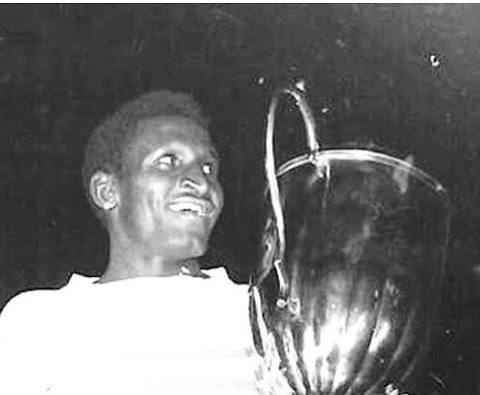
No matter how much we speak about Abu Dawoud, we cannot fully do justice to what he gave to Al-Merrikh. He is one of the club’s true legends, whose name was engraved in letters of light on the walls of this great institution. His memory will forever live in the hearts of Al-Merrikh supporters, and his dedication and sincerity will remain a model to be followed.
He played for twenty years, during which he wore the captain’s armband for both Al-Merrikh and the Sudanese national team. He was among those who achieved a league title without a single draw or defeat. He set an example for his teammates in loyalty to the crest. He once revealed that the cause of his illness was playing while injured, noting that leaving the starting lineup made returning extremely difficult due to the presence of exceptional, highly skilled players. He also recorded one of the highest appearance totals in Sudanese football.
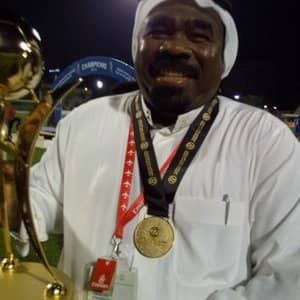
Grief engulfed the people of Omdurman, the entire Sudanese sports community, and fans who admired his artistry. Many said:
“With the passing of Captain Suleiman Abdel-Qader, Sudanese football and Al-Merrikh have lost one of their purest symbols and most devoted and disciplined figures. Abu Dawoud was not merely a player who wore the red crest and the Falcons of Jediane emblem; he was a natural leader, a man of principle, and a voice of balance on and off the pitch.”
For twenty years in the service of Al-Merrikh and the national team, he embodied a rare model of a player who combined technical solidity with refined morals and unwavering commitment. His presence on the field was never ordinary; he inspired confidence in his teammates and led with calmness and wisdom. He carried the captain’s armband for both club and country with distinction, always rising to the occasion in major matches and difficult moments.
Abu Dawoud left a profound legacy in the hearts of all who played alongside him and learned from him the true meaning of belonging and loyalty to the crest. He was Al-Merrikh’s captain in the golden era—a figure of stature and authority, respected and feared by opponents. The armband only added to his presence and leadership value, giving true meaning to captaincy and sportsmanship, which earned universal respect amid generations of exceptional stars.
Twenty years is no small feat, yet they passed swiftly. He worked throughout them with sincerity and diligence. To play in your position for two decades without being displaced, while generations change around you, is a testament to grandeur, to the greatness of Al-Merrikh, and to true loyalty and belonging.
Captain Suleiman was eloquent, witty, and always ready with a gentle joke.
The loss of Abu Dawoud has cast a shadow over the entire sporting family in all its colors. He was a pillar of the nation and of sport, and a shining example of ethics and love.
Abu Dawoud: A Distinguished Football Career
Suleiman Abdel-Qader was born in the village of Al-Zarq, south of the city of Shendi in River Nile State. He received his education at Beit Al-Amanah Primary, Intermediate, and Secondary Schools in Omdurman. He played for Al-Farouq Club, which included players who emerged as stars during the golden age of Sudanese football, such as Bishara, Ezzedine Al-Duhaish, and Jaafar Gagarin.
He joined Al-Merrikh from the club’s youth ranks at an early age. With the national team, he won the Africa Cup of Nations in 1970. With Al-Merrikh, he achieved the league championship without defeat, with only a single draw across two seasons.
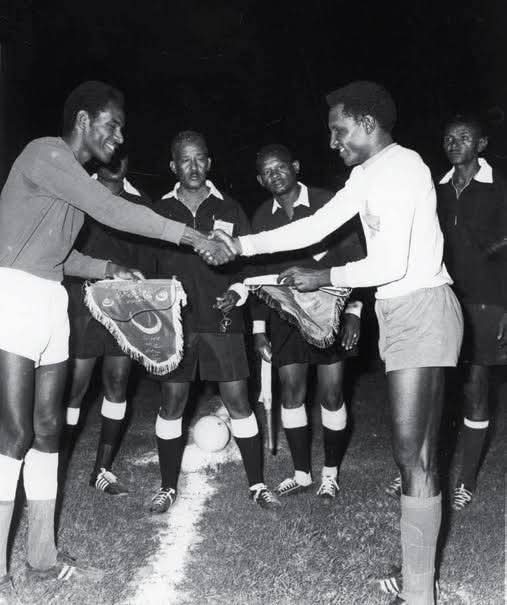
He later worked as a coach for Al-Merrikh and won the CAF Champions League and the East and Central Africa Championship. He also worked as an employee at the People’s Bank.
Suleiman Abdel-Qader was not merely a name on Al-Merrikh’s roster; he was a complete embodiment of commitment and quiet leadership. Those who knew him closely understood that his presence commanded respect without noise, and that his influence extended far beyond the pitch to the values he instilled in others.
He was a model of a player who teaches through action, not words, and who leads by example rather than slogans. His passing is a great loss, but his legacy remains alive in the memory of Al-Merrikh and Sudanese football, and in the conscience of everyone who believes that sport is ethics before it is results.
To the gardens of eternity—The legend of defense and loyalty in the golden era,The king of “taqreesh,” The King of Tackling.
A star that will never fade from the memory of Sudanese football.
He made glory and immortalized his name in the history of the Red Castle.
Peace be upon a man who wore the crest with absolute sincerity.
Post your comments
Photo of the Week

Khartoum ( Suna-Sudanow) — Dr. Faisal Ahmed Al-Noor has received new international recognition after being selected as the recipient of the 2026 Ibn Qurrah International Award, presented by the National Arab American Medical Association (NAAMA) during its annual conference in Houston, United States. The award recognizes his contributions to medicine, science, humanitarian w...
More-

30 August, 2026
Stories from the Heart of the Battlefield From a University of Khartoum Professor to a Vegetable Seller in Cairo
Cairo (Sudanow) In one of Cairo’s neighborhoods, where the stories of passersby intersect with the details of everyday life, the story began with a quiet-faced Sudanese man standing behind a small vegetable stall. He carefully arranged tomatoes and greens, selling them with a smile. Few of those passing by knew that the man they addressed so simply had spent years of his life in lecture halls and scientific research labor...

Contact Us

Address: Sudan News Agency (SUNA) Building, Jamhoria Street, Khartoum - Sudan
Mobile:+249 909220011 / +249 912307547