


On World Theatre Day Mahdi Nouri: Theatre as a Mirror of the Soul and a Gateway to Hope After War
29 March, 2026
Khartoum (Sudanow)
Whenever memory weighs heavily on the human spirit, theatre returns as an ever-renewing refuge, reclaiming its timeless role: offering people a chance to understand themselves and decode the realities around them. Theatre is a living space for emotional catharsis—as described by the ancient Greeks—and a free arena for dialogue, critique, and change. It breaks the barrier between performer and audience, creating moments of authenticity and reflection that foster emotional intelligence and social empathy. It is a tool for building awareness, a mirror of the soul, and a medium that blends entertainment with education.
In this context, and on the occasion of World Theatre Day, Sudanow highlights the trajectory of Sudanese theatre during the war, exploring how it has maintained its presence despite immense challenges. This comes through a conversation with Sudanese director Mahdi Nouri, who has played an active role in revitalizing theatre, using art as a means of awareness, hope-building, and reshaping individuals and communities in times of crisis.
Sudanese Theatre… Stories Told in Times of War
Nouri begins by reflecting on the resilience of Sudanese theatre:
“Throughout the years of war, theatre practitioners did not withdraw from the scene. Instead, they actively engaged in what can be described as ‘awareness theatre,’ presenting performances in displacement camps, shelters, schools, and even open spaces in Omdurman, Port Sudan, Kassala, El-Obeid, and El-Fasher. Their aim was to promote values of coexistence and social cohesion during one of the most difficult periods.”
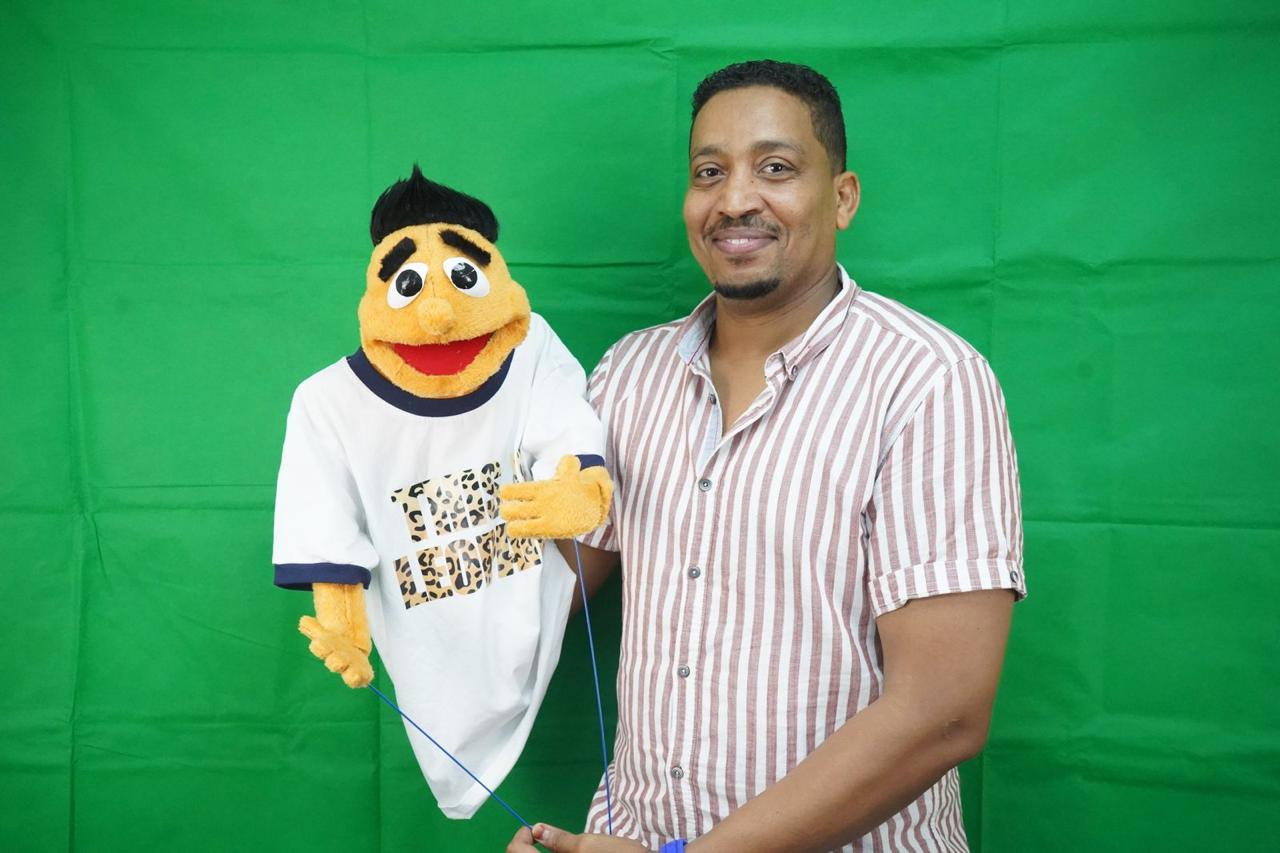
Children were not overlooked in these efforts. Theatre for children and puppet performances were staged—remarkably—under neem trees in Madani and Gedaref, in an attempt to restore smiles to faces worn down by war.
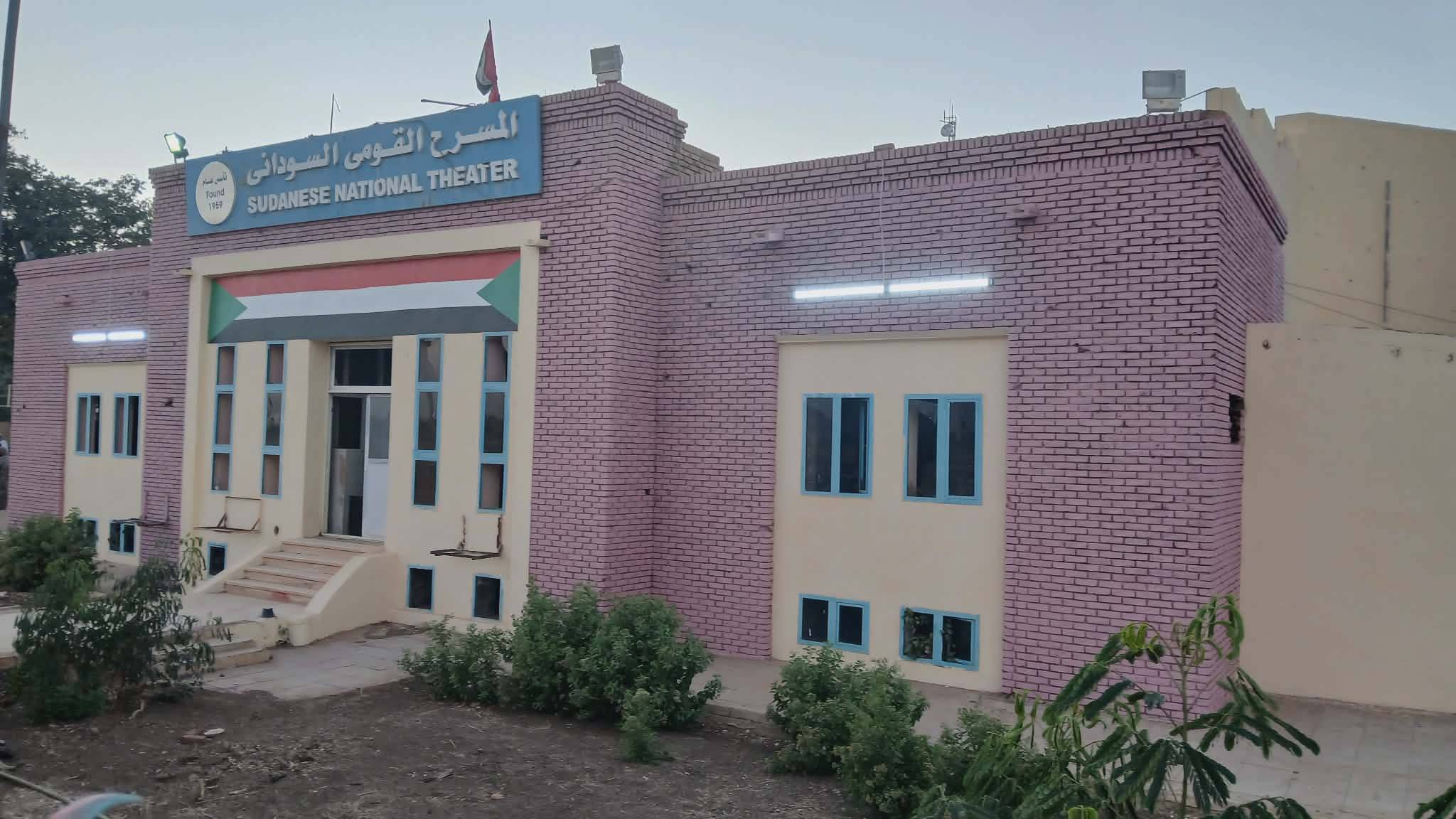
These initiatives reflected deep commitment from artists, some of whom chose to live within displacement camps, voluntarily or by circumstance, to remain close to people and their struggles. With the gradual return of life to the capital, another significant development emerged: theatre practitioners, under the initiative “Reconstruction of Theatres for Culture and Arts,” rushed to rehabilitate the National Theatre in Omdurman, launching short performances that signaled the revival of stage life.
Early maintenance and cleanup campaigns had already begun through collective efforts by dramatists, including Faisal Ahmed Saad, Wad Al-Mahdi Al-Fadni, Abdul-Rafi’ Hassan Bakhit, Abdullah Al-Hilu, alongside Abu Araki Al-Bakhit and the late Abdul Qadir Salim—demonstrating how art can lead the way in restoring life’s rhythm.

Mahdi Nouri… A Rich Artistic Journey
Mahdi Mohammed Mahdi Nouri is a Sudanese television and theatre director with a diverse and promising artistic career spanning both mediums. He holds a diploma in drama from the College of Music and Drama at Sudan University of Science and Technology, and a bachelor’s degree in computer science from the University of Gedaref.
His professional experience includes directing for Blue Nile Channel (2012–2022), supervising Al-Shorooq Channel, and managing identity and content production across a range of formats including children’s programs, documentaries, music videos, and dramatic and theatrical productions.
On stage, Nouri has directed notable plays such as The Tragedy of Al-Hallaj, The Wolves, Al-Hameem, The Merchant and the Captain, The Fortress of Forgetfulness, and his latest work Jafilaan. He also produced the series Beit Al-Kol (2025–2026), which promotes coexistence and cultural diversity. His work earned him the Television Creativity Award from the World Peace Institute in London.
He has also acted in several productions, including Characters of Abdel Hakim, Sudanese Tales, Mek Nimr, and The Prophecy of the Dice, reflecting his versatility across directing and acting.

Theatre in Exile and at Home… Unending Resilience
Nouri explains that Sudanese theatre faced unprecedented challenges during the war, leading to the near-total shutdown of formal theatres and disruption of troupe activities, especially in Khartoum. However, this pause became an opportunity to adapt to simpler, more flexible forms.
Performances moved into public spaces, relying on direct performance and oral storytelling in the absence of technical resources. In relatively safer areas of Omdurman, theatre returned to the pulse of the streets, offering performances in markets and gathering places to alleviate trauma and revive a sense of life.
Theatre also contributed to supporting displaced populations through interactive workshops focused on emotional expression and release. Meanwhile, Sudanese theatre practitioners in the diaspora continued presenting works that conveyed the realities of the war to broader audiences.
Despite fragmentation and infrastructural decline, theatre endured as a form of human resistance—recreating itself in its simplest form: one person telling a story to another. It proved that the stage, regardless of location, remains capable of carrying people toward hope.

Theatre as a Tool for Post-War Cohesion
Nouri believes that in times of war and its aftermath, theatre should not be preoccupied solely with documenting pain or reproducing tragedy. Instead, it must turn toward creating hope as a psychological and societal necessity—since hope enables recovery and prevents the paralysis caused by excessive sorrow.
From this perspective, he sees theatre as an inclusive space capable of embracing cultural and linguistic diversity, transforming it into a source of richness rather than conflict. It creates opportunities for direct encounters between different identities, helping rebuild trust within war-affected communities.
This vision is reflected in his works, including the play Jafilaan in Mid-Sha’ban and the series Beit Al-Kol. He continues to develop new productions that revisit fundamental questions in a changing world.
Despite severe resource constraints during the war, these conditions fostered a rare spirit of solidarity among teams, with everyone contributing what they could, driven by belief in the message and love for the craft. This gave the work authenticity and real value, reinforcing his belief that art carries a mission beyond the self—one that opens pathways for others, especially younger generations.
Theatre at a Crossroads: Awareness or Marginalization
In a broader reflection, Nouri asserts that theatre today faces a decisive test: either it reclaims its role as a platform for enlightenment and critical questioning, or it risks being pushed to the margins of the cultural scene.
In his view, theatre is a medium of cultural and social communication that reflects the concerns and identity of society.
With rapid digital transformations, Nouri is working to extend his experience to modern platforms, leveraging his background in television—particularly interactive programming. He believes that the essence of theatre lies in live interaction, which can evolve into new forms through digital media without losing its spirit.
Looking ahead, he aims to further develop the Beit Al-Kol project into a more mature and impactful initiative, alongside producing theatrical works that promote coexistence and contribute to rebuilding communities.
Mahdi Nouri’s experience reflects the broader spirit of Sudanese theatre practitioners, who have proven during times of crisis that theatre is not a cultural luxury, but a genuine human necessity. Amid disrupted communication and immense challenges, Sudanese theatre has remained capable—through a word or a scene—of uniting what has been divided, instilling hope, and reaffirming its role as a force for social cohesion and post-war recovery.
Post your comments
Photo of the Week

Khartoum (Sudanow) — In just three days, the war in Sudan will complete its third year since it erupted on April 15, 2023. The conflict pits the Sudanese Armed Forces, supported by allied forces, against the rebel militia and its backers at both regional and international levels. Experts believe this war is no longer purely an internal affair; rather, it has evolved into...
More-

13 April, 2026
Stories from the Heart of the Battlefield War and the Growing Suffering of People with Disabilities
Khartoum (Sudanow) — As the war in Sudan enters its fourth year, and destruction has affected everyone, the suffering of people with disabilities has doubled. This vulnerable group faces severe risks due to war, displacement, and the difficulty of accessing medical and humanitarian aid, in addition to the near-total collapse of educational, medical, and rehabilitation services. To understand the scale of suffering and t...

Contact Us

Address: Sudan News Agency (SUNA) Building, Jamhoria Street, Khartoum - Sudan
Mobile:+249 909220011 / +249 912307547