


World Sports Day and the Rehabilitation of Stadiums
12 April, 2026
(Khartoum – Sudanow)
The Ministry of Youth and Sports celebrated last week the International Day of Sport, in accordance with the declaration of the United Nations General Assembly on August 23, 2013, designating April 6 of each year as the International Day of Sport for Development and Peace. This reflects a full awareness of the immense popularity of sport and its positive impact on promoting human rights, as well as social and economic development.
The celebration witnessed distinguished attendance led by the Prime Minister, along with the Ministers of Sports and Defense, the Governor of Khartoum, and a number of prominent figures across various sectors. Given that sport shares with music the characteristic of being a universal language that transcends borders, fostering a sense of shared identity and social integration, and contributing to combating extremism and conflict by promoting reconciliation and dialogue, it became necessary to exert efforts to resume sporting activities. This includes rehabilitating sports facilities, a task that requires overcoming major challenges following the destruction of infrastructure caused by the war that broke out on April 14, 2023.
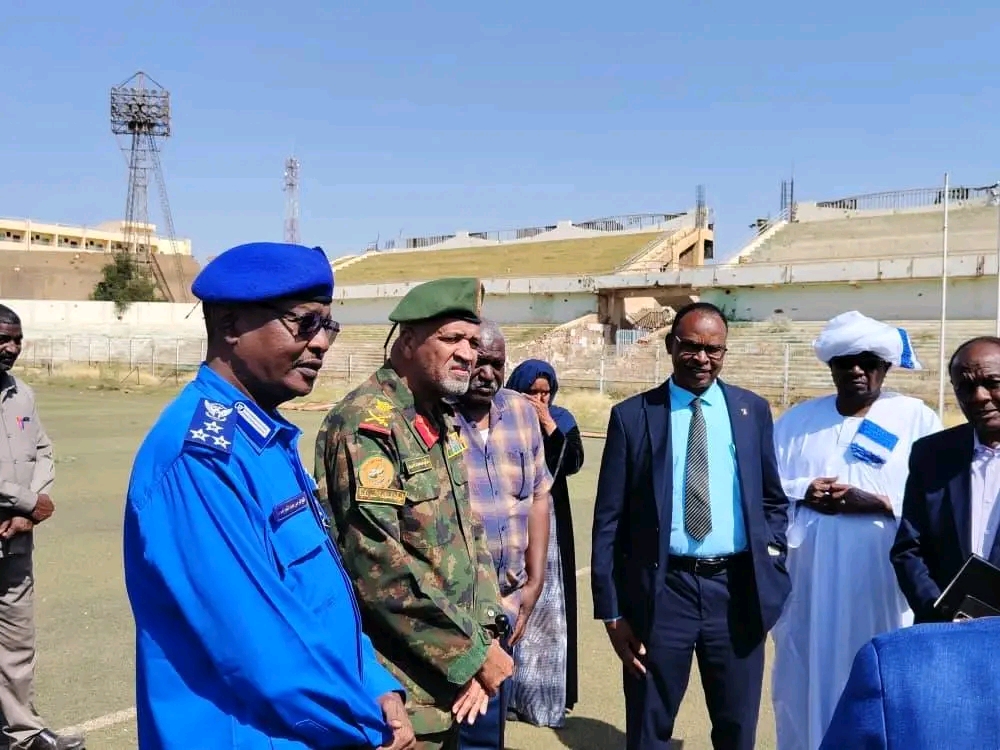
During his speech at the celebration, Prime Minister Dr. Kamil Idris issued several directives focused on rehabilitation and preparation according to the latest international standards to host sporting events. He also called for activating sports camps both inside and outside Sudan to enhance sports development at all levels. Furthermore, he directed state governors to prevent encroachment on areas designated for sports and cultural activities. He also adopted a fundraising campaign to secure the required budgets under his direct supervision, with the support of major companies and affluent business figures to contribute to the project and ensure its completion on schedule.
The Sports City has long been a dream for Sudanese athletes—a massive sports complex envisioned to reflect a bright and proud image for the country. After the dream began to materialize and its features emerged, anticipation grew for its long-awaited opening. However, delays in implementation accompanied by disputes were followed by the outbreak of the devastating war. The Sports City was transformed into a military barracks by the Rapid Support Forces militia, becoming one of the first facilities to suffer damage during the clashes. The devastation and destruction extended to other sports facilities, including the stadiums of Khartoum, Al-Hilal, and Al-Merrikh in Omdurman, as well as volleyball and basketball halls, tennis courts, and swimming pools across Khartoum State.

After the militia withdrew from Khartoum, authorities began restoring normal life and preparing the environment, which necessarily included the resumption of sports activities. The Sovereignty Council issued a decision to form a committee for the rehabilitation and preparation of stadiums in Khartoum State, chaired by the Minister of Youth and Sports. The committee included representatives from sports, security, and engineering sectors. Its mandate includes assessing the damage to sports facilities, preparing technical estimates for maintenance work, securing the necessary financial support, and developing a clear timeline for implementation, with the authority to seek assistance as needed. The committee began its work with field visits to several stadiums, including Khartoum, Jabal Awliya, Al-Tahrir, Al-Hilal, and Al-Merrikh, where it assessed the extent of the damage.
Last Thursday, Prime Minister Dr. Kamil Idris received comprehensive reports from the heads of subcommittees regarding progress made and remaining work, as well as plans to complete the project on time. This follows field visits to targeted stadiums to identify deficiencies and requirements needed to host the Elite Stage of the Premier League, as part of the “Return to the Homeland” initiative launched by the Sudanese Football Association to support the return of citizens to Khartoum State. The committee affirmed its commitment to the set timeline for the return of sports activities in Khartoum and highlighted efforts made, noting that completion of work in the targeted stadiums is pending after the initial phase of environmental cleanup and removal of war remnants in coordination with relevant authorities.

For its part, the Football Association announced the launch of the Elite League—representing the final stage of the Premier League competition—on April 26 in Khartoum stadiums, with the participation of eight clubs. Matches will be hosted at Khartoum, Kober, and Al-Usra stadiums, while Al-Hilal and Al-Merrikh stadiums were excluded, marking the gradual official return of sports activities in Khartoum. Meanwhile, Al-Hilal and Al-Merrikh clubs will undertake the rehabilitation of their own stadiums.
The rehabilitation of stadiums and the resumption of sports activities in Khartoum can be considered a major event and a hopeful sign of life returning to normal after three years of suspension. One of the first encouraging signs was the holding of the General Assembly of the Sudanese Aquatics Federation on Saturday, April 11, at the Ministry of Youth headquarters in Omdurman—making it the first federation to convene inside Khartoum. This serves as an indicator of recovery returning to the heart of the capital and the ability to overcome challenges.
Sport remains a bridge for communication, bringing communities closer together, promoting a culture of peace, strengthening cooperation among individuals, and dissolving conflicts through flexible and low-cost means.
Post your comments
Photo of the Week

Khartoum (Sudanow) — In just three days, the war in Sudan will complete its third year since it erupted on April 15, 2023. The conflict pits the Sudanese Armed Forces, supported by allied forces, against the rebel militia and its backers at both regional and international levels. Experts believe this war is no longer purely an internal affair; rather, it has evolved into...
More-

13 April, 2026
Stories from the Heart of the Battlefield War and the Growing Suffering of People with Disabilities
Khartoum (Sudanow) — As the war in Sudan enters its fourth year, and destruction has affected everyone, the suffering of people with disabilities has doubled. This vulnerable group faces severe risks due to war, displacement, and the difficulty of accessing medical and humanitarian aid, in addition to the near-total collapse of educational, medical, and rehabilitation services. To understand the scale of suffering and t...

Contact Us

Address: Sudan News Agency (SUNA) Building, Jamhoria Street, Khartoum - Sudan
Mobile:+249 909220011 / +249 912307547