


Quranic Khalwas in Sudan: A Haven for Minds and a Sanctuary for Wandering Hearts
12 April, 2026
Khartoum, (Sudanow)— Quranic Khalwas represent one of the oldest and most significant traditional educational systems in the Islamic world, having played a pivotal role over long centuries in preserving the Holy Quran and disseminating Sharia sciences, in addition to their profound contribution to shaping the religious and social structure of Sudanese society.
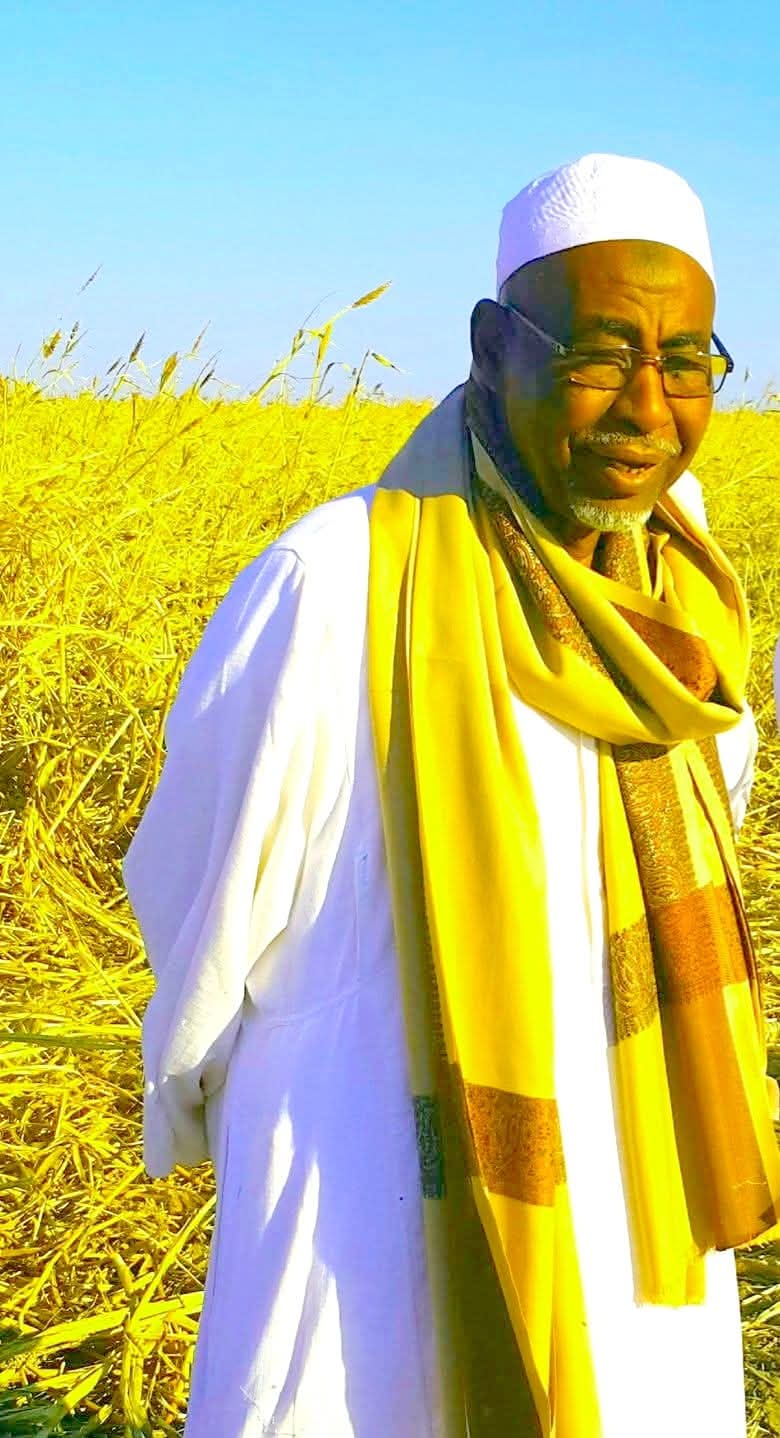
Among the most prominent Khalwas in Sudan are the Hamashkoreib Khalwas in the East, Um Dawanban in Khartoum, Al-Saim Dima in Omdurman, Al-Ghubush in Barbar, and the Khalwa of Sheikh Al-Burai in Kordofan.
To shed the light on these institutions and the services they provide, Sudanow met with Sheikh Al-Fatih Sheikh Abdalrahim Al-Burai, the supervisor of the Sheikh Al-Burai Khalwas in Al-Zariba, North Kordofan State, to discuss these Khalwas and understand their internal workings. Sheikh Al-Fateh began by stating: "Our Khalwa was founded in the 1920s by Sheikh Mohammed Waqi’ Allah, the father of Sheikh Abdelrahim Al-Burai, who was the first to ignite the 'Fire of the Quran' in Kordofan. He began by teaching students Quranic memorization, Tajweed, jurisprudence, and the Prophetic biography. His son, Sheikh Abdalrahim Al-Burai, later continued his father’s legacy by expanding these Khalwas, building numerous mosques across Sudan. Every mosque had an attached Khalwa for Quranic memorization, leading Al-Zariba Khalwa to establish many branches in El Obeid, White Nile, Khartoum, Madani, Port Sudan, Nyala, and other Sudanese cities."
Sheikh Al-Fatih added: "What distinguishes our Khalwa is that it receives thousands of students every year and provides them with internal boarding facilities belonging to the Khalwa, containing rooms prepared for their comfort, a Takia for providing food, and a hospital for their treatment." Sheikh Al-Fateh has worked diligently to develop student housing by adding various service facilities so that students find everything they need in one comprehensive location. Beside Quranic sciences, students study the arts of Arabic calligraphy, Arabic and English languages, and texts on jurisprudence, monotheism, and the Prophetic biography at the hands of many teachers and scholars led by Sheikh Qaribullah Sheikh Al-Burai. After memorizing the Quran, they are granted a certificate of appreciation from the Al-Zariba Scientific Institute, through which they can apply to all formal institutions to complete their education and join universities to continue their academic journey. Some may choose to satisfy themselves with Quranic memorization, leading prayers in mosques, and calling people to God.
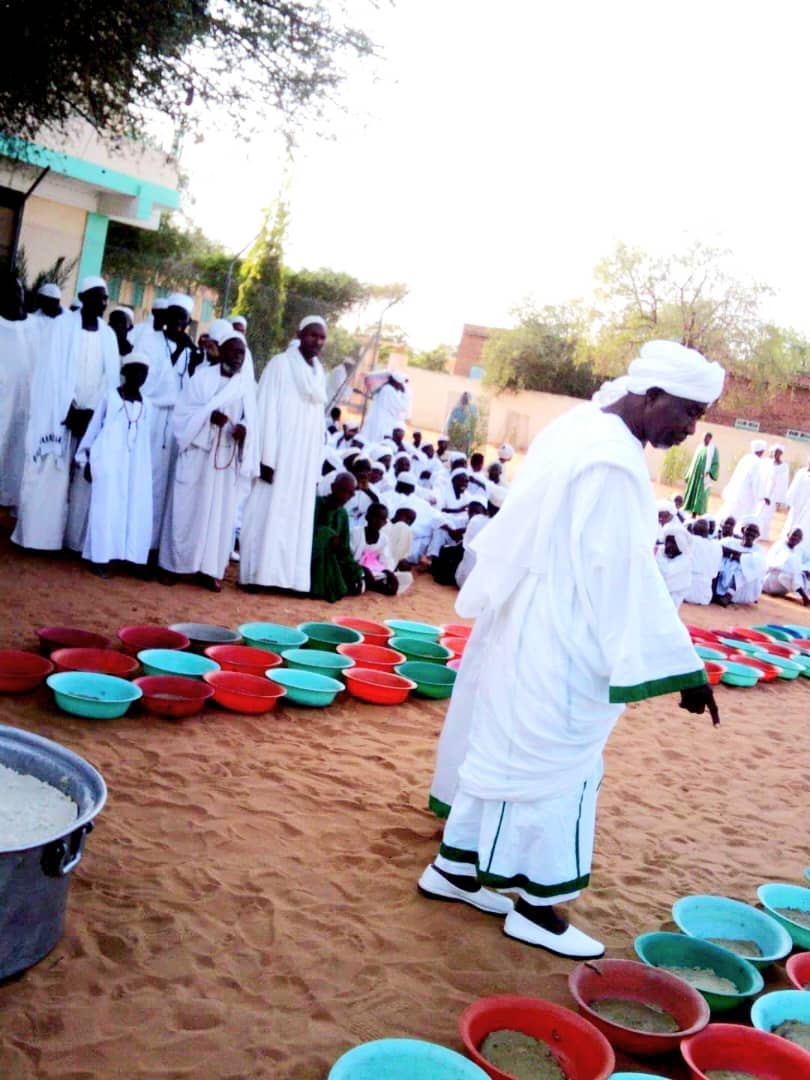
Supervisors of the Khalwa are keen to check on the students, urging them to perform the five daily prayers in congregation and to recite, memorize, and review the Quran, alongside entertaining them with circles of Zikr, Madih, and permissible spiritual chanting.
With the beginning of every autumn, Sheikh Al-Fateh Sheikh Abdalrahim Al-Burai plants his land, which produces thousands of tons of millet. The students then harvest what their Sheikh has planted in a unique scene of cooperation that brings teacher and student together, as they eat what they grow and wear what they sew.
Sheikh Al-Fatih confirmed to Sudanow: "Our agricultural project produces approximately four thousand eight hundred sacks of millet every year, all of which we spend to feed the students of the Quran. Although we do not keep a formal census of our students, what we grow for them is sufficient for their needs and perhaps even exceeds it; for what is established for the sake of God, God Almighty blesses with His care and protection."
There is no official database showing the total number of Khalwa students and memorizers at the national level in Sudan, but partial figures indicate that the total number may reach tens of thousands annually. Most numbers of memorizers have been recorded through graduation ceremonies. In the fourth graduation carnival in the city of Merowe, organized by the Council for Quranic Memorization and Care for Memorizers in cooperation with the Riyadh Jinan Maqashi Center in 2026, 18 memorizers were registered. In the Hamashkoreib Khalwas, 150 male and female memorizers were recorded in a large celebration organized in 2023 in northeastern Sudan, amidst a major public procession. As for the village of Al-Ja'aliyin Al-Hubaigi—Nile River State in 2025—10 memorizers were recorded in a local celebration during Ramadan, with the participation of neighboring villages. The Mabrouka Khalwa complex in Sennar State also recorded 1,000 male and female memorizers, which represents the largest announced figure within a complex housing more than 6,000 students.

The disparity in the numbers of memorizers is significant; some celebrations graduate (10–20) memorizers, while in large complexes, the number reaches hundreds or thousands.
Reports of the conflict in Sudan have recorded a tragic chapter concerning the targeting of Khalwas and the destruction of their educational and social infrastructure. The losses were not limited to the destruction of ancient Maseeds in Omdurman, Kordofan, and the villages of Al-Jazirah, but extended to affect the most vulnerable segment: the migrant students.
On October 30, 2025, the grain store belonging to the Sheikh Al-Burai Khalwa was attacked by strategic drones, resulting in the injury of five students and damage to many cars inside the Maseed near the site of the attack; all the injured were treated immediately.
The latest data from UNICEF (November 2025) indicates that about 14 million children in Sudan are now outside the educational system, with the crisis sharply concentrated in the states of Darfur and Kordofan.
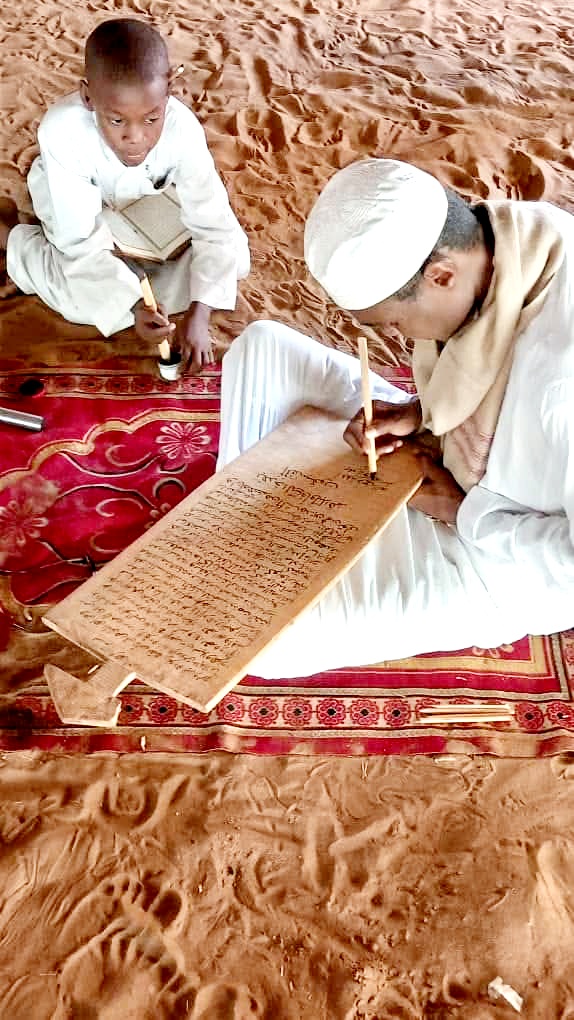
Al-Jazirah State witnessed widespread destruction of these institutions, where its Khalwas were subjected to systematic looting operations documented by "local human rights entities" (such as the Al-Jazirah Conference). Historic wooden writing tablets were converted into cooking fuel in light of gas shortages, which is considered a "cultural crime" alongside the humanitarian crime.
Rates of acute malnutrition among children jumped by a staggering 683%, turning Khalwas from houses of knowledge into shelter centers for everyone displaced by the war and driven away from their homes. In Kordofan, the United Nations Office for the Coordination of Humanitarian Affairs (OCHA) documented in February 2026 reports child casualties in attacks by the terrorist Rapid Support Forces militia that targeted gathering centers for the displaced, which include students and migrants, making these historic religious institutions a living witness to the collapse of the humanitarian protection system in Sudan.
Despite the shifts witnessed by the modern educational system and the challenges imposed by globalization and technology, Khalwas still retain their symbolic and practical status, attracting thousands of students from various regions of Sudan and abroad in a model that combines religious education and social upbringing. Their role has emerged once again in the light of contemporary crises, especially during periods of war and the disruption of formal education, confirming their flexibility and ability to endure. Khalwas were not merely educational institutions with limited functions; rather, they formed integrated educational spaces that contributed to preparing generations of scholars, imams, and preachers, and contributed to consolidating the Islamic and cultural identity in Sudan and its African extensions.

In conclusion, Sheikh Al-Fateh Sheikh Abdelrahim Al-Burai called upon all sons to adopt the morals of the Holy Quran before memorizing and reciting it. A Khalwa student must be an example to be followed in piety, good conduct, cleanliness, and knowledge. We ask God Almighty to grant our students success, to benefit them with what He teaches them, to teach them what benefits them, and to increase them in knowledge.
Post your comments
Photo of the Week

Khartoum (Sudanow) — In just three days, the war in Sudan will complete its third year since it erupted on April 15, 2023. The conflict pits the Sudanese Armed Forces, supported by allied forces, against the rebel militia and its backers at both regional and international levels. Experts believe this war is no longer purely an internal affair; rather, it has evolved into...
More-

13 April, 2026
Stories from the Heart of the Battlefield War and the Growing Suffering of People with Disabilities
Khartoum (Sudanow) — As the war in Sudan enters its fourth year, and destruction has affected everyone, the suffering of people with disabilities has doubled. This vulnerable group faces severe risks due to war, displacement, and the difficulty of accessing medical and humanitarian aid, in addition to the near-total collapse of educational, medical, and rehabilitation services. To understand the scale of suffering and t...

Contact Us

Address: Sudan News Agency (SUNA) Building, Jamhoria Street, Khartoum - Sudan
Mobile:+249 909220011 / +249 912307547