


Stories from Inside the Battlefield At the Threshold of Waiting: Stories of Families Searching for Their Sons
20 April, 2026
Khartoum (Sudanow) —
Wars are not measured by the number of wounded and dead, but by the silent voids they leave in the hearts of the living—voids created by enforced disappearance, when a person turns into an unknown number or a suspended name between hope and despair. As the war in Sudan enters its fourth year, one of its most painful tragedies is becoming increasingly evident: the issue of missing persons, which grows more complex and expansive with each passing day.
Thousands of families are living to the rhythm of heavy waiting and bitter reality, trapped in severe psychological distress—between a grieving mother, a heartbroken and patient father, a confused wife, a worried sister, and children clinging to hope for their loved ones’ return.
Amid this painful reality, Sudanow toured the families of missing persons in an attempt to convey their message to the international community and its official and humanitarian organizations, calling on them—on all grounds of humanity—to assist in search efforts and to mobilize all available resources to help locate the missing and bring joy back to their families. Sudanow also met with several families of detainees and documented their exhausting journey in searching for their loved ones.
The story begins with Sihaam Abdulrahman Al-Hassan, sister of the missing Hafiz Abdulrahman Al-Hassan, known as “Al-Zaki.” Sihaam says: “Hafiz is in his forties and works in freelance business. He left our home in Ombada Al-Sabeel in Omdurman in April 2024, and no trace of him has been found since then.”
She explains that Hafiz had remained with the youth of the neighborhood after their families were displaced, while his own family moved to the city of Damar in River Nile State. With the tightening siege on the area by members of the rebel militia, he decided to travel to Damar to join his family. She adds: “We learned from neighbors that he had left Ombada. We waited the first day, then the second, thinking perhaps he was delayed due to the difficulty of the road, or that he spent the night in Al-Thawrat or Shendi.”
She continues: “Three days passed without any sign of Hafiz, and his phone was switched off. Anxiety overwhelmed the family, and we began the search.”
She notes that her elder sister, Fatima Abdulrahman, traveled to Omdurman and searched for him in all detention camps, but could not find any trace.
Sihaam says the family’s hope was renewed after the liberation of Khartoum and the opening of prisons and detention centers. Fatima returned again to review detainee records, but did not find his name or any clue.
She adds that his siblings filed a report with the Sudanese Red Crescent Society to assist in the search, and they contacted his brother Mohammed earlier, asking if there was any news. However, they were informed that they had been unable to access Darfur since the beginning of the war.
Sihaam concludes her account by mentioning that a neighbor’s son, Mohamed Musa, disappeared days before Hafiz. He was reportedly taken from their home in Ombada Al-Sabeel. She confirms that there is information suggesting both of them are held in the “Dagrees” camp in Nyala.
The stories of arbitrary detentions continue without a city, neighborhood, or village being spared. In this account, we document the story of a group of young men who were arrested in the early evening from inside a home, in full view of neighborhood residents.
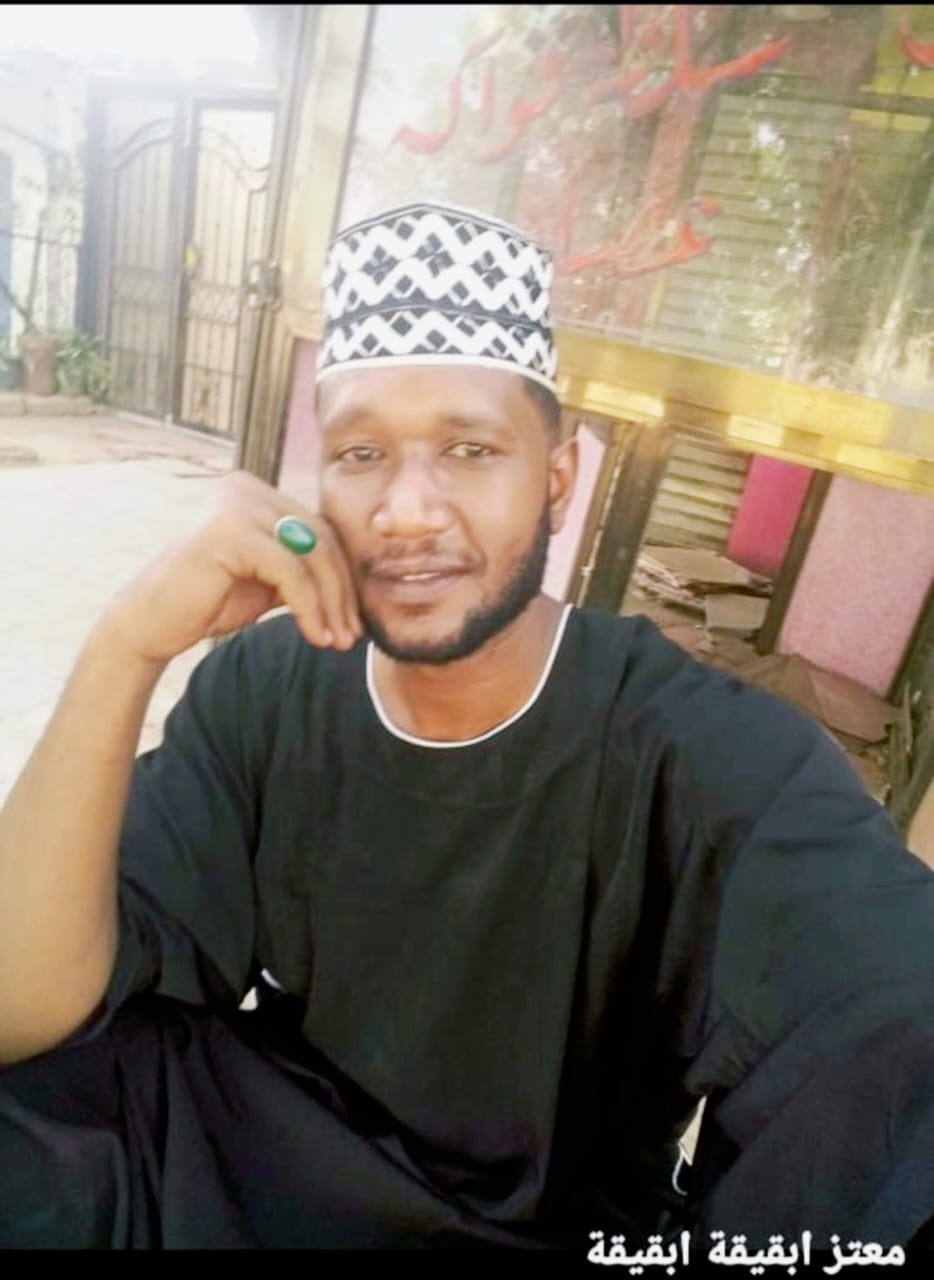
Rawiya Hassan Ali tells Sudanow her family’s tragedy with deep sorrow and grief after the disappearance of her only brother, Moataz Hassan Ali Hassan Al-Ghul (45 years old), who lived in Imtidad Al-Daraja Al-Thalitha, Block 4, in one of Khartoum’s neighborhoods. He worked in freelance business and owned a spare parts shop.
Rawiya explains that her brother was arrested along with a neighbor while they were gathered watching a football match. Members of the rebel militia stormed the place, beat him and his friend Mus’ab severely, and then took them to an unknown destination on January 16, 2024.
She adds: “We did not know anything until twenty days later. My brother had advised the neighborhood not to inform us so as not to worry us, thinking it would only take a few days and he would return.”
She continues: “Since then, moments of anxiety and tension began, and we have been living—and still are—through extremely difficult psychological conditions. We started searching in the detention centers of Al-Riyadh, Soba, and others.”
She notes that they contacted some militia members who demanded large sums of money in exchange for information, in an attempt at extortion, confirming that they received the money but provided no results.
She goes on: “Recently, my brother’s name appeared on a list of detainees in Dagrees Prison in Nyala, Darfur State. When we contacted the publisher of the post, he also requested money.”
She adds that they tried to verify the information through her husband’s friends in Nyala, who confirmed that access to the prison is difficult and that the city is largely empty after the displacement of most residents.
Rawiya concludes: “My brother has no political affiliation and no connection to any political or military direction. He is a simple civilian citizen who practiced his freelance work and remained at home like other young men in the neighborhood after evacuating his family from Khartoum.”
This is only a small part of a much larger picture, as the list of missing persons continues to grow. Sudanow continues to publish their stories sequentially, in the hope of finding a glimmer of hope for their return. The publication repeatedly appeals to all international, regional, and national organizations, human rights groups, and relevant authorities to look with compassion and responsibility at these grieving families who continue to cling to hope.
Conclusion
The tragedy of missing persons is an urgent humanitarian issue that requires immediate and serious action from the international community, human rights organizations, and all bodies concerned with protecting human dignity. The continuation of enforced disappearance not only deprives families of their loved ones but also threatens the social fabric and deepens wounds that become increasingly difficult to heal over time. While these families hold on to a fragile thread of hope, the moral and humanitarian duty remains to uncover the fate of the missing, end the suffering of waiting, and restore rights to their rightful owners—so that disappearance does not remain an endless fate without resolution.
Post your comments
Photo of the Week

Sudanese Student Wins International Research Award and Presents Digital Nursing Project at Royal College of Nursing Conference in Britain Khartoum – Sudanow In a country where the healthcare sector is facing mounting crises and war has placed hospitals, healthcare workers, and patients under immense pressure, a Sudanese nursing student has chosen to begin with a question ...
More-

11 October, 2026
Stories from the Heart of the Battlefield On World Teachers’ Day: The Sudanese Teacher — Achievements Against All Odds
Teachers carried their chalk through the rubble and kept working — Resilience War closed schools, but examinations continued — A Mission Low salaries and mounting hardships — The Price of the Profession Khartoum (Sudanow) — Teachers around the world are marking World Teachers’ Day this week, an occasion that carries messages of appreciation and gratitude for those who carry the torch of knowledge...

Contact Us

Address: Sudan News Agency (SUNA) Building, Jamhoria Street, Khartoum - Sudan
Mobile:+249 909220011 / +249 912307547