


Traditional and Complementary Medicine: A Serious Step Toward Enhancing Chances of Success
03 May, 2026
Khartoum (Sudanow) — The administrative decision issued by Dr. Haitham Mohamed Ibrahim to form a committee for traditional and complementary medicine (alternative medicine), based on the outcomes of the Higher Council for Traditional Medicine in April 2023, represents a significant and complex step—especially amid the ongoing war and the partial collapse of institutional structures. Nevertheless, real opportunities for success remain, alongside challenges and obstacles that cannot be ignored.
This process goes beyond being merely a health-related measure; it represents a comprehensive transformation in the field of medicine and is directly linked to rebuilding state institutions and restoring the health sector in Sudan. This requires a high level of coordination among relevant stakeholders. Therefore, the success of this initiative depends on achieving a delicate balance between leveraging opportunities and addressing challenges.
To discuss the importance of the committee and its role in regulating traditional medicine in line with rapid developments in the field, Sudanow interviewed the committee’s chairman, Lt. Gen. (Police) Prof. Ahmed Awad Al-Jamal, a consultant in forensic medicine and forensic pharmacy, and an expert in medicinal substances. He explained that, as part of government efforts to develop and regulate traditional and complementary medicine in the country, the committee is preparing to mark the first anniversary of its official launch. Its first expanded meeting was held on May 11, 2025, via video conferencing, under the patronage of the Federal Minister of Health.
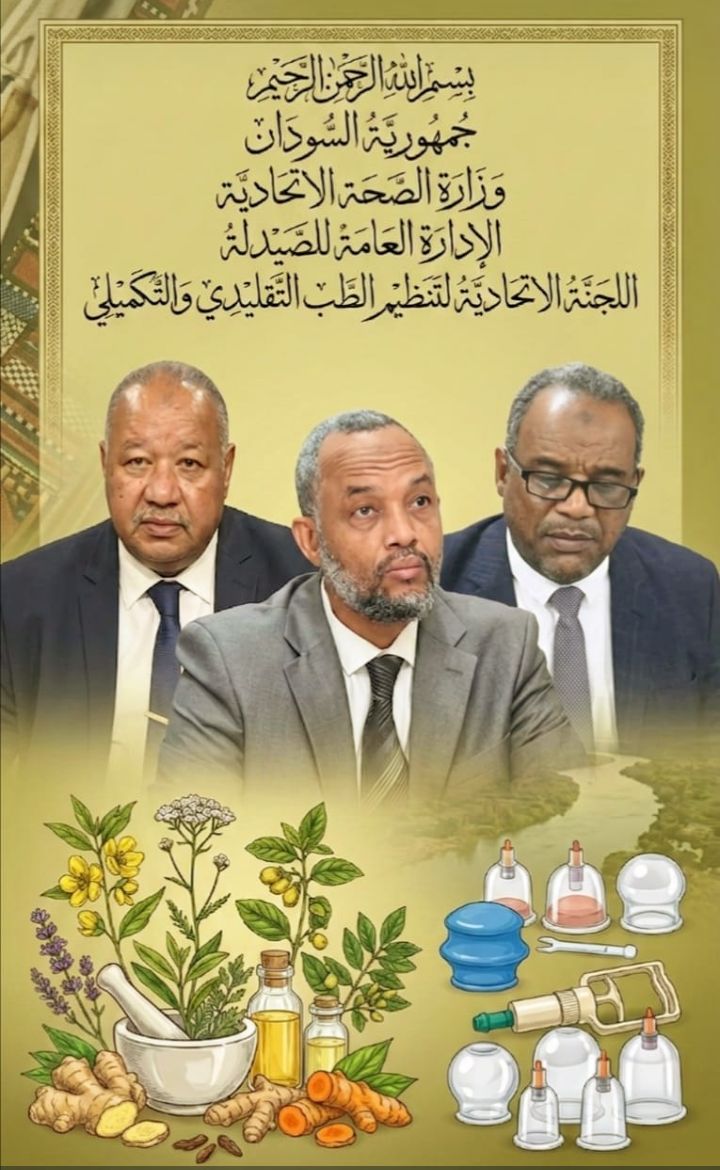
He noted that the first meeting was held in response to the invitation of the Federal Minister of Health, Dr. Haitham Mohamed Ibrahim, and in implementation of Administrative Decision No. (8) of 2025, issued on March 18 of the same year. He added that the formation of the committee was based on the recommendations and outcomes of the Higher Council for Traditional Medicine meeting held in April 2023.
Prof. Al-Jamal explained that the committee includes a distinguished group of scientists and experts from various fields, including:
Medicinal and aromatic plants
The Institute of Traditional Medicine Research
Practitioners of traditional medicine, including physicians, pharmacists, and researchers
Officials from federal and state ministries of health, each according to their specialization
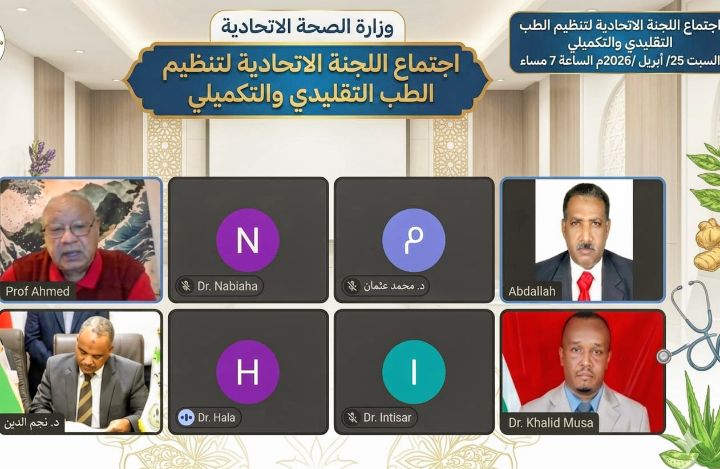
All members work collaboratively to deliver integrated and comprehensive outcomes.
He added that the May 2025 meeting, held under the patronage of the Minister of Health, included the presentation of a comprehensive action matrix, which covered:
Clearly defining tasks and distributing roles and responsibilities among relevant institutions
Establishing mechanisms for institutional coordination
Identifying success indicators through a roadmap to ensure effective performance that serves public health while preserving national medical heritage under modern regulations
He emphasized that this initiative primarily aims to regulate traditional and complementary medicine and integrate it into the primary healthcare system, ensuring the safety of Sudanese citizens. The rationale behind forming the committee includes regulating practices, organizing the sector, and improving the overall health situation.
Among the committee’s key objectives are:
Integrating traditional medicine into the healthcare system through promoting safe use
Exchanging expertise and conducting visits with other countries
Coordinating efforts among institutions operating in the field
Promoting best practices in regulation and governance
Encouraging the national pharmaceutical industry based on Sudanese plants
Monitoring the implementation of the action matrix
Establishing a database for traditional medicine
Developing licensing standards and specifications
Conducting surveys and studies
Reviewing and updating relevant laws
Holding regular meetings for evaluation and follow-up
Supporting the School of Complementary Medicine in Khartoum State
Setting specifications for pharmaceutical manufacturing from natural resources
Developing regulations governing traditional medicine practice
Promoting safe use in emergency health situations
Preparing a package of services to be included in essential healthcare
Following up on meetings of the Higher Council for Traditional Medicine
Prof. Al-Jamal further noted that, over the course of a full year, the committee has been working diligently to review the roles of partners across the various components of the action matrix, define responsibilities, and determine program types. It has also established implementation indicators in line with international standards. In addition, the committee has worked on refining and standardizing the terminology used within its scope. The vice chairman, Dr. Najm Al-Din, was tasked with preparing a paper on this matter, which sparked extensive discussions and resulted in highly important recommendations expected to be announced soon.
In conclusion, Sudanow hopes that this committee will receive the necessary support and backing from the state and its relevant institutions, as well as from national and international health organizations. Sudan possesses rich natural resources that serve as a reservoir of medicinal plants and forest products, positioning it to become a leader in this field and a model to be emulated globally.
Post your comments
Photo of the Week

Khartoum (Sudanow) — In just three days, the war in Sudan will complete its third year since it erupted on April 15, 2023. The conflict pits the Sudanese Armed Forces, supported by allied forces, against the rebel militia and its backers at both regional and international levels. Experts believe this war is no longer purely an internal affair; rather, it has evolved into...
More-

20 April, 2026
Stories from Inside the Battlefield At the Threshold of Waiting: Stories of Families Searching for Their Sons
Khartoum (Sudanow) — Wars are not measured by the number of wounded and dead, but by the silent voids they leave in the hearts of the living—voids created by enforced disappearance, when a person turns into an unknown number or a suspended name between hope and despair. As the war in Sudan enters its fourth year, one of its most painful tragedies is becoming increasingly evident: the issue of missing persons, which ...

Contact Us

Address: Sudan News Agency (SUNA) Building, Jamhoria Street, Khartoum - Sudan
Mobile:+249 909220011 / +249 912307547