


On Their World Day: Lupus Patients… A Window of Hope through Traditional and Complementary Medicine
10 May, 2026
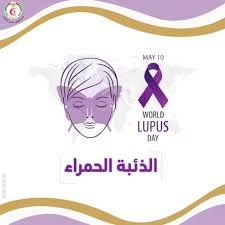
Khartoum (Sudanow) — May 10 of each year marks World Lupus Day. This day comes amid a noticeable increase in the spread of this serious disease. However, with scientific progress, growing family awareness, and the efforts made by experts in traditional and complementary medicine (alternative medicine), it has become possible to overcome it, live with it, and reduce its complications.
Experts in traditional and complementary medicine in Sudan have succeeded in controlling the disease and limiting its spread by following a dietary system and natural medical prescriptions. To learn more about this disease and methods of prevention and treatment, Sudanow interviewed Dr. Mohamed Osman Maysara, Consultant in Community Medicine and Public Health, expert in traditional and complementary medicine and therapeutic nutrition, member of the Permanent Committee for Medicinal and Aromatic Plants, head of the committee for establishing alternative medicine schools at the Ministry of Health, and one of the contributors to the rehabilitation and re-rehabilitation of many cases of the disease and other illnesses.

Dr. Mohamed Osman began his remarks by congratulating lupus patients and participating in the celebration of World Lupus Day, saying: the celebration aims to enhance and increase awareness and acceptance of living with the disease, as well as to improve their quality of life in a natural way and provide healthcare in all its forms.
He stated that lupus is one of the most important and dangerous autoimmune rheumatic diseases, resulting from a disorder or dysfunction in the body’s immune system, which produces certain types of antibodies that attack and damage the body’s tissues instead of protecting them. It progresses to affect most of the body’s organs in sequence and varies in nature from one person to another. It was named in the 1800s “lupus” due to its resemblance to a wolf’s face.
He added that there is no clear single cause, but genetic predisposition and environmental, genetic, and hormonal factors, as well as viral infections, smoking, and exposure to sunlight, play a major role in its occurrence. It is also noted that most patients had used large amounts of antibiotics in childhood due to throat infections or tonsillitis, and it is believed that this contributed to weakening the body’s immune system.
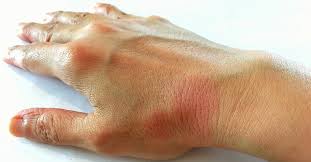
The disease has been increasing significantly in recent times due to changes in lifestyle and living patterns. Its severity varies depending on the organs affected. The most important symptoms include severe fatigue and exhaustion, persistent fever, recurrent mouth ulcers, inflammation and swelling of the joints, skin rash, redness and a butterfly-shaped rash on the face, hair loss, morning stiffness, extreme sensitivity to sunlight, and, most dangerously, kidney inflammation, which may occur in men more than women to varying degrees. Other symptoms include inflammation of the gastrointestinal lining, seizures and nervous system problems, anemia, heart involvement, respiratory inflammation, low platelet count, and hormonal system problems, especially related to the menstrual cycle.
Not all these symptoms necessarily appear in a patient. The disease is not contagious. It mostly affects women between the ages of 15 and 45 and does not affect pregnancy. The ratio of infection is approximately nine women to one man, which is attributed to the sensitivity and characteristics of the female hormonal system.

There is also what is known as autoimmune overlap syndrome, where lupus may overlap with diseases such as rheumatoid arthritis, and in many cases may coexist with multiple sclerosis or both together. It may also increase the likelihood of early Alzheimer’s disease. Its prevalence is approximately one case per 1,500 individuals.
There are four types of lupus:
1. Systemic lupus erythematosus (the most common and widespread).
2. Cutaneous lupus.
3. Drug-induced lupus, which appears as a result of using certain medications and disappears once the cause is removed.
4. Neonatal lupus, which occurs in some newborns and disappears within the first months after birth.
There are also factors that worsen the condition, including psychological trauma, digestive system disorders, obesity, and deficiencies in vitamins and minerals. Therefore, lupus diagnosis must be comprehensive, combining symptoms with laboratory tests, and the earlier the diagnosis, the faster the results of rehabilitation and treatment.
Dr. Maysara emphasized that despite the seriousness of the disease and its complications, especially in cases of delayed diagnosis, traditional and complementary medicine, through therapeutic nutrition programs, plays a major role in rehabilitation and re-rehabilitation, alleviating patients’ suffering and achieving positive results.
This is achieved through several approaches. First, the patient must be aware of the nature of the disease and its complications, with continuous follow-up by a specialist doctor, in addition to psychological rehabilitation for the patient and their family, and understanding that “for every disease there is a cure, known by those who know it and unknown by those who do not,” as stated in a prophetic tradition.
Second, just as the body can contribute to causing disease, it is also capable of healing itself by regulating the immune system and restoring balance to disturbances affecting the immune, digestive, hormonal, and nervous systems. This is done through therapeutic nutrition, avoiding exposure to sunlight, avoiding certain medications, staying away from chemical cleaning and disinfecting substances, avoiding foods containing preservatives, and reducing sugar intake.
The process begins with detoxification of the body and cleansing the digestive system of bacteria, fungi, parasites, and their residues, followed by restoration of the digestive system. During this phase, most symptoms decrease by more than 40% in a noticeable way.
After that comes the stage of strengthening the immune system by supporting the body with vitamins, minerals, fiber, and essential nutrients, along with follow-up and evaluation. At this point, symptoms may disappear, laboratory test results become negative, and associated symptoms—especially in the visual system such as eye pain, dryness, sensitivity, redness, and blurred vision—may resolve. Notably, the return of fingerprint patterns, which had been associated with autoimmune patients, is restored completely.
The rehabilitation and re-rehabilitation period ranges from 9 to 12 months. Many patients with autoimmune diseases, especially lupus, have been fully rehabilitated in less than 9 months during the program. Some patients may experience a recurrence of certain symptoms only if they do not adhere to their dietary regimen, without any change in laboratory test results.
Post your comments
Photo of the Week

Khartoum (Sudanow) — Abdel Gaiyum Gate, one of the most prominent historical landmarks in the city of Omdurman, has regained its authentic heritage appearance following extensive restoration and rehabilitation works that revived its splendor after the severe damage it sustained during the recent war in Sudan. Abdel Gaiyum Gate is considered one of the archaeological landma...
More-

20 April, 2026
Stories from Inside the Battlefield At the Threshold of Waiting: Stories of Families Searching for Their Sons
Khartoum (Sudanow) — Wars are not measured by the number of wounded and dead, but by the silent voids they leave in the hearts of the living—voids created by enforced disappearance, when a person turns into an unknown number or a suspended name between hope and despair. As the war in Sudan enters its fourth year, one of its most painful tragedies is becoming increasingly evident: the issue of missing persons, which ...

Contact Us

Address: Sudan News Agency (SUNA) Building, Jamhoria Street, Khartoum - Sudan
Mobile:+249 909220011 / +249 912307547