


Tales from Inside the Battlefield Houses of Worship and Quranic Khalwas in the Crossfire of War A dialogue on destruct
17 May, 2026
By Kaltoum Abdelbagi Musa
Khartoum (Sudanow) — Over the course of three years, Sudan has endured one of the harshest and most complex wars in its history, after a rebel militia launched a conflict that left widespread destruction across infrastructure, service institutions, educational facilities, and religious centers, while placing citizens under unprecedented humanitarian suffering.
The effects of the war were not limited to physical devastation alone; they also struck at the very fabric of values, coexistence, and social peace, in clear violation of humanitarian norms and international conventions.
Among the most prominent targets of the attacks were houses of worship and Quran memorization khalwas, despite their religious and social significance and their protected status under international law. Mosques and churches were subjected to repeated assaults and violations, while civilians were killed during religious observances in shocking scenes that deeply shook Sudanese society.
In Al Jazirah State — once known for its security and stability — the tragedy of the Wad Al-Fadni Educational Complex for Quran Memorization emerged as one of the starkest examples.
Speaking to Sudanow, student Ehab Abdullah described the ordeal:
“Wad Al-Fadni Khalwa is considered one of the oldest religious and educational institutions in the region. For many years, it served as a beacon for Quran memorization and the promotion of tolerance and coexistence.”
The complex hosted students from various Sudanese states, as well as students from African and Arab countries including Mauritania, Nigeria, Kenya, Democratic Republic of the Congo, Tunisia, and Ethiopia, forming a unique model of diversity and brotherhood.
The institution provided an integrated educational environment that included housing, care, education, and social support, all within a climate of stability and community solidarity — before war reached its doors.
The Wad Al-Fadni complex was suddenly attacked by rebel militia forces, who stormed the premises without justification and assaulted unarmed students carrying nothing but Qurans and books of knowledge.
In 2024, the area came under attack by the rebel militia. On the first day, militia members entered the village and terrorized residents at gunpoint. They also seized approximately 85 civilian vehicles belonging to villagers, spreading fear and panic among the population.
The following day, the militia returned claiming they had come to “protect civilians,” yet they remained in the area for nearly twenty-five days, during which they committed widespread violations against residents and young people.
According to Ehab, the militia subjected village youth to brutal forms of torture, including forcing them into stagnant water pits and making them remain there for long periods. Victims were also flogged and dragged along paved roads over long distances.
These abuses led to the death of Hashim Al-Wada’a, one of the memorizers of the Quran, who was reportedly flogged to death after refusing to participate in such acts.
Residents lived in a complete absence of security during that period, as looting of cars and livestock continued daily, alongside what Ehab described as “strange and humiliating practices” against civilians.
He recounted another incident:
“When some villagers went fishing, they were threatened with two choices: either eat the fish raw without cooking it, or throw it back into the water.”
A week after the liberation of Wad Madani, the militia escalated its looting operations, robbing civilians even as they attempted to flee the region.
Ehab continued:
“Everyone was robbed. Even Khalifa Mohammed had his car stolen and was forced to leave the village on foot.”
Residents fled to the area of Fadasi, including children and the elderly, many unable to carry any belongings. Some left with nothing but the clothes they were wearing.
Ehab spoke painfully of how the war halted studies at the religious complex, displaced students, shut down schools, and completely disrupted education, worsening the humanitarian and social conditions in the area.
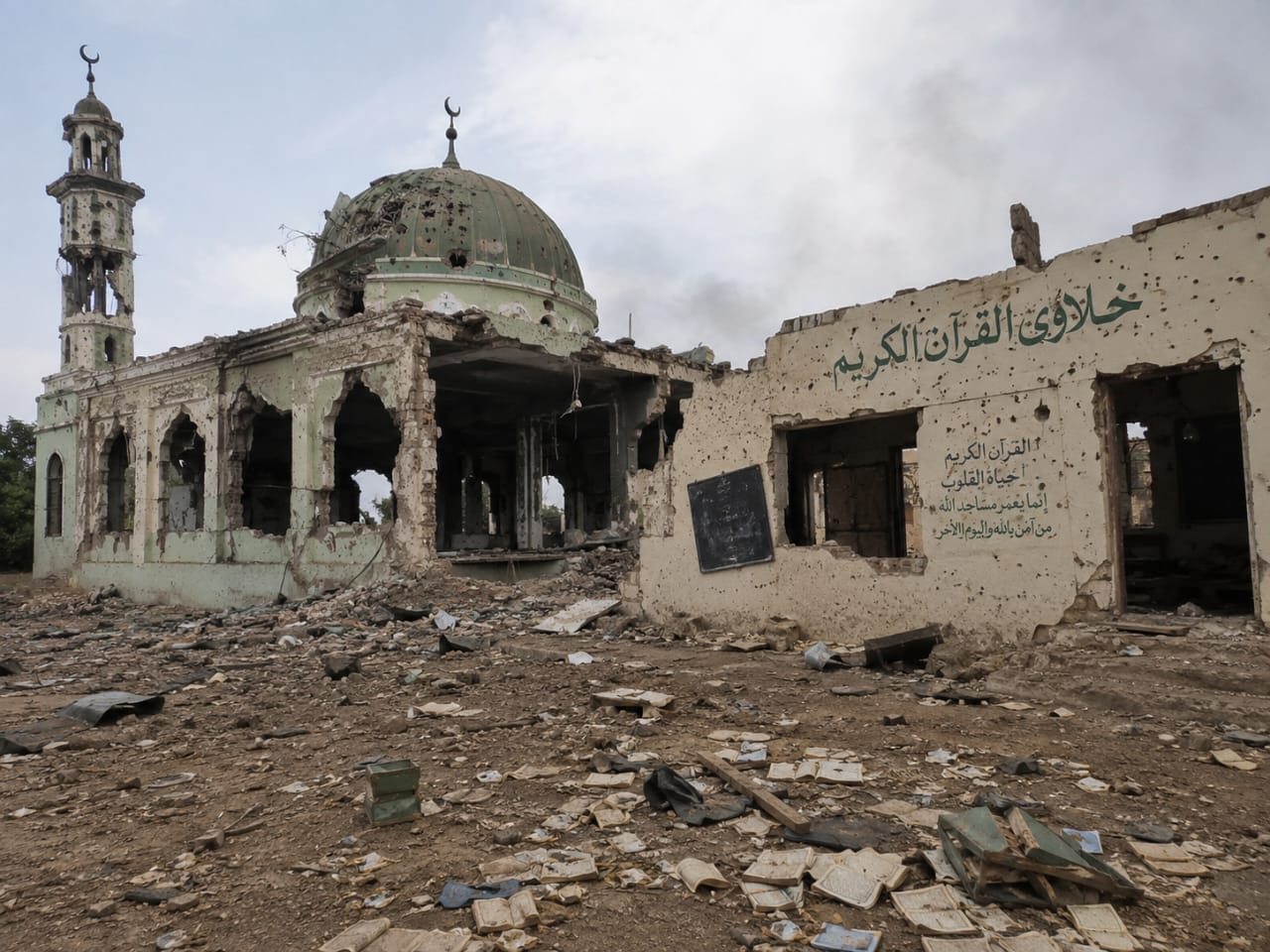
Regarding the situation after the expulsion of militia forces, he explained that the region now lives in a state of cautious calm, though the scars of war remain deeply visible amid weak public services and slow recovery efforts.
He identified the major challenges as:
Reconstruction
The return of displaced residents
Restoring security and stability
Supporting the educational process
Rehabilitating the mosque and religious complex to restore their educational and spiritual role
Ehab appealed to official authorities and humanitarian organizations to urgently support the population by providing basic necessities, restoring services, and prioritizing education.
He concluded:
“Despite the pain, we remain hopeful. The people of the village have a strong will to return and rebuild. We believe the future can be better if there is genuine support and determination. Life must go on.”
The tragedy of Wad Al-Fadni Complex, along with many other affected regions, reflects the scale of violations committed against civilians and educational and religious institutions during the war. These acts constitute grave breaches of international law and humanitarian values, underscoring the urgent need to rebuild these institutions and support their role in strengthening peace and social cohesion in Sudan.
Post your comments
Photo of the Week

Sudanese Student Wins International Research Award and Presents Digital Nursing Project at Royal College of Nursing Conference in Britain Khartoum – Sudanow In a country where the healthcare sector is facing mounting crises and war has placed hospitals, healthcare workers, and patients under immense pressure, a Sudanese nursing student has chosen to begin with a question ...
More-

11 October, 2026
Stories from the Heart of the Battlefield On World Teachers’ Day: The Sudanese Teacher — Achievements Against All Odds
Teachers carried their chalk through the rubble and kept working — Resilience War closed schools, but examinations continued — A Mission Low salaries and mounting hardships — The Price of the Profession Khartoum (Sudanow) — Teachers around the world are marking World Teachers’ Day this week, an occasion that carries messages of appreciation and gratitude for those who carry the torch of knowledge...

Contact Us

Address: Sudan News Agency (SUNA) Building, Jamhoria Street, Khartoum - Sudan
Mobile:+249 909220011 / +249 912307547