


Eid sacrifices… dramatic price surges amid war, fees, and market distortions
27 May, 2026
Just hours before Eid al-Adha, the annual controversy over sacrificial sheep prices has returned, amid the negative impact of the war on Sudan’s livestock sector—particularly in Greater Kordofan and Darfur, which form the backbone of animal production in Sudan. With livestock entering the markets, many citizens complain about unjustified price spikes, attributing them to speculation, taxation, and intermediaries. Specialists, however, argue that the real crisis goes beyond supply and demand and reflects a deep structural distortion across the entire value chain.
Impact of the war
The war has cast a heavy shadow over grazing and livestock production areas in Greater Kordofan—regions that witness extensive nomadic pastoral movement and seasonal migration routes. Fighting and insecurity have disrupted herd movement and complicated collection and transportation to major markets. This has also weakened trade activities linked to livestock.
As Eid approaches, this reality has been directly reflected in sheep markets, where brokers and middlemen have become more active, fueling price speculation that observers say exceeds the true value of livestock. This has created a wide gap between producer prices in rural areas and final consumer prices in cities.
The livestock heartlands
Kordofan and Darfur are considered the main hub of Sudan’s livestock wealth, holding around 60% of the national herd. Historically, they have been the primary supply source for local markets and exports.
However, the war has reduced this share due to displacement, disrupted grazing routes, and difficulty accessing production areas. This has negatively affected livestock exports and reduced foreign currency earnings after the breakdown of collection and transport systems and rising operational costs.
Many traders have been forced to seek alternative markets or rely on other states to compensate for shortages, while supply chains have faced increasing bottlenecks that have reduced market efficiency and stability.
Brokers under accusation
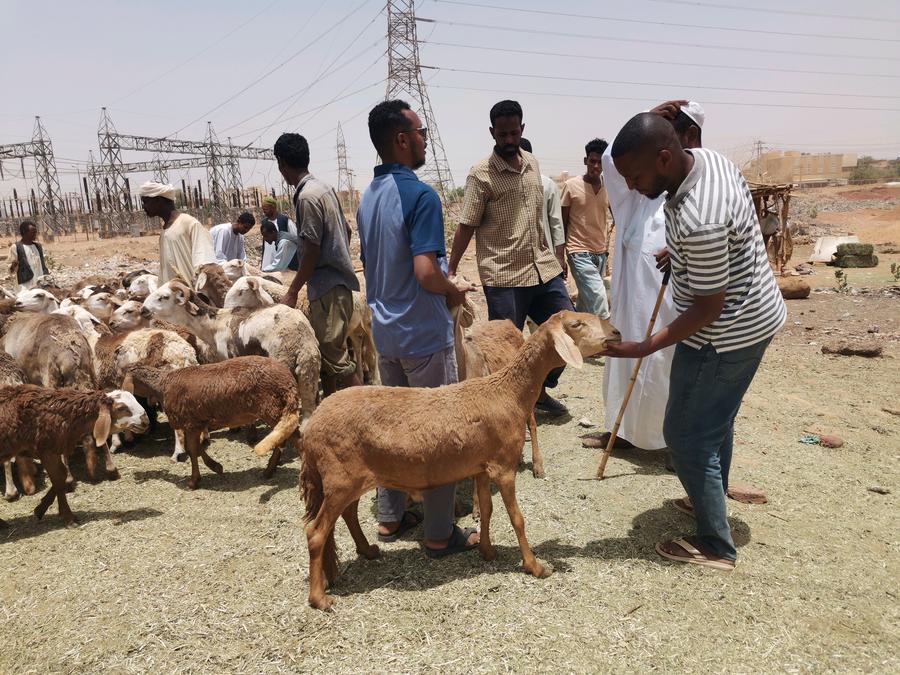
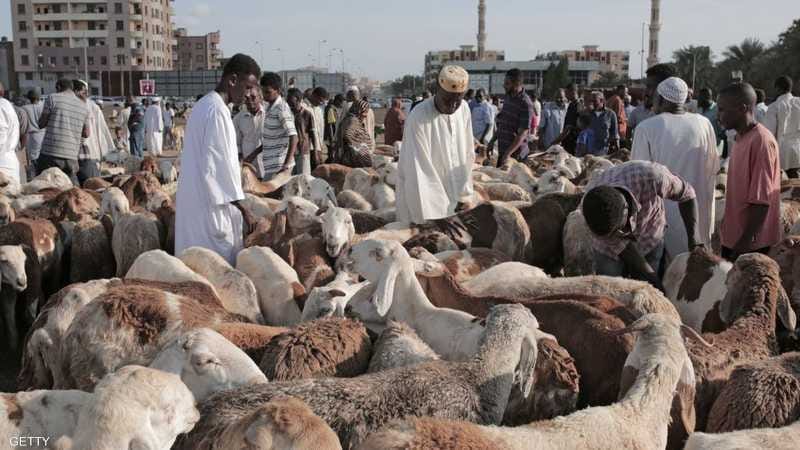
In Khartoum and Port Sudan markets, citizens report that sacrificial sheep prices range from 600,000 Sudanese pounds for medium-sized animals to around 1.2 million pounds, while large breeds can reach up to 2 million pounds depending on size and breed.
Livestock traders, however, deny claims of extreme price hikes, arguing that some brokers exaggerate prices that do not reflect real market conditions. They note that some livestock markets in Al Jazira State are selling large sheep for between 350,000 and 500,000 pounds, with expectations of further price drops as more supply enters the markets.
Observers say this large disparity between production areas and consumption centers reveals serious market distortions and opens the door for speculation that inflates prices without real production justification.
Taxes, fees, and transport costs
Head of the Livestock Export Chamber, Saleh Salah, says the rise in sacrificial sheep prices is due to multiple factors, most notably the heavy increase in central, state, and local taxes and fees.
He added that rising transport costs due to higher fuel prices have also increased the cost of moving livestock from production areas to consumption markets, directly affecting final prices.
Specialists believe the accumulation of taxes and fees has become a major burden on the sector, especially amid the fragile economic conditions caused by the war.
The war’s blow to production
Economic analyst Dr. Haitham Fathi confirms the war’s negative impact on the livestock sector. He explains that it has directly affected local livestock markets, as reduced animal numbers have driven up meat and dairy prices, while feed prices have surged due to infrastructure destruction.
He adds that the closure of major production markets and the difficulty of movement between safe and conflict-affected states has nearly paralyzed livestock transport to major cities such as Khartoum and other regions.
The damage has extended beyond livestock to grazing lands, a key pillar of the national economy and a major source of export revenue. As a result, the sector’s contribution to the trade balance has declined significantly.
Causes of rising prices
Dr. Fathi attributes rising sacrificial sheep prices to several interconnected factors: weak exports leading to market shortages, fragmented regional markets, high transport costs, and multiple formal and informal fees.
He also highlights the role of long chains of intermediaries that inflate prices without adding real value, along with the depreciation of the Sudanese pound, which has increased the cost of feed and services.
He notes that trade restrictions between war-affected regions have further disrupted livestock movement. He compares Sudan with countries like Egypt and Chad, which—despite lower production—enjoy more stable prices due to better market regulation and smoother supply chains.
He concludes that Sudan, despite being one of the largest livestock producers and exporters, has not succeeded in organizing its production, sales, and export markets, resulting in the absence of competitive pricing and leaving citizens burdened by speculation and fees.
Important conclusion
Ultimately, the rise in sacrificial sheep prices this year reflects a broader picture of the war’s impact on Sudan’s livestock sector. The conflict has not only remained on the battlefield but has extended into grazing lands, migration routes, markets, and supply chains.
Despite Sudan’s vast livestock wealth, continued war, multiple taxes, high transport costs, and weak market regulation have driven prices upward. As Eid approaches, the question remains: will increased supply entering the markets help curb speculation and reduce prices, or will citizens remain the weakest link in a system controlled by intermediaries, fees, and the consequences of war?
Post your comments
Photo of the Week

Dinder – SUNA – SUDANOW As part of international cooperation programs in wildlife conservation and the implementation of international conventions governing wildlife protection in Sudan, the Federal Dinder National Park authorities received a Nile crocodile on the banks of the Dinder River this morning. The crocodile was transported from Jordan to Sudan as part of jo...
More-

30 August, 2026
Stories from the Heart of the Battlefield From a University of Khartoum Professor to a Vegetable Seller in Cairo
Cairo (Sudanow) In one of Cairo’s neighborhoods, where the stories of passersby intersect with the details of everyday life, the story began with a quiet-faced Sudanese man standing behind a small vegetable stall. He carefully arranged tomatoes and greens, selling them with a smile. Few of those passing by knew that the man they addressed so simply had spent years of his life in lecture halls and scientific research labor...

Contact Us

Address: Sudan News Agency (SUNA) Building, Jamhoria Street, Khartoum - Sudan
Mobile:+249 909220011 / +249 912307547