


500 Volunteers Saved 90% of Sudan's Records in 3 Days
31 May, 2026
Khartoum (Sudanow Magazine) – The national memory of any nation is a priceless treasure, and the National Archives is the repository of this memory and the keeper of its history. The war that erupted in Sudan in April 2023 was not merely a military conflict, but a direct threat to identity and history, as it targeted cultural and scientific institutions. In this report, historian Dr. Bashir Ahmed Mohi El-Din examines the extent of the destruction inflicted on the National Records Office, the National Museum, and the National Library, and recounts the story of a grassroots initiative to revive what remains of Sudan's historical memory.
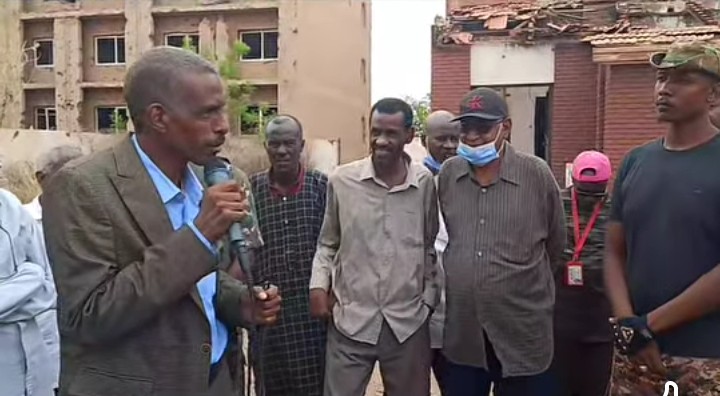
Sudanese historian Dr. Bashir Ahmed Mohi El-Din emphasized that from the very first day of the outbreak of violence on April 15, 2023, with the declaration of rebellion by the Dagalo militias, he was deeply concerned about three foundations due to their location in the direct confrontation zones between the army and the Dagalo militias: the National Records Office, the National Museum, and the National Library. The last two institutions fell into the hands of these barbarians from the very first day.
As soon as Khartoum was liberated on May 25, 2025, Dr. Bashir sought permission from the relevant authorities to assess the extent of the damage inflicted on these institutions. Dr. Bashir, his face etched with pain and sorrow, said, “The greatest shock came when I entered the National Museum and found it completely looted. Nothing remained of the approximately three thousand artifacts.”
As for the National Library, I found it and its books scattered on the floor.
Regarding his assessment of the damage to the National Records Office, Dr. Bashir explained to a reporter from Sudanow magazine that the damage consisted of documents being scattered or damaged by fire, wind, and rain due to the destruction of the buildings and vaults where they were stored. The National Records Office was part of the battlefield due to its proximity to the General Command, so the terrorist militia forces did not hesitate to direct their heavy weapons fire in their attempt to capture the General Command.
Throughout the two years of fighting, the archives remained neglected. But the historian offered a glimmer of hope when he said, “90% of the documents are intact.” This prompted an initiative to rescue these documents, in cooperation with the archives administration, focusing on general cleanliness, removing manuscripts from the floor and returning them to tables for arrangement, and then restoring and repairing any damage.

The National Records Office is considered the oldest archive in the modern era, after the Ottoman Archives and the Egyptian National Archives. The Sudanese Archives, which became the Sudanese National Records, contains approximately 30 million Sudanese documents, as well as some documents pertaining to Egypt and neighboring countries. The documents were organized and indexed, and some were digitized, while the remainder were preserved in paper form, dating from ancient times, the Sudanese kingdoms, the Khedival era, the Mahdist period, the British Mandate, and the post-independence period.
Its importance lies in the fact that it represents Sudan's historical memory, containing rare documents covering all subjects: land deeds, sales contracts, speeches, government and border documents, press records, and various historical manuscripts.
The National Records Office of Sudan was established in 1916 under the British Mandate as the "Sudan Archives Office." It was renamed the "Central Records Office" in 1965, and in 1982 it adopted its current name. This institution is responsible for preserving government records and archives, as well as Sudanese documents, including manuscripts and various other documents, holding more than 30 million documents.
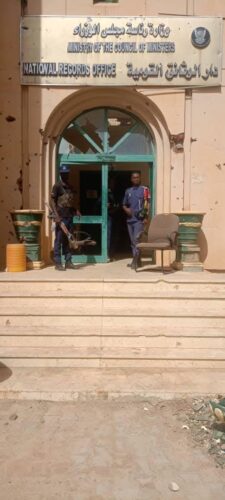
Dr. Bashir considered the loss of even a small portion of these documents a historical crisis, because the loss of any document signifies a failure to establish fundamental Sudanese rights, thus harming future generations both materially and morally.
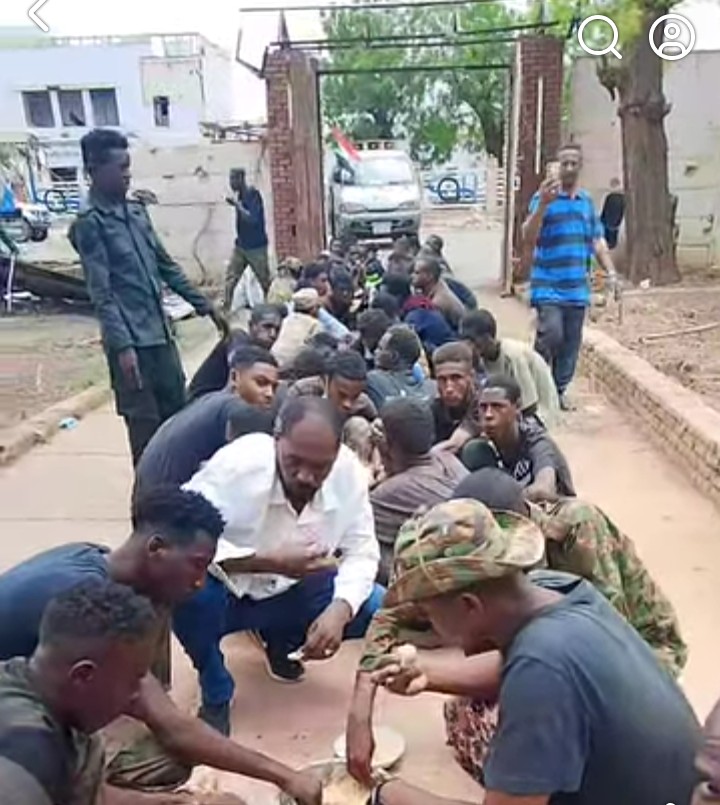
Regarding the inception of his national initiative to revitalize the National Records Office, Dr. Bashir Ahmed Mohi El-Din explained that he launched it through his Facebook page. Young and old alike responded enthusiastically, each contributing what they could, whether food, drink, or hygiene supplies. The number of participants exceeded 500.
The security forces were also present, providing food and water to overflowing. The participants, including volunteers from neighborhoods like Al-Haj Yousif, Al-Jereif, Burri, and Tuti, as well as individual young people, successfully worked for three days to collect documents, remove rubble and broken glass, and dispose of explosive devices. They then restored the National Archives to full functionality in coordination with the administration.
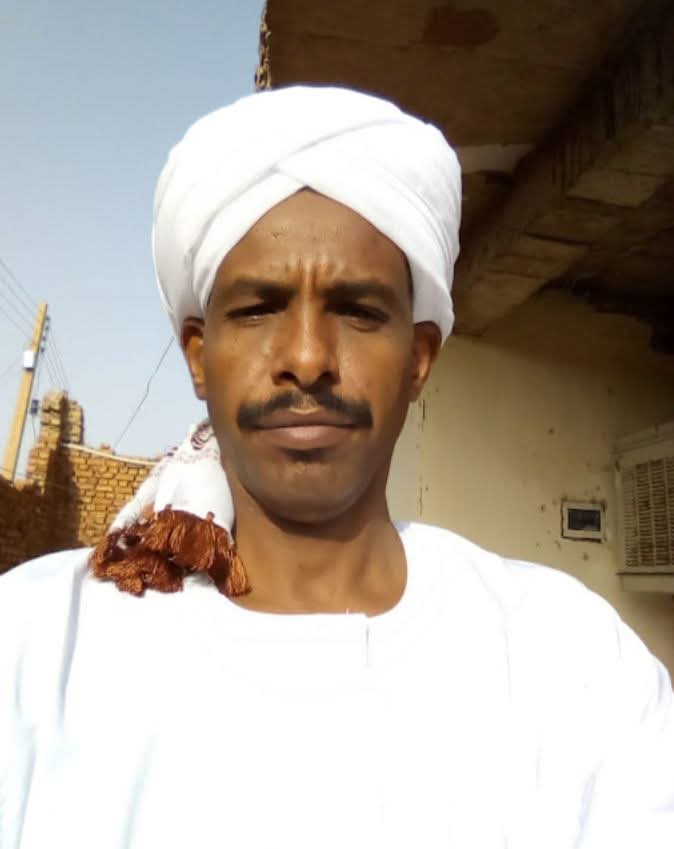
Regarding the technical aspects, Dr. Bashir emphasized that this falls under the responsibility of the National Records Office staff, as the remaining work involves repairing the glass, lighting, and air conditioning. The initiative had no budget; all official and public support was provided through direct contributions. We were determined to work with our bare hands and avoid any financial involvement. All contributions came from volunteers acting on their own initiative, as money can be corrupting. The initiative began with an appeal to young people, and they responded in numbers we never imagined, each bringing what they could.
What happened to the National Archives serves as a wake-up call to every Sudanese: history cannot protect itself. However, this volunteer initiative has proven that the Sudanese people remain committed to their memory and are prepared to sacrifice to safeguard it. Preserving these documents is not merely an artistic endeavor, but a patriotic act that guarantees future generations their right to know their past and defend their rights. The responsibility now rests with the state and official institutions to complete what these young people have begun and safeguard this irreplaceable heritage.
Post your comments
Photo of the Week

Khartoum (Sudanow) — Today, the Muslim Ummah celebrates the blessed occasion of Eid Al-Adha. The editorial family of Sudanow Magazine extends its heartfelt congratulations and best wishes to the great Sudanese people and to the Islamic nation across the world, praying to Almighty Allah to return this occasion upon us for many years to come while our homeland enjoys peace, s...
More-

31 May, 2026
Stories from the Heart of the Battlefield War Extinguishes the Light of Knowledge: Destruction of Education and Rehab
Khartoum (Sudanow) — The war ignited by the rebel militia in Sudan was not merely a military confrontation; it evolved into a humanitarian and civilizational catastrophe that targeted Sudanese people, their security, education, and future. The destruction extended to universities, institutes, and educational centers, extinguishing many of the beacons of knowledge that had, for decades, graduated generations and nurtured ho...

Contact Us

Address: Sudan News Agency (SUNA) Building, Jamhoria Street, Khartoum - Sudan
Mobile:+249 909220011 / +249 912307547