


Asia Abdel-Magid 1943-2023: A Pioneer's Biography of Theater and Childhood in Sudan
07 June, 2026
Khartoum (Sudanow) – When a shell falls on an artist's home, it doesn't just kill a body; it silences the memory of a nation. Asia Abdel-Majid, the first Sudanese female theater director and actress, was not merely a name in the annals of theater; she was a complete artistic and cultural school in herself. She passed away in May 2023, killed by shrapnel from the war, but her artistic and academic legacy remains a testament to a woman ahead of her time, who carried the concerns of theater, childhood, and scouting in her heart and mind.
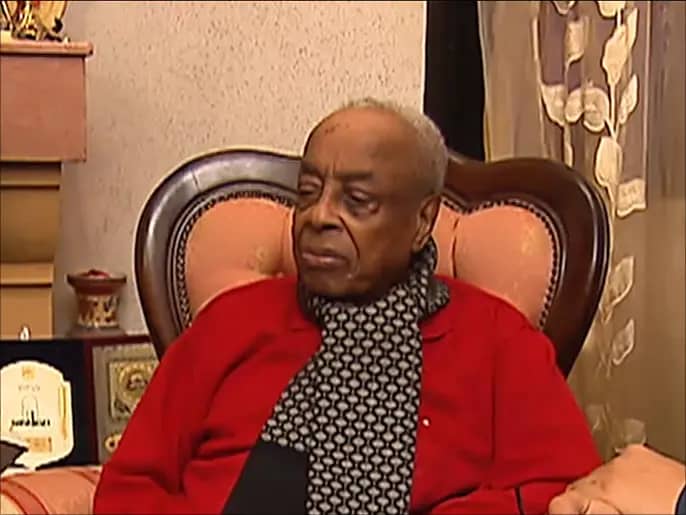
Asia Mohamed Toum El-Tahir El-Ketayabi was born in 1943 in the Al-Umda neighborhood of Omdurman. Her mother was Batoul Mohamed Ahmed El-Sheikh El-Jaali. The El-Ketayabi family has given Sudan many creative figures, such as the poet El-Tijani Youssef Bashir and Abdel-Qader El-Ketayabi. She lived under the care of her relative, Abdel-Majid, who was like a second father to her. Because he was so proud of her, he gave her his surname, and from him she took the name by which she became famous: Asia Abdel-Majid. She studied at Abdel Moneim Primary School in Khartoum, then enrolled in Karari Intermediate School. In 1959, she joined the Teachers' Training College in Omdurman, and after graduating in 1962, she worked as a teacher at the same college. She was interested in the arts, especially theater, which captivated her. In 1968, she went to Egypt to study at the Academy of Theatrical Arts in Cairo, in the acting department, and graduated in 1972, ranking first in her class. Among her classmates were the stars Ahmed Zaki, Ahmed Abdel Warith, Ahmed Maher, Samira Mohsen, Shahira, and Afaf Shuaib.
She then earned a master's degree from the Khartoum International Institute for Arabic Language and Extracurricular Studies. While studying in Cairo, she played a minor role in the play "Al-Bakashin" at the Al-Khayyam Theater, starring the giant of Arab cinema, Farid Shawqi.
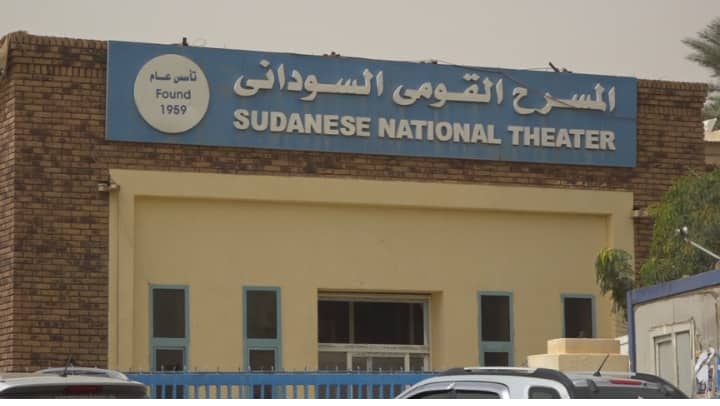
She authored a research paper titled "The History of Sudanese Theater," drawing her information from contemporary playwrights who wrote plays in the 1930s. She conducted research on "Revue Theatre" during her studies at the Academy of Dramatic Arts in Cairo, under the supervision of Rafiq al-Sabban. She also compiled a concise artistic dictionary on theatre, cinema, and music, and has several research papers in the field of childhood. She was a member of the Sudanese Scouts.
Asia Abdel-Majid is the wife of the late poet and Muhammad Miftah al-Fayturi, the poet of Africa and the Sultan of Lovers, as he was known. He even wrote a poem about her.
Asia was also a great admirer of her husband's poetry. In an interview, she said, "In my opinion, Muhammad al-Fayturi is the best Arab and African poet of the twentieth century, without exaggeration, because he connected Arab and African civilizations."
Despite the great fame and glory that al-Fayturi enjoyed and continues to enjoy, it would not have been appropriate to refer to her simply as "the wife of a great man." She herself was not an obscure or ordinary figure to be overlooked. Rather, she was a generous and creative Sudanese woman who served her country and people, sharing with them the joys and sorrows of life.
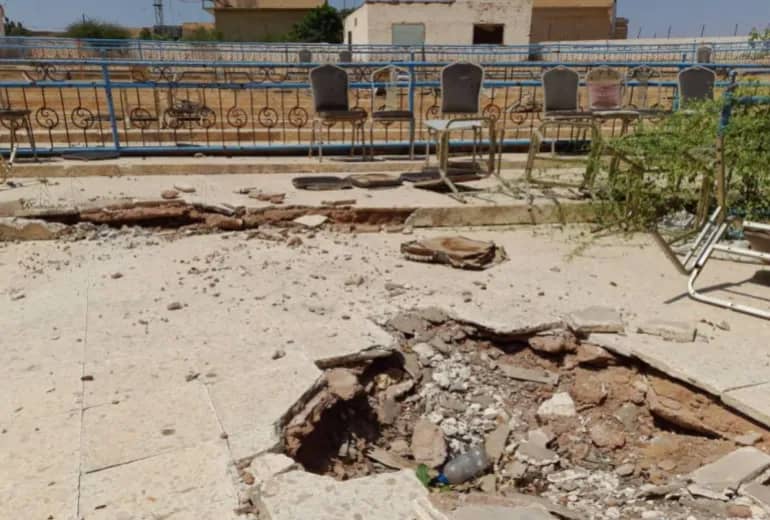
Asia Abdel-Magid died on the evening of May 3, 2023, succumbing to injuries sustained when shrapnel from a shell struck her home in the Sudanese capital, Khartoum. The shelling was a result of attacks by the Rapid Support Forces (RSF) militia, who targeted the area where she lived during clashes.
Asia Abdel-Magid is gone in body, but her ideas and unfinished cultural project remain. She believed that theater was a mirror of society and that childhood was its future, and she dedicated her life to both through research, teaching, and acting. Her death by shrapnel from war confronts us with a painful question: how many minds and talents has Sudan lost in this war? Asia was not just a statistic; she was history personified. Our duty today is to protect what remains of this history: to preserve her research, reprint her dictionary, and teach her biography, so that she does not die twice.
Post your comments
Photo of the Week

Khartoum (Sudanow) — Sudan was deeply saddened today by the passing of one of its most distinguished scholars. Academic and research circles mourned the death of Professor Mohammed Al-Hassan Shayoub, who passed away in Cairo at dawn on Monday, June 8. With his departure, the scientific community has lost a towering academic figure and one of the nation’s most respecte...
More-

08 June, 2026
On the Hearths of the Community Kitchens, the Meaning of Homeland Was Forged
In Arabic, the word Takia originally denotes a place of support and refuge. Historically, it has also referred to spaces dedicated to hospitality, where food is offered to the needy and to travelers. Yet some words outgrow their dictionary definitions, acquiring deeper meanings shaped by extraordinary moments in history. Such is the story of Sudan’s community kitchens during the recent war. As conflict swept across the co...

Contact Us

Address: Sudan News Agency (SUNA) Building, Jamhoria Street, Khartoum - Sudan
Mobile:+249 909220011 / +249 912307547