


Stories from the Frontlines of War. At the Threshold of Waiting: Stories of Families Searching for Their Loved Ones
14 June, 2026
Muhannad
Khartoum (Sudanow) — Wars are not measured only by the number of the wounded and the dead, but by the silent voids they leave in the hearts of the living. These voids are created by forced absence, when a person becomes an unknown number or a name suspended between hope and despair. As the war in Sudan enters its fourth year, one of its most painful tragedies continues to unfold: the growing and increasingly complex issue of missing persons.
Thousands of families live under the heavy burden of waiting, enduring harsh realities and severe psychological distress. Mothers grieve, fathers struggle to remain patient, wives live in uncertainty, sisters worry endlessly, and children wait anxiously for the return of their loved ones.
Amid this painful reality, Sudanow visited families of missing persons in an effort to convey their message to the international community and humanitarian organizations, appealing for assistance in locating the missing and mobilizing all possible resources to help reunite families and restore hope to their lives. Through its initiative to document the scale of suffering, Sudanow continues its meetings with affected families.
The Story of Mahand Abdelwahab Hassan
The first story comes from Al-Mundhir, brother of the missing Mahand Abdelwahab Hassan, 42 years old, a resident of Al-Sabeel, Block 8, Omdurman. Mahand is married and the father of six children between the ages of three and twelve. He worked as an electrical technician.
At the outbreak of the war, the family relocated to their extended family home in Al-Thawra, considered safer than their neighborhood in Omdurman. Mahand would travel daily between Al-Thawra and Al-Banorama in northern Omdurman seeking work.
On April 28, 2024, after completing a job in Souq Sabreen, he decided to visit his house in Al-Sabeel to check on the property and search for his rickshaw, which had gone missing at the beginning of the war. He never returned.
According to Al-Mundhir, the family filed a missing-person report with all relevant authorities and checkpoints and obtained an official missing-person certificate. They also contacted Zain telecommunications company to trace his last phone activity.
Shortly afterward, an unknown individual called using Mahand’s phone number and asked whether Mahand was affiliated with the Sudanese Armed Forces or the Rapid Support Forces, then abruptly ended the call.
The last confirmed sighting of Mahand was in Souq Sabreen, where acquaintances saw him carrying his work tools before heading toward Al-Sabeel. Al-Mundhir says the family has been deeply affected by his disappearance, particularly his mother, Aroua Ahmed Amin, his wife, and his eldest daughter. Despite the anguish, the family continues to hold onto hope and faith that Mahand will one day return home.
A Family's Double Tragedy
Mohamed Al-Samani Abdelkarim Babiker shared with Sudanow the suffering of another family that lost two of its young men.
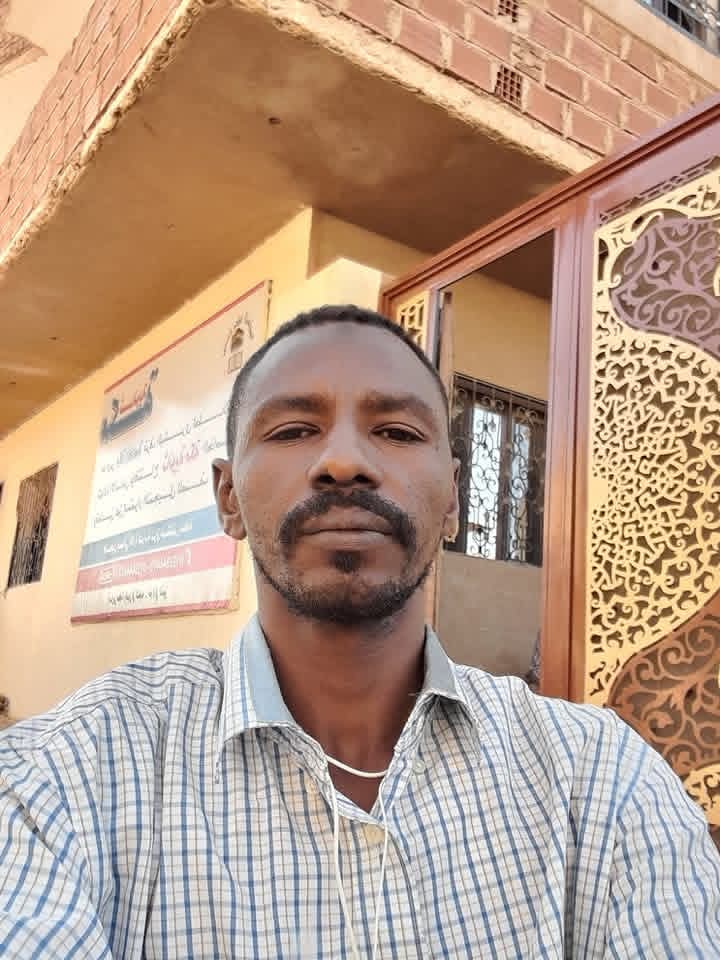
The first is Musa Hassan Musa Al-Sheikh Al-Samani, 43 years old, a resident of Al-Kalakla Al-Qubba in southern Khartoum. Musa worked as a bus driver and is married with two children.
According to Mohamed, Musa was taken from his home during the events surrounding the recapture of Khartoum, as armed members of the rebel militia were withdrawing from the area. After he refused to hand over his vehicle, they forcibly took both him and the bus.
His disappearance has left the family living in constant anxiety and emotional distress. Yet hope remains alive, especially for his mother, Madina Al-Bashir Abdelqader, who continues to await his return.

Mohamed then recounted the story of another missing cousin, Alaa Al-Din Al-Waseela Mohamed Ahmed Al-Safi, 22 years old, from Tayba Al-Hassanab in Jabal Awliya locality, south of Khartoum.
Alaa Al-Din earned a modest living through small-scale informal work. He was reportedly detained by militia members at a Starlink internet access point on accusations of cooperating with military intelligence.
Since his arrest, the family has endured immense hardship and sorrow. They searched for him in numerous detention facilities and improvised prisons reportedly established in residential areas, including sites in Riyadh and Soba. Despite repeated efforts, they have found no trace of him.
A Small Glimpse of a Much Larger Tragedy
These stories represent only a fraction of a far larger crisis. The list of missing persons continues to grow, and many families remain trapped between uncertainty and hope. Sudanow continues to publish the stories of the missing in the hope that they may contribute to locating them or shedding light on their fate.
The publication also renews its appeal to international, regional, and national organizations, human rights groups, and all institutions concerned with prisoners' and detainees' rights to give urgent attention to these grieving families, who continue to cling to the hope of seeing their loved ones again.
Conclusion
The tragedy of missing persons is an urgent humanitarian issue requiring serious and immediate action from the international community, human rights organizations, and all bodies committed to protecting human dignity.
The continuation of enforced disappearances does not merely deprive families of their loved ones; it threatens the social fabric and deepens wounds that become increasingly difficult to heal with time. As these families hold onto a fragile thread of hope, the moral and humanitarian obligation remains clear: to uncover the fate of the missing, end the suffering of endless waiting, and restore justice to those affected, so that absence does not become an open-ended destiny with no conclusion.
Post your comments
Photo of the Week

Sudanese Student Wins International Research Award and Presents Digital Nursing Project at Royal College of Nursing Conference in Britain Khartoum – Sudanow In a country where the healthcare sector is facing mounting crises and war has placed hospitals, healthcare workers, and patients under immense pressure, a Sudanese nursing student has chosen to begin with a question ...
More-

11 October, 2026
Stories from the Heart of the Battlefield On World Teachers’ Day: The Sudanese Teacher — Achievements Against All Odds
Teachers carried their chalk through the rubble and kept working — Resilience War closed schools, but examinations continued — A Mission Low salaries and mounting hardships — The Price of the Profession Khartoum (Sudanow) — Teachers around the world are marking World Teachers’ Day this week, an occasion that carries messages of appreciation and gratitude for those who carry the torch of knowledge...

Contact Us

Address: Sudan News Agency (SUNA) Building, Jamhoria Street, Khartoum - Sudan
Mobile:+249 909220011 / +249 912307547