


After Three Years of Forced Displacement: Ali Shomo… The Return of a Media Icon
14 June, 2026
Official Reception by the Government of Hope Reflects State Recognition of National Figures
Al-Aiser: The Return Marks a Milestone in the Journey of National Liberation
Shomo Criticizes the International Community’s Failure to Do Justice to Sudan
Awad: The Cruelty of War Cannot Diminish the Status of Those Who Shaped the Nation’s Consciousness
Khartoum (Sudanow)
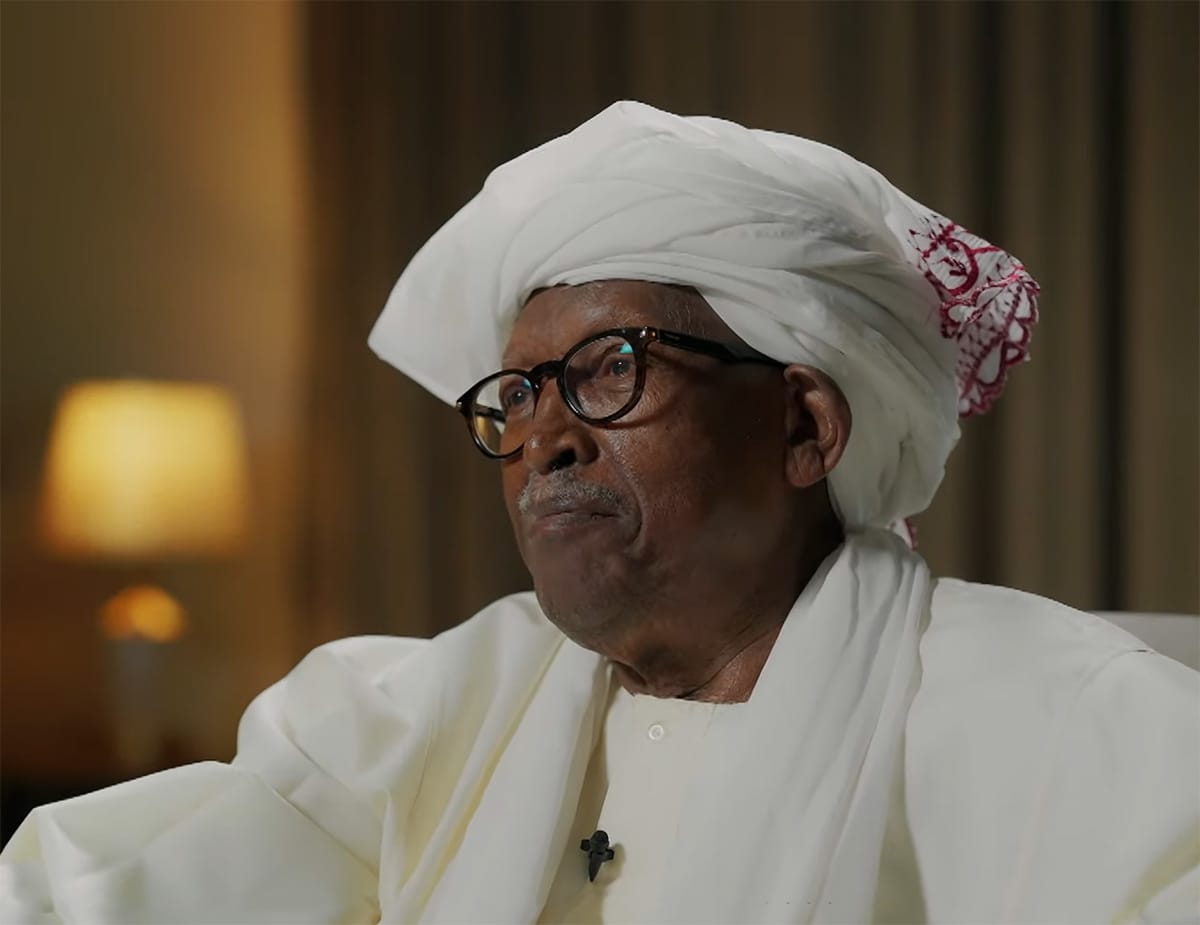
The return of Professor Ali Mohamed Shomo to Khartoum was far more than a personal homecoming for a veteran media figure after nearly three years away from his homeland. It emerged as a national event of considerable political, cultural, and humanitarian significance, reminding Sudanese society of the harm inflicted upon many of its national icons during the war triggered by the Rapid Support Forces (RSF).
After spending nearly three years, most of them in Saudi Arabia, Professor Shomo once again set foot in Khartoum—the city he had been forced to leave after his home in the Al-Safiya district of Bahri was repeatedly stormed by militia members who paid little regard to his academic stature, national standing, or decades-long contribution to media and culture in Sudan and the Arab world.
Loyalty and Recognition
Professor Shomo's return was marked by a remarkable reception at Khartoum International Airport, reflecting the deep appreciation Sudanese people hold for one of their most distinguished media pioneers.
Among those welcoming him were Minister of Foreign Affairs and International Cooperation Ambassador Mohi El-Din Salim, Minister of Culture, Information, Tourism and Antiquities Khalid Al-Aiser, Undersecretaries Dr. Graham Abdel Gadir and Somaya Al-Hadi, the Chairman of the Board of Trustees of the Tayeb Salih Prize, along with numerous journalists, intellectuals, and public figures.
The reception went beyond protocol. It carried profound symbolism, reflecting the state's commitment to honoring its national figures and restoring dignity to those who were forcibly displaced by the war. It also conveyed a broader message: that the restoration of Khartoum is not merely about rebuilding infrastructure but also about restoring the people and national symbols who have shaped Sudan’s collective consciousness for decades.
The event further signaled the beginning of a new phase of national recovery and the return of Sudanese expertise and talent to contribute to rebuilding what the war destroyed.
A Distinguished Media Legacy
Professor Ali Mohamed Shomo is widely regarded as one of the leading pioneers of media in Sudan and the Arab world. His unique career has combined professional journalism, media management, and academic scholarship.
Born in the city of Al-Nuhud in North Kordofan, Shomo received his early education in Sudan before continuing his studies at Al-Azhar University in Egypt. He later pursued postgraduate studies in the United Kingdom, earning master's and doctoral degrees in media and mass communication, in addition to specialized qualifications in education, psychology, radio, and television broadcasting.
He began his professional journey as a broadcaster at the Sudan Radio and Television Corporation in Omdurman and steadily rose through leadership positions to become Director of Sudan Radio, media advisor, and Undersecretary of the Ministry of Culture and Information.
Beyond administration, Shomo played a significant role in media education across Sudanese and Arab universities, helping train generations of journalists and broadcasters who later became leading figures in the profession both inside and outside Sudan.
He also held several constitutional and ministerial positions, including Minister of State for Youth and Sports and Minister of Culture and Information. He chaired the Higher Council for Mass Sports and Youth Welfare and later led the National Press and Publications Council, contributing significantly to the development of Sudan’s media institutions.
On the regional level, Shomo's name became closely associated with the development of media in the United Arab Emirates. He was among the pioneering figures who helped establish and develop television broadcasting in the country and played a foundational role in building Abu Dhabi Television, making him one of the architects of modern television media in the UAE.
The Triumph of the National Idea
During the reception ceremony, Minister Khalid Al-Aiser described Professor Shomo as one of Sudan’s most prominent cultural and media icons.
He stated that Shomo’s return carries powerful symbolic significance and reflects the recovery currently taking place in Khartoum. It also represents a successful example of voluntary return following the liberation of the capital from militia control.
Al-Aiser noted that Professor Shomo had witnessed the earliest days of the war and the militia’s presence in Khartoum, yet remained steadfast in defending the national idea against political and ideological attempts at manipulation carried out under misleading slogans.
According to the minister, Shomo’s return also represents an important milestone in moving beyond exclusionary, regional, and divisive narratives. His national positions in support of the Sudanese Armed Forces, Al-Aiser said, reflect the collective conscience of the Sudanese people and will continue to inspire future generations.
Praise for the Armed Forces
Speaking with evident gratitude and emotion, Professor Shomo expressed his profound happiness at returning home.
He praised the performance of the Sudanese Armed Forces and allied forces during the war, noting that many people had doubted the possibility of reclaiming Khartoum after large parts of the capital had fallen under rebel control.
“We never imagined that we would return to Khartoum after leaving it,” he said.
Shomo explained that despite living abroad, he had closely followed developments in Sudan until victory was achieved and the capital was liberated.
Reflecting on the destruction caused by the conflict, he described the scale of devastation as almost unimaginable. He also criticized what he viewed as the international community’s failure to adequately support Sudan and respond fairly to the attacks it endured.
Rejecting the justifications advanced by the militia for launching the war, he argued that the slogans used were merely pretexts for the destruction of the Sudanese state.
Professor Shomo also praised the role played by national media during what he described as the “War of Dignity” and called upon the government to prioritize the media sector during reconstruction efforts, emphasizing its role in protecting the state and strengthening national awareness.
A National Event
Dr. Abdel Azim Awad, veteran broadcasting expert and former Secretary-General of the National Press and Publications Council, believes that Professor Shomo’s return transcends its personal dimension and should be regarded as a national event carrying deep political, cultural, and symbolic significance.
Awad noted that during the early days of the war, Shomo endured severe pressure while remaining in his home in Al-Safiya, Bahri. Militia members reportedly raided the house repeatedly despite his determination not to leave.
Eventually, he was forced into displacement. His home was subsequently looted, resulting in the loss of an extensive personal library, rare academic works, historical documents, and research materials representing an important part of Sudan’s media heritage.
According to Dr. Awad, Professor Shomo is not merely a distinguished media personality but one of the true founders of modern Sudanese media. He also left a significant mark on the UAE’s media experience, earning the trust and respect of the Emirati leadership during the era of the late Sheikh Zayed bin Sultan Al Nahyan and contributing to the establishment of leading media institutions that became part of the UAE’s broader development project.
Awad added that the official and popular celebration of Shomo’s return reflects Sudanese appreciation for their national figures and sends a clear message: no matter how harsh war becomes, it cannot erase a lifetime of service nor diminish the stature of those who helped shape the nation’s consciousness.
Conclusion
Whatever the circumstances, the return of Professor Ali Mohamed Shomo represents the return of a national memory and a voice that has remained deeply embedded in the consciousness of Sudanese and Arab audiences for decades.
His homecoming stands as further evidence of the failure of attempts to uproot national symbols from their homeland and a victory for knowledge, culture, and media over violence and destruction.
The image of Ali Shomo being welcomed back to Khartoum will remain one of the most powerful symbols of a new era—an era defined by loyalty to national icons and the restoration of the Sudan that generations have known throughout history.
Post your comments
Photo of the Week

Khartoum, (Sudanow)_ Until recently, Khartoum Stadium was under the fire of war, in the middle of a volatile area. Because of its geographical location, it sits in a district packed with universities, markets, bus terminals, and high-rise buildings, whose facades still bear the marks of war. Yet in a short time, the process of bringing the stadium back to life was completed, so i...
More-

14 June, 2026
Stories from the Frontlines of War. At the Threshold of Waiting: Stories of Families Searching for Their Loved Ones
Khartoum (Sudanow) — Wars are not measured only by the number of the wounded and the dead, but by the silent voids they leave in the hearts of the living. These voids are created by forced absence, when a person becomes an unknown number or a name suspended between hope and despair. As the war in Sudan enters its fourth year, one of its most painful tragedies continues to unfold: the growing and increasingly complex issue ...

Contact Us

Address: Sudan News Agency (SUNA) Building, Jamhoria Street, Khartoum - Sudan
Mobile:+249 909220011 / +249 912307547