


Joint Committee Convenes in Moscow Sudan and Russia: A Strategic Partnership
28 June, 2026
Important issues discussed by the Consultative Committee... Continuous coordination.
Russia reaffirmed its support for Sudan's unity... A consistent position.
Khartoum looks forward to a greater Russian role in reconstruction... An expected contribution.
Al-Burhan to visit Russia next October... Strengthening bilateral relations.
The eleventh session of the Sudan–Russia Political Consultations Committee convened in the Russian capital, Moscow, marking another milestone in the long-standing relations between the two countries and reflecting their shared commitment to expanding cooperation into broader strategic horizons amid rapidly evolving regional and international developments and common challenges.
The Sudanese delegation was led by Ambassador Muawia Osman Khalid, Undersecretary of the Ministry of Foreign Affairs and International Cooperation, accompanied by Sudan's Ambassador to the Russian Federation, Mohamed Al-Ghazali Siraj. The Russian delegation was headed by Deputy Foreign Minister Georgy Borisenko, in the presence of Russia's Ambassador to Sudan, Andrey Chernovol.
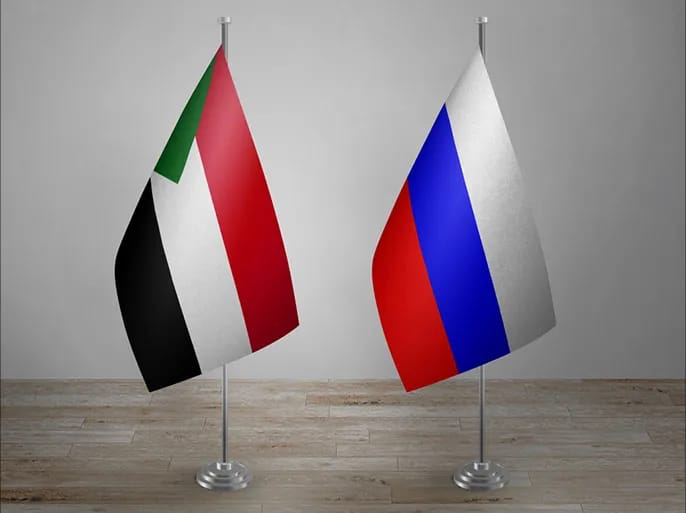
The talks covered bilateral relations extensively, reviewing cooperation in political, economic, and cultural fields, while exchanging views on regional and international issues of mutual concern, as Khartoum and Moscow continue to strengthen their political and economic partnership based on shared interests.
Political Consultations Committee
The Sudan–Russia Political Consultations Committee is one of the principal diplomatic mechanisms governing bilateral relations. Its sessions are held periodically, alternating between Khartoum and Moscow, under the leadership of senior officials from both foreign ministries.
The committee reviews and evaluates bilateral cooperation, follows up on the implementation of agreements and memoranda of understanding in areas such as the economy, energy, transport, and culture, coordinates positions on regional and international issues, and prepares joint participation in major events, particularly the Russia–Africa Summits.
The convening of the current session underscores the continuity of regular political dialogue as a key instrument for advancing bilateral relations and promoting common interests.
Seven Decades of Relations
The eleventh session gained particular significance as it coincided with the 70th anniversary of diplomatic relations between Sudan and Russia. Both sides exchanged congratulations and reaffirmed the deep historical ties linking the two nations.
Ambassador Muawia Osman Khalid congratulated the Russian Federation on its National Day and confirmed that Chairman of Sudan's Transitional Sovereignty Council, General Abdel Fattah Al-Burhan, is scheduled to participate in the Third Russia–Africa Summit, to be held in Moscow next October.
He also expressed Sudan's hope to host the next session of the Political Consultations Committee in Khartoum, reflecting the continuity of political dialogue between the two countries.
Developments in Sudan
During the consultations, Ambassador Muawia Osman Khalid briefed the Russian side on developments in Sudan, outlining the military advances achieved by the Sudanese Armed Forces against the Rapid Support Forces (RSF) across various fronts.
He also reviewed government efforts aimed at restoring peace and stability, leading to elections, highlighting the Sudanese-Sudanese dialogue process and the return of large numbers of displaced citizens to their home areas, particularly following the relocation of government institutions back to Khartoum and the gradual normalization of life in the capital.
The Undersecretary reaffirmed Sudan's commitment to upgrading relations with Russia to the level of a strategic partnership through intensified political consultations, high-level exchanges, and stronger mutual interests.
He praised the close coordination between the two countries in international forums and their reciprocal support for candidates in international organizations.
Sudan also expressed its aspiration for an active Russian contribution to post-war reconstruction, based on the cooperation protocol signed during last year's Joint Ministerial Committee meeting.
The Sudanese side reviewed progress in implementing the committee's recommendations and emphasized the importance of activating agreements in transport, infrastructure, energy, oil, agriculture, and other vital sectors.
It also welcomed progress toward establishing a sister-city partnership between Saint Petersburg and Port Sudan, as well as growing cooperation with the Republic of Tatarstan.
Cultural and Scientific Cooperation
The discussions extended beyond politics and economics to include cultural, educational, scientific, and humanitarian cooperation.
The Sudanese delegation expressed appreciation for Russia's continued scholarship program for Sudanese students, particularly in light of the challenges facing Sudan's education sector in recent years.
The delegation also praised the work of Russian archaeological missions in Sudan in excavation, restoration, and preservation of Sudan's cultural heritage, as well as their contribution to recovering artifacts looted during the war.
Sudan further welcomed Russia's resumption of medical visas for Sudanese patients, noting that Russia has become one of the preferred destinations for medical treatment.
Nearly 20,000 Sudanese citizens benefited from Russian medical services between 2021 and 2025.
The Sudanese side also highlighted increasing Russian exports to Sudan in electronics, electrical engineering, and medical equipment, reflecting the growing diversity of bilateral cooperation.
An Important Partner
Deputy Russian Foreign Minister Georgy Borisenko described Sudan as one of Russia's key partners in Africa and the Middle East, citing the high level of political dialogue and ongoing coordination in international forums.
He expressed Russia's appreciation for Sudan's supportive positions on several international issues, emphasizing that both countries face similar challenges requiring closer cooperation.
Borisenko also pointed to the significant increase in bilateral trade in recent years and announced a 30 percent increase in Russian scholarships for Sudanese students next year, raising the total to 140 scholarships, with the possibility of further expansion.
He reaffirmed Russia's unwavering support for Sudan's sovereignty, territorial integrity, and legitimate state institutions, including the Sovereignty Council, the Council of Ministers, and other national institutions.
Messages and Implications
According to observers, the eleventh session of the Sudan–Russia Political Consultations Committee conveyed several important political messages.
Foremost among them was the determination of both countries to maintain political dialogue and coordination despite rapidly changing regional and international circumstances.
The discussions also reflected Khartoum's desire to diversify its international partnerships and benefit from Russian expertise and investment during the reconstruction phase.
For Moscow, Sudan remains a strategic partner on the Red Sea and an important gateway for expanding Russia's presence in Africa.
Conclusion
Ultimately, the 70th anniversary of Sudanese-Russian diplomatic relations has reaffirmed that ties between the two countries have evolved beyond traditional cooperation into a comprehensive, multidimensional partnership encompassing politics, economics, culture, education, and healthcare.
This gives the outcomes of the eleventh session particular significance in shaping the future course of bilateral cooperation in the years ahead.
Post your comments
Photo of the Week

Cairo (Sudanow) The story began with a chance encounter on the afternoon of the 16th of this month. As I stepped out of my residence in Cairo, I noticed a young Sudanese woman, no older than twenty-four, hurrying through a narrow street crowded with pedestrians. I stepped aside to avoid colliding with her and jokingly remarked, "Take it easy; this is Cairo, not Khartoum." She ap...
More-

28 June, 2026
Stories from the Heart of the Battlefield On the Threshold of Waiting: Stories of Families Searching for Their Missing
Khartoum – Sudanow Wars are not measured solely by the numbers of the wounded and the dead; they are also measured by the silent voids they leave in the hearts of the living. These voids are created by forced absence, when a person becomes an unknown number or a name suspended between hope and despair. As Sudan’s war enters its fourth year, one of its most painful tragedies continues to unfold: the issue of missing persons,...

Contact Us

Address: Sudan News Agency (SUNA) Building, Jamhoria Street, Khartoum - Sudan
Mobile:+249 909220011 / +249 912307547