


War Sponsors and the Silence of the World: Is El Obeid Destined to Pay the Price
28 June, 2026
Introduction: When Disaster Becomes a Repeating Pattern
The ongoing military and media mobilization around the city of El Obeid cannot be viewed as an isolated development or merely another battle in Sudan’s war. Rather, it bears the hallmarks of a familiar scenario that Sudan has already witnessed in Wad Madani and later in El Fasher, where media campaigns and military build-ups preceded widespread destruction, mass displacement, and grave violations. In each case, local communities paid the price while the international community largely limited itself to expressions of concern and observation.
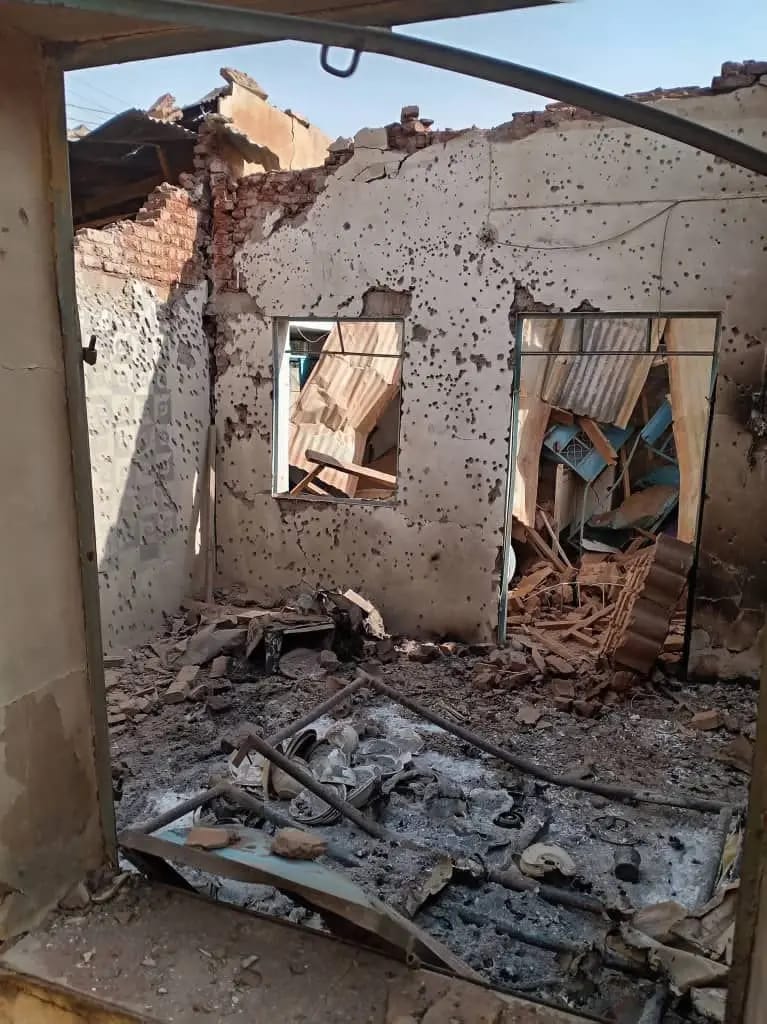
The question today is not whether El Obeid will come under attack, but whether the international community will continue treating the Sudanese tragedy as a routine crisis that requires neither deterrence nor meaningful intervention, even as all the warning signs are plainly visible.
First: Wad Madani – The Precedent That Opened the Door
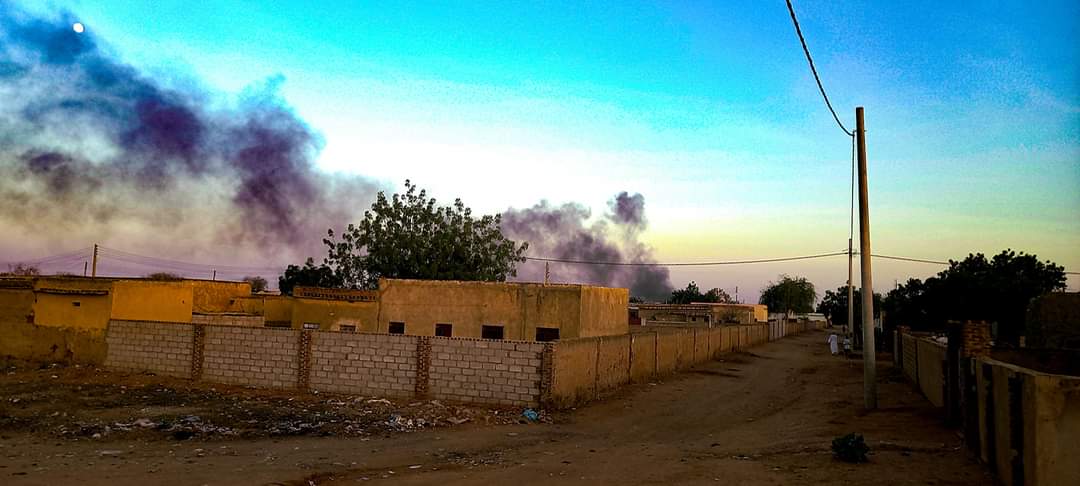
When Wad Madani fell, Sudan lost far more than a strategic city. The country was deprived of one of its most important economic, agricultural, and service hubs. The consequences included massive waves of displacement, the collapse of production and service networks, and a significant expansion of the humanitarian crisis. The city had also served as a vital lifeline supplying Khartoum during its occupation.
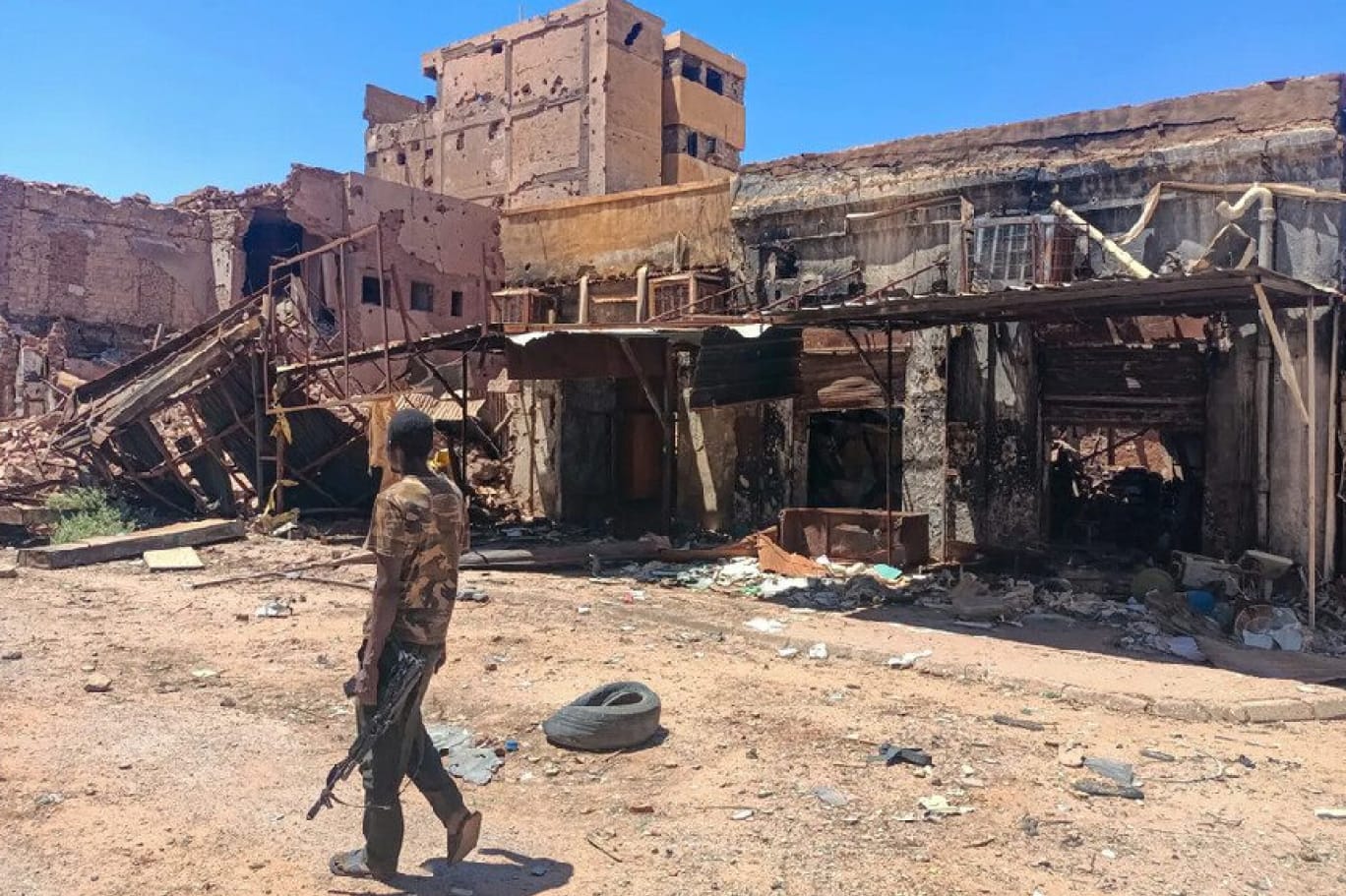
Despite the magnitude of the disaster, those responsible for the violations faced no meaningful international deterrence. This sent a dangerous message: that altering realities through armed force could proceed with little political or legal consequence.
Second: El Fasher – A Crime Committed Before the Eyes of the World
In El Fasher, the pattern was repeated on an even more tragic scale. A prolonged siege, systematic deprivation, continuous shelling, thousands of casualties and wounded civilians, mass displacement, and widespread abuses against non-combatants.
Most troubling of all, these events unfolded in full view of the United Nations and major international and regional actors. Condemnations and warnings were issued, yet meaningful measures capable of halting the escalation or holding perpetrators accountable never materialized.
El Fasher has become a painful symbol of the international system’s failure to protect civilians when the victims are Sudanese, and a stark illustration of how the country risks being gradually fragmented.
Third: Why El Obeid?
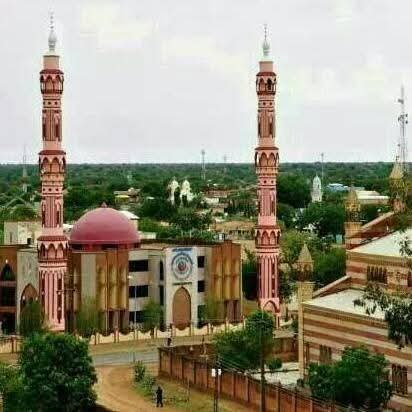
El Obeid occupies a pivotal strategic position linking Darfur, Kordofan, and central Sudan. It is also a critical transportation and logistical hub.
Any attempt to seize the city would therefore represent more than a military gain. It would constitute an effort to reshape battlefield realities and political balances ahead of any future settlement.
This is what makes the current mobilization so dangerous. It is not merely about a military confrontation but about creating new facts on the ground that may later be leveraged in political negotiations and post-war arrangements.

Fourth: Major Risks and Concerns
1. A New Humanitarian Catastrophe
Any large-scale confrontation in or around El Obeid could force hundreds of thousands of civilians to flee, in a region already suffering from severe humanitarian and economic pressures and prolonged exhaustion.
2. State Exhaustion and Resource Depletion
A protracted war continues to drain public resources, weaken the national currency, and undermine essential services, thereby deepening civilian suffering and limiting the state’s capacity to respond to emergencies.
3. Institutionalizing Impunity
If the scenarios of Wad Madani and El Fasher are repeated without accountability, the message will once again be clear: targeting cities and civilians can become an acceptable means of achieving military and political objectives. This danger is compounded by the failure of political platforms and by misleading narratives that seek to justify the war through false equivalence.
4. Imposing a Distorted Settlement
Perhaps the greatest danger lies in using military developments to impose a political settlement based on force rather than justice and stability. Such an outcome would likely sow the seeds of future conflict rather than resolve the current one, while posing serious risks to national unity and Sudan’s long-term security.
Fifth: What Can the State Do?
First: Move the Battle to the Diplomatic Arena
The issue of El Obeid should be proactively elevated to the international stage through engagement with the United Nations Security Council, the African Union, the League of Arab States, and international partners, while holding those supporting escalation accountable for their political and moral responsibilities.
Second: Build a Comprehensive Legal File
All forms of military and logistical support, as well as violations committed against civilians, should be systematically documented and incorporated into legal dossiers for future use before relevant international mechanisms.
Third: Challenge the Counter-Narrative
Modern wars are not won by weapons alone; they are also fought through narratives. Sudan must engage international media and global public opinion with facts, figures, documented testimonies, and verifiable evidence.
Fourth: Mobilize the National Front
The protection of cities begins not only at military frontlines but also through national unity, social cohesion, and the collective rejection of turning civilians into fuel for conflict.
A Crisis of International Conscience
What makes Sudan’s experience particularly painful is not only the scale of bloodshed and destruction, but also the indifference with which Sudanese suffering is often met. While regional and international meetings continue to multiply, civilians endure immense hardship as though their tragedy were merely a marginal detail in a larger geopolitical picture.
The Sudanese people have already paid a heavy price in Wad Madani and El Fasher, and many now fear that El Obeid may suffer the same fate. Yet the gravest danger is not the fall of another city or the loss of military ground; it is the possibility that international silence becomes an indirect partner in perpetuating and reproducing the tragedy.
Today, El Obeid is more than a threatened city. It is a new test of the credibility of regional institutions and their commitments to safeguarding nations, a test of the international community’s willingness to protect civilians, and a test of Sudanese determination to prevent the repetition of a scenario that devastated Al Jazirah, ravaged Darfur, and now threatens the heart of Kordofan.
Conclusion
The Sudanese tragedy has become one of the world’s largest humanitarian crises, yet it continues to receive only a fraction of the political, media, and humanitarian attention it deserves. Millions of displaced persons and refugees, tens of thousands of victims, destroyed towns and villages, a collapsing economy, and a social fabric being torn apart day after day—all while the international, Arab, and African conscience remains largely confined to expressions of concern, crisis management, and observation rather than serious efforts to end the war.
The real danger lies not merely in the possible fall of another city or the expansion of the conflict, but in the world becoming accustomed to Sudanese suffering. When statistics replace human beings, when numbers replace personal stories, and when diplomatic statements replace meaningful action, the result is not simply political failure but a profound moral collapse that implicates the international system itself.
More alarming still is that the devaluation of Sudanese lives will not remain confined within Sudan’s borders. Continued warfare and instability will generate further displacement and irregular migration, increase border fragility, threaten the security of the Red Sea, the Sahel, and the Horn of Africa, and contribute to broader regional instability whose costs will eventually be borne by all.
Crises that are allowed to grow unchecked on the periphery do not remain there. Over time, they evolve into regional and international threats, igniting cross-border instability and insecurity.
Today, El Obeid is not merely a city under threat; it is a final warning bell. If the world failed in Wad Madani, where the subsequent occupation engulfed much of Al Jazirah State, and hesitated in El Fasher despite siege, starvation, and the erosion of human dignity, then the repetition of the same tragedy in El Obeid would send a dangerous message: that Sudanese lives are valued less in the calculations of international politics and institutions.
Such an outcome would not be an indictment of Sudan alone. It would stand as a harsh judgment on the contemporary international conscience and its inability to protect innocent civilians when they are far removed from the centers of influence and global attention.
The question therefore remains before the world, the Arab region, and Africa alike: How many more Sudanese cities must bleed? How many more children, women, and elderly people must perish before sympathy is transformed into action, concern into responsibility, and condemnation into meaningful deterrence?
Until then, the silence itself risks becoming a form of collective responsibility.
What a tragic commentary on the state of contemporary values, balances of power, and the promises embodied in international charters and institutions.
“History will ultimately judge not only those who perpetrated these crimes, but also those who possessed the means to prevent them and chose instead the comfort of silence and observation.
Post your comments
Photo of the Week

Cairo (Sudanow) The story began with a chance encounter on the afternoon of the 16th of this month. As I stepped out of my residence in Cairo, I noticed a young Sudanese woman, no older than twenty-four, hurrying through a narrow street crowded with pedestrians. I stepped aside to avoid colliding with her and jokingly remarked, "Take it easy; this is Cairo, not Khartoum." She ap...
More-

28 June, 2026
Stories from the Heart of the Battlefield On the Threshold of Waiting: Stories of Families Searching for Their Missing
Khartoum – Sudanow Wars are not measured solely by the numbers of the wounded and the dead; they are also measured by the silent voids they leave in the hearts of the living. These voids are created by forced absence, when a person becomes an unknown number or a name suspended between hope and despair. As Sudan’s war enters its fourth year, one of its most painful tragedies continues to unfold: the issue of missing persons,...

Contact Us

Address: Sudan News Agency (SUNA) Building, Jamhoria Street, Khartoum - Sudan
Mobile:+249 909220011 / +249 912307547