


Doaa Kamal: A Sudanese Dream That Defeats Time, Cost, and Accuracy Challenges in Brain Tumor Diagnosis
28 June, 2026
Cairo (Sudanow)
The story began with a chance encounter on the afternoon of the 16th of this month. As I stepped out of my residence in Cairo, I noticed a young Sudanese woman, no older than twenty-four, hurrying through a narrow street crowded with pedestrians. I stepped aside to avoid colliding with her and jokingly remarked, "Take it easy; this is Cairo, not Khartoum." She apologized politely and replied, "If you knew the reason, you would excuse me," before continuing toward the building's elevator.
Only a few minutes later, a man in his sixties approached me carrying a box of sweets. "That is my daughter," he said proudly. "She has just been announced as the winner of a Sudani innovation award and is rushing upstairs to share the good news with her mother, who played a major role in her success." He offered me a piece of candy, and I agreed to accept it on one condition—that he arrange an interview with his daughter for Sudanow Magazine five days later. He gladly accepted.
On the appointed day, engineer Doaa Kamal Mohamed Al-Hassan arrived with her father. After taking her seat, she explained that she had recently been appointed as a Teaching Assistant at the Faculty of Mathematical Sciences and Informatics, University of Khartoum. She added that her graduation project was the same project that had won second place in this year's Sudani Innovative Projects Competition.
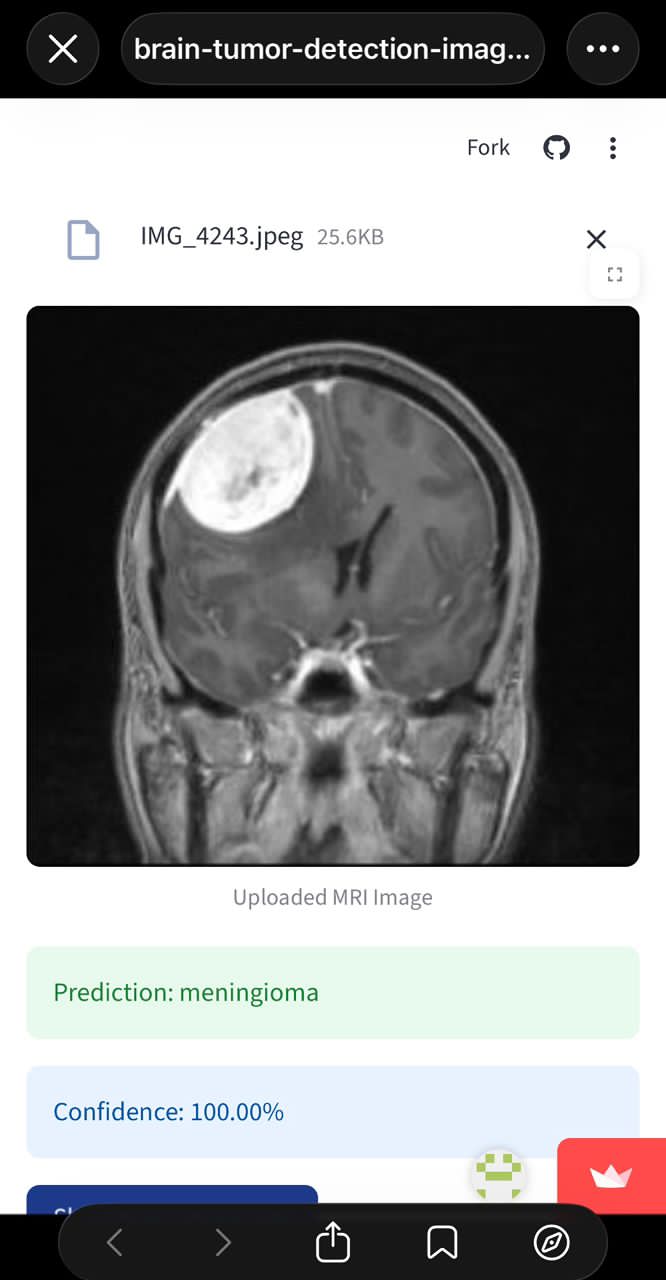
Doaa explained that the project aims to develop an intelligent system based on deep learning techniques to analyze and classify brain tumors from MRI (Magnetic Resonance Imaging) scans with high accuracy. The system is designed as a decision-support tool for physicians, significantly reducing image analysis time while emphasizing that the final medical diagnosis remains solely the responsibility of the specialist.
She noted that the project was developed in collaboration with two fellow students in response to the critical importance of early brain tumor detection, which greatly improves treatment outcomes and reduces complications. Since interpreting MRI scans requires considerable time and specialized expertise, the team employed artificial intelligence techniques to accelerate image analysis and provide diagnostic indicators that help physicians achieve faster and more accurate results.
Regarding the award, Doaa said that the team submitted the project to the Sudani Competition for Entrepreneurial and Inspirational Projects, an initiative aimed at discovering promising innovations and providing funding, networking opportunities, and support for their development. The prize, worth 9 million Sudanese pounds, will be invested entirely in advancing the project by improving the current AI model, expanding the training dataset, developing a more professional user interface, conducting further testing to enhance system performance, and exploring partnerships with healthcare institutions and specialists to prepare the system for practical implementation while strengthening the team's capabilities.
She explained that reviewing MRI scans manually can take considerable time, particularly in complex cases requiring additional images or consultations with other specialists—a delay that may be critical for patients. Although physicians are highly skilled, heavy workloads and the large number of similar cases can occasionally lead to minor human errors.
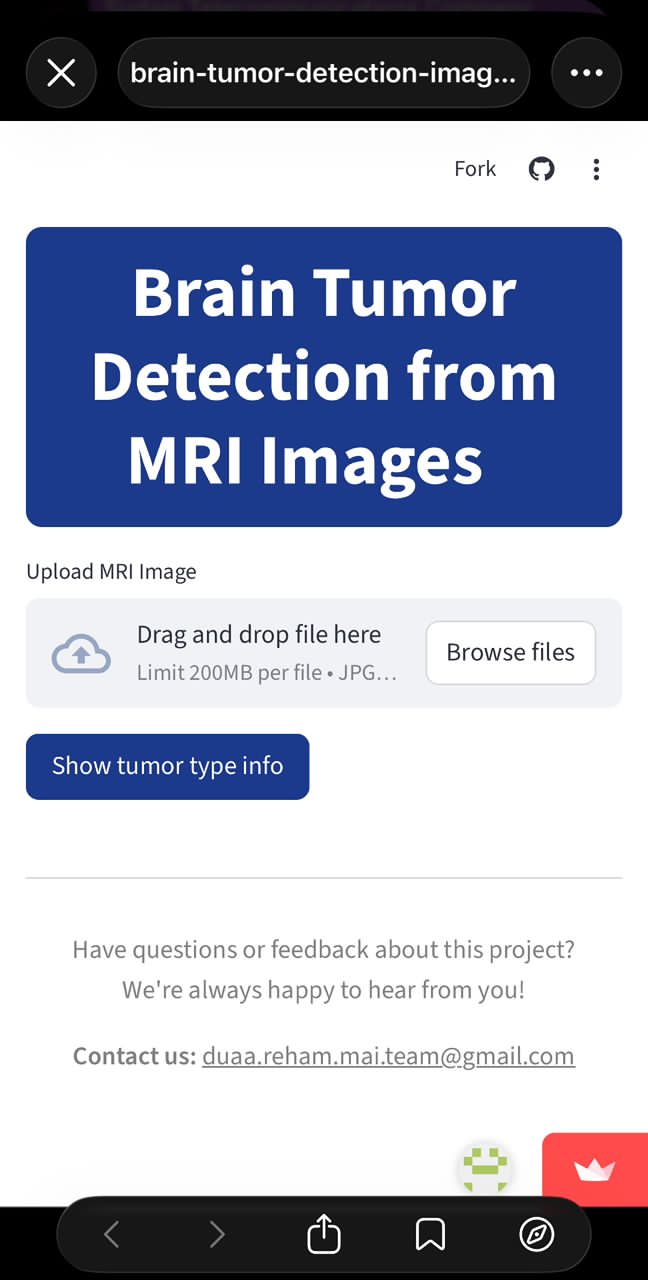
By contrast, the AI application can analyze an uploaded MRI image in less than 5 to 10 seconds, achieving an accuracy rate of approximately 97.35% during testing. Nevertheless, Doaa stressed that the application is not intended to replace physicians but to support them by accelerating diagnosis. The process is simple: a physician or radiologist uploads the MRI scan, the system automatically analyzes it, and then displays the likely tumor type along with a brief medical description.
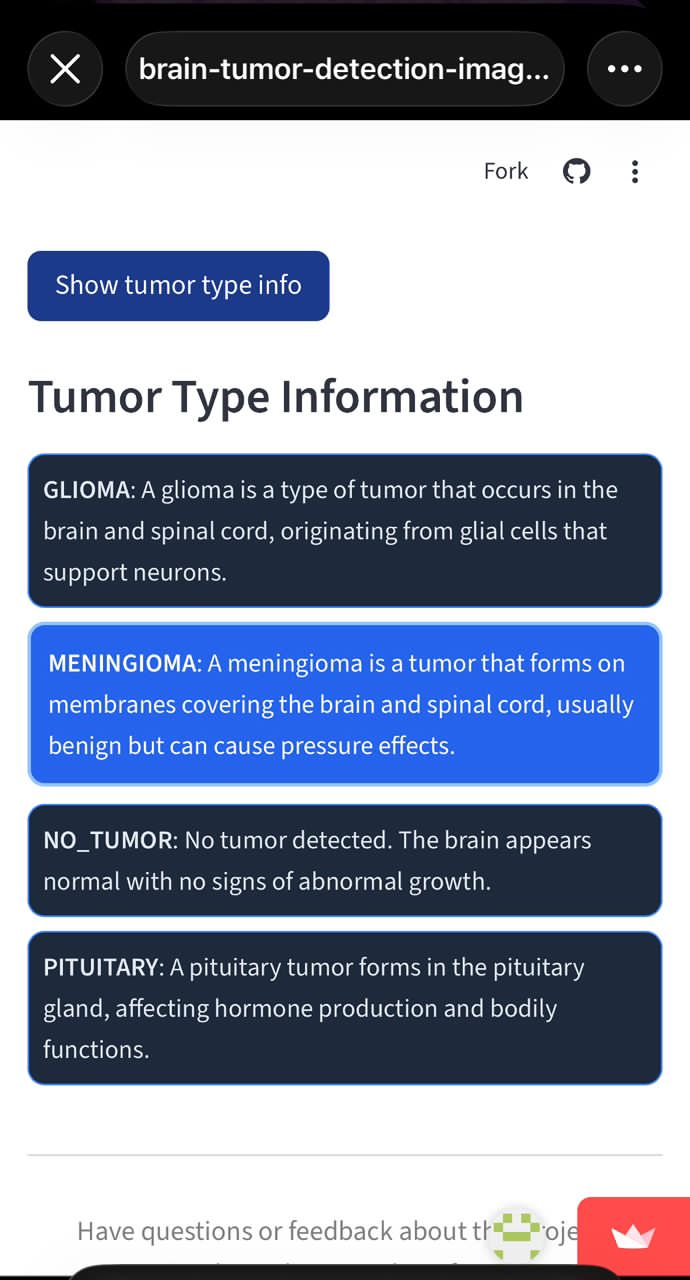
She further clarified that the project does not modify the MRI machine itself. Instead, it functions as an independent AI system that analyzes images generated by existing MRI equipment. The current version has been developed as a web application capable of instantly uploading, analyzing, and classifying images. In the future, it could be integrated into hospital information systems and medical imaging software to serve as a real-time diagnostic support tool.
The team is also studying the legal and technical aspects of intellectual property protection before officially registering the innovation and safeguarding the rights of its members. The team consists of Doaa Kamal Mohamed Al-Hassan, Reham Ammar Mahjoub Othman, and Mai Makawi Mohamed Abuzaid, under the supervision of Professor Khalid Obeid Khairy.
Looking ahead, Doaa said the next phase includes promoting the project through scientific conferences, technology exhibitions, and specialized innovation competitions, while establishing partnerships with hospitals, healthcare organizations, and medical technology companies. The long-term vision is to transform the project into a specialized platform offering intelligent solutions for medical diagnosis and diagnostic image analysis.
In her concluding remarks, Doaa emphasized that the project's mission is rooted in the belief that artificial intelligence has become a genuine partner in advancing healthcare and improving the quality of medical services. She expressed hope that the initiative would represent a practical step toward harnessing modern technologies to serve society and keep pace with global scientific progress.
In many ways, the box of sweets offered by her father marked the beginning of a remarkable Sudanese success story abroad. Doaa and her team did far more than complete a graduation project—they developed an intelligent, practical solution capable of saving valuable seconds that may ultimately mean the difference between life and death. Their achievement demonstrates that Sudanese talent can compete on the global stage despite enormous challenges. The hope now is that this promising university project will evolve into a clinically approved hospital system, making the Sudani Award the first milestone on the journey of a Sudanese innovation with worldwide impact.
Post your comments
Photo of the Week
Cairo (Sudanow) The story began with a chance encounter on the afternoon of the 16th of this month. As I stepped out of my residence in Cairo, I noticed a young Sudanese woman, no older than twenty-four, hurrying through a narrow street crowded with pedestrians. I stepped aside to avoid colliding with her and jokingly remarked, "Take it easy; this is Cairo, not Khartoum." She ap...
More-

28 June, 2026
Stories from the Heart of the Battlefield On the Threshold of Waiting: Stories of Families Searching for Their Missing
Khartoum – Sudanow Wars are not measured solely by the numbers of the wounded and the dead; they are also measured by the silent voids they leave in the hearts of the living. These voids are created by forced absence, when a person becomes an unknown number or a name suspended between hope and despair. As Sudan’s war enters its fourth year, one of its most painful tragedies continues to unfold: the issue of missing persons,...

Contact Us

Address: Sudan News Agency (SUNA) Building, Jamhoria Street, Khartoum - Sudan
Mobile:+249 909220011 / +249 912307547