


Amid the victories of the Sudanese Armed Forces and supporting forces
05 July, 2026
Unifying the Home Front... Decisive to Winning the Battle
Calls for National Mobilization and Social Cohesion... Community Support
Strengthening the Economy and Public Services... Reinforcing the Military Effort
Dr. Abdel Azim: The blows suffered by the militia reflect a qualitative shift in the course of the war
Amid broad military operations and successive victories achieved by the Sudanese Armed Forces and allied supporting forces across several theaters of operation, political, intellectual, and academic circles have increasingly called for strengthening national unity and consolidating the home front, viewing it as one of the key elements for restoring security and stability.
Observers believe that the military's battlefield successes present an important opportunity to reinforce public support for state institutions, counter disinformation campaigns, prevent the spread of division, and protect citizens' morale. They argue that Sudan is passing through a critical phase that requires placing the national interest above all else and uniting efforts behind the Armed Forces in order to thwart the plans of hostile actors and safeguard the country's unity and sovereignty.
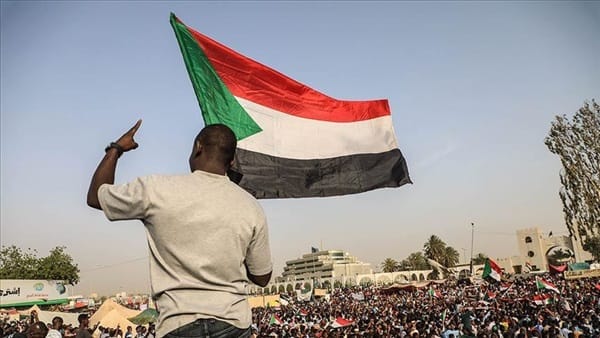
National Mobilization and Unity
Several experts and political figures stressed that the current stage demands the highest degree of national cohesion and social solidarity. They emphasized that Sudan's battle will not be decided solely on the battlefield but also requires a strong and united home front standing behind the Armed Forces and state institutions.
They argue that the country needs a broad national mobilization initiative involving all segments of society without exception, strengthening trust among communities while blocking attempts to spread despair, division, and misinformation—particularly amid organized campaigns targeting Sudan's social fabric and questioning the state's ability to overcome current challenges.
A Struggling Economy
Economically, the situation has become increasingly difficult as the Sudanese pound continues to lose value against foreign currencies, resulting in sharp increases in the prices of essential goods and services and worsening the hardships faced by citizens.
Observers believe that Sudan's economy is undergoing an extremely sensitive period requiring national solidarity, patience, and social cooperation, alongside more effective economic policies aimed at easing the burden on citizens and restoring stability.
At the same time, millions of internally displaced persons and refugees hope to return to their homes and resume normal lives. However, security, economic, and service-related challenges continue to hinder their safe and sustainable return.
Many analysts believe that improving economic conditions and restoring basic services are essential to strengthening the home front, boosting public morale, and preventing hostile groups from exploiting difficult living conditions to spread frustration and negative messaging.
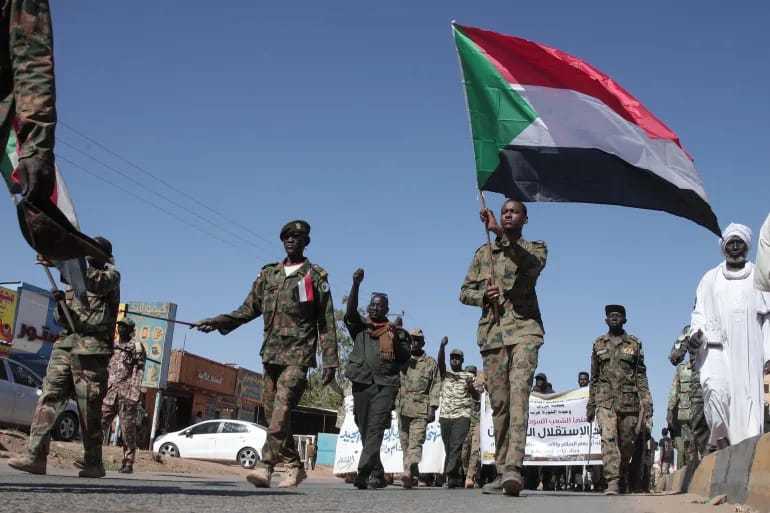
Strengthening the Home Front
Analysts broadly agree that reinforcing the home front is one of the most important prerequisites for overcoming the current crisis. They warn against coordinated disinformation campaigns allegedly conducted by militia-affiliated networks and their supporters, which seek to exploit economic hardship and public anxiety by spreading rumors, inciting discord, and undermining confidence in state institutions.
They emphasize that confronting such campaigns is not solely the responsibility of government agencies but also of political forces, civil society organizations, intellectuals, media professionals, tribal leaders, and religious figures.
Experts note that the battle for public awareness has become an integral part of Sudan's broader national struggle. Combating misinformation requires responsible journalism based on transparency, timely dissemination of accurate information, and encouraging citizens to verify information before sharing or believing unverified reports.
Expanding national participation and drawing upon the expertise of qualified professionals in addressing public issues, they argue, would strengthen public confidence and reduce the influence of voices promoting despair and hopelessness.
The Al-Rataj Model
In line with efforts to strengthen domestic stability, Chairman of the Sovereignty Council and Commander-in-Chief of the Armed Forces, Lieutenant General Abdel Fattah al-Burhan, recently received widespread praise for his visit to the Al-Rataj area.
Observers viewed the visit—aimed at reconciling members of the Rashaida and Bishariyin communities—as a practical example of the leadership role required during this sensitive period. They said Al-Burhan's presence among local residents in an area affected by tribal tensions sent a strong message demonstrating the state's commitment to addressing conflicts at their roots, promoting social peace, and reinforcing state authority through direct engagement with citizens.
Meetings with tribal leaders and community elders helped ease tensions and opened new avenues for dialogue, leading many observers to conclude that several hours of direct engagement achieved more than months of mediation efforts.
Rallying Behind the Armed Forces
Journalist and broadcasting expert Dr. Abdel Azim Awad praised the extensive military operations and successive victories achieved by the Sudanese Armed Forces and their supporting forces across multiple fronts, particularly in Kordofan, Darfur, and the Blue Nile region.
He stated that the repeated setbacks suffered by the Rapid Support Forces (RSF) militia and its allied fighters demonstrate a qualitative shift in the course of military operations and reinforce confidence in the ability of the regular armed forces to prevail.
Speaking to Al-Karama, Dr. Abdel Azim stressed that these battlefield successes require a strong popular base and a cohesive home front. He called for greater public support for the Armed Forces while rejecting all forms of division, hate speech, and misinformation aimed at weakening national morale.
He further emphasized the responsibility of political leaders, tribal administrations, community figures, intellectuals, academics, and media professionals to promote national unity, strengthen a sense of collective responsibility, and preserve internal cohesion as a key pillar for achieving victory and rebuilding Sudan in the post-war period.
Conclusion
In light of the continuing military gains achieved by the Sudanese Armed Forces and supporting forces, the need to strengthen the home front, reinforce national unity, and protect society from misinformation, division, and narratives of despair has become more urgent than ever.
The accumulated economic, security, and social challenges require the government, political actors, intellectuals, and society as a whole to work together in a spirit of national responsibility, setting aside political rivalries.
Ultimately, a strong and united home front, together with broad public support for state institutions, remains a fundamental pillar for securing victory, shaping Sudan's future, preserving its security and stability, and advancing its reconstruction and development.
Post your comments
Photo of the Week

Cairo (Sudanow) The story began with a chance encounter on the afternoon of the 16th of this month. As I stepped out of my residence in Cairo, I noticed a young Sudanese woman, no older than twenty-four, hurrying through a narrow street crowded with pedestrians. I stepped aside to avoid colliding with her and jokingly remarked, "Take it easy; this is Cairo, not Khartoum." She ap...
More-

28 June, 2026
Stories from the Heart of the Battlefield On the Threshold of Waiting: Stories of Families Searching for Their Missing
Khartoum – Sudanow Wars are not measured solely by the numbers of the wounded and the dead; they are also measured by the silent voids they leave in the hearts of the living. These voids are created by forced absence, when a person becomes an unknown number or a name suspended between hope and despair. As Sudan’s war enters its fourth year, one of its most painful tragedies continues to unfold: the issue of missing persons,...

Contact Us

Address: Sudan News Agency (SUNA) Building, Jamhoria Street, Khartoum - Sudan
Mobile:+249 909220011 / +249 912307547