


Issued by the European Union and Met with Strong Condemnation Gold Ban… Targeting Sudan's Economy
19 July, 2026
Questions Raised Over the Failure to Sanction the UAE… Allegations of Resource Plunder
Khartoum Bets on Building Partnerships… Diplomatic Moves Underway
Ambassador Abdelbagi Hamdan: The Decision Is Political and Will Not Affect Sudan's Gold Trade
Report by: Ismail Jibril Tisso
Just two days after the European Parliament adopted a resolution naming the United Arab Emirates as a party involved in the Sudan conflict through its alleged support for the Rapid Support Forces (RSF), the Council of the European Union escalated its measures by announcing a comprehensive ban on the import of Sudanese gold and prohibiting the export of mercury and cyanide—two substances widely used in gold extraction.
The Council said the measures aim to cut off sources of war financing. However, the decision has also sparked broad questions about the consistency of the European approach to the Sudanese crisis, particularly as it marks a significant shift in the nature of EU sanctions. Rather than targeting specific individuals or entities, the measures now extend to one of Sudan's most important economic sectors, signaling a transition from sanctioning people to targeting the country's economy as a whole. The decision has been met with widespread criticism and rejection.
Comprehensive Ban
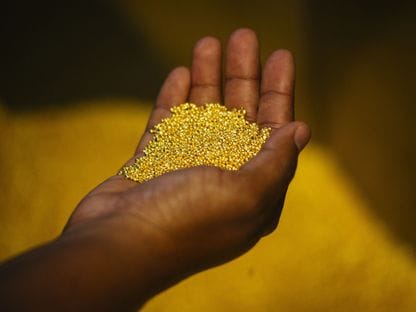
The European Union has imposed a complete prohibition on the purchase, import, or transport of any gold originating from Sudan. It has also banned the export of mercury and cyanide, chemicals commonly used in gold extraction, while allowing limited exemptions for humanitarian and medical purposes.
The decision is also intended to close loopholes that previously enabled Sudanese gold to enter European markets through intermediary countries, as part of tighter oversight of supply chains linked to armed conflicts.
Targeting the Economy
Observers believe the decision reflects a shift in European thinking. Gold has become one of Sudan's most important financial resources, prompting Brussels to move beyond sanctions against individuals toward broader economic measures targeting one of the country's principal sources of foreign currency.
The move carries both political and economic implications, as it represents the first European action directly targeting Sudan's mining sector since the outbreak of the war.
Legitimate Questions
The decision is particularly significant because it came only two days after the European Parliament, for the first time since the conflict began, explicitly named the United Arab Emirates as a supporter of the RSF, ending years of avoiding direct reference to the country despite repeated accusations by the Sudanese government in international forums.
This development raises a central question: Why did the European Union choose to impose a ban on Sudanese gold while refraining from taking any economic measures against the UAE, one of the most prominent investors and traders in Sudanese gold, despite the parliamentary resolution accusing it of supporting the militia?
Observers argue that the answer to this question will largely determine whether European policy is consistent in identifying the causes of the crisis and adopting measures capable of addressing them.
Economic Implications
The measures are expected to affect Sudan's mining sector, which has become the backbone of the national economy following the loss of oil revenues after South Sudan's secession. They could also impact artisanal mining, which provides livelihoods for thousands of families, as well as Sudan's exports and foreign currency earnings.
At the same time, some economic experts have downplayed the practical impact of the decision, noting that direct gold trade between Sudan and the European Union is limited. They argue that producers may increasingly turn to alternative markets.
A Political Decision
Sudan's Ambassador to Belgium and Head of Mission to the European Union, Ambassador Abdelbagi Hamdan Kabir, believes the EU decision is fundamentally political rather than economic.
Speaking to Al-Karama, Ambassador Kabir said the decision reflects the position the Council of the European Union has maintained toward the Sudanese government since the outbreak of the war. He argued that the Council's approach wrongly equates the Sudanese Armed Forces—the country's official military institution—with a rebel militia, a position rejected by Khartoum.
He added that the European Union continues to avoid describing the conflict as an armed rebellion against the state, despite what he considers to be the legally correct characterization.
According to Ambassador Kabir, the decision will have no direct impact on Sudan's gold trade with Europe because Sudanese gold does not enter European markets directly. Instead, it passes through international refining and trading hubs before reaching Europe, making the commercial impact limited while leaving the political message as the most significant aspect of the decision.
Containing the Repercussions
Ambassador Kabir linked the gold ban to the European Parliament's resolution issued just two days earlier, arguing that the timing of the executive decision sends political messages that cannot be separated from developments within European institutions.
He said that the first-ever mention of the UAE in a European Parliament resolution resulted from sustained Sudanese diplomatic efforts, supported by parliamentarians and human rights organizations sympathetic to Sudan. He described the inclusion of the UAE in the parliamentary resolution as an important development that could be built upon in the future.
In his view, the Council of the European Union's decision was intended, at least in part, to reduce the political impact of the Parliament's resolution. He noted that the Parliament not only named the UAE but also urged the Council to move toward designating the RSF as a terrorist organization—a recommendation that has yet to be translated into executive action.
Ambassador Kabir stressed that responding to the European decision requires more than political engagement. It also demands active economic diplomacy aimed at attracting European companies to invest in Sudan's mining sector. Economic interests, he argued, are often the most influential factor in reshaping EU policies.
He added that international experience demonstrates the considerable influence major corporations can exert on policymaking when their commercial interests are at stake. Building economic partnerships with European investors, he concluded, could become one of Sudan's most effective tools for influencing future European positions.
Conclusion
Ultimately, the Council of the European Union's decision marks a new chapter in the complex relationship between Sudan and the European Union. It opens the door to a phase in which political, economic, and diplomatic considerations are increasingly intertwined.
The Sudanese government's ability to mitigate the impact of the decision may depend on its success in building economic partnerships with European investors, companies, and institutions that have a vested interest in Sudan's economy and, consequently, an incentive to advocate for more balanced European policies in the future.
Post your comments
Photo of the Week

Cairo (Sudanow) The story began with a chance encounter on the afternoon of the 16th of this month. As I stepped out of my residence in Cairo, I noticed a young Sudanese woman, no older than twenty-four, hurrying through a narrow street crowded with pedestrians. I stepped aside to avoid colliding with her and jokingly remarked, "Take it easy; this is Cairo, not Khartoum." She ap...
More-

19 July, 2026
Stories from the Frontline War Changed Faces Before It Changed Cities
War: Challenges and Resilience The daily struggle for survival... The pulse of the streets Earning a living has become a daily battle... Rising prices and families' hardship Children leave classrooms for marketplaces... Overwhelming circumstances Returnees to Khartoum await government action... Hope and optimism There is little disagreement that the war which erupted on 15 April 2023, ignited by the Rapid Support Forces (RS...

Contact Us

Address: Sudan News Agency (SUNA) Building, Jamhoria Street, Khartoum - Sudan
Mobile:+249 909220011 / +249 912307547