


The National Multidimensional Poverty Index: An Analysis Revealing the Roots of Sudan's Development Crisis
26 July, 2026
Khartoum (Sudanow)
In an analytical review of the National Multidimensional Poverty Index (MPI) report released by the Oxford Poverty and Human Development Initiative (OPHI) in July 2026, Sudanow interviewed Dr. Magda Mostafa Sadig, Dean of the Faculty of Economics, Financial and Banking Studies at Sudan International University. She affirmed that the launch of the Sudan Multidimensional Poverty Index (Sudan MPI 2023) marks a strategic shift in the methodology of measuring poverty in Sudan, as it moves beyond the traditional income- and expenditure-based approach to assess deprivation across multiple dimensions of people's lives.
She explained that the index is the first of its kind at the national level and was developed through a partnership between the Central Bureau of Statistics (CBS), the Oxford Poverty and Human Development Initiative (OPHI), and several international partners. It provides a more accurate and realistic tool for understanding the nature of poverty and guiding development policies.

Dr. Magda noted that the index is built on four main dimensions: health, education, living standards, and employment, encompassing 14 indicators that measure households' access to essential services and economic and social opportunities. This provides policymakers with a comprehensive understanding of the extent of deprivation experienced by Sudanese citizens.
She explained that the findings of the 2023 National Multidimensional Poverty Survey revealed an extremely difficult reality that existed even before the outbreak of war in April 2023. The index value reached 0.441, while the multidimensional poverty rate stood at 82.8% of the population, reflecting an unprecedented expansion of poverty.
She added that the average intensity of deprivation among poor households reached 53.3% of the measured indicators. This demonstrates that the challenge lies not only in the widespread prevalence of poverty but also in its depth and the complexity of its underlying causes. According to her, these findings confirm that Sudan was already facing a severe economic and social crisis before the war, which subsequently compounded the country's humanitarian and development challenges.
Dr. Magda pointed out that the report clearly identifies the principal drivers of multidimensional poverty, foremost among them inadequate healthcare services, low educational attainment, and poor school attendance among children. These findings, she said, underscore that investment in education and healthcare is the most effective pathway for building human capital and reducing poverty over the long term.
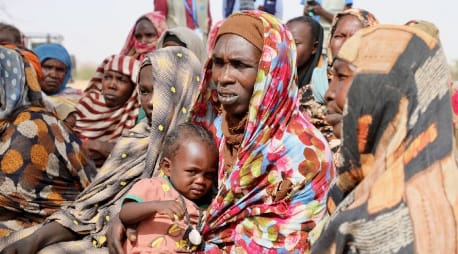
She further highlighted significant regional disparities, noting that North Kordofan, Kassala, and Blue Nile recorded the highest levels of multidimensional poverty, while states such as Khartoum and the Northern State reported comparatively lower rates. This, she said, reflects persistent regional development imbalances and calls for development policies tailored to the specific needs of each state.
The report also identified the groups most vulnerable to deprivation, including rural populations, nomadic communities, internally displaced persons (IDPs), refugees, female-headed households, and youth-headed households. Dr. Magda stressed that these groups should be prioritized in social protection programs and poverty reduction strategies.
She emphasized that the index provides the government and development partners with a valuable scientific tool for directing resources toward the most deprived areas, setting priorities for investment in health and education, strengthening social protection programs, supporting post-war reconstruction efforts, and monitoring progress toward the Sustainable Development Goals (SDGs)—particularly Goal 1: No Poverty.
Regarding the post-war period, Dr. Magda said the report's greatest value lies in the fact that its data were collected before the outbreak of armed conflict in April 2023. As such, it serves as a critical baseline against which the economic and social deterioration caused by the war can be measured, as well as the effectiveness of recovery and reconstruction programs in the years ahead.
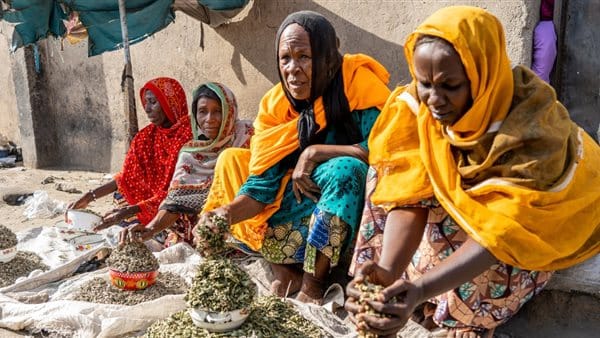
Despite the report's significance, she believes there is room for further improvement. She explained that the index does not capture the direct impacts of the war that erupted after the data collection process. Current poverty levels are therefore likely to be substantially higher due to widespread displacement, destruction of infrastructure, deterioration of basic services, and the loss of livelihoods.
She added that future editions of the index should be updated regularly and expanded to include indicators reflecting the consequences of conflict, such as displacement, loss of livelihoods, and access to humanitarian assistance, enabling the index to better capture Sudan's rapidly evolving realities.
Dr. Magda Mostafa Sadig concluded by emphasizing that the Sudan Multidimensional Poverty Index 2023 represents a major milestone in measuring poverty and shaping public policy. It reveals that more than four-fifths of Sudan's population were already experiencing multiple forms of deprivation before the outbreak of war. These findings, she said, place a clear responsibility on policymakers to prioritize investment in education and healthcare and to promote balanced regional development as the essential foundations for building a more resilient Sudan and ensuring a more equitable distribution of development opportunities in the post-war era.
Post your comments
Photo of the Week

Cairo (Sudanow) The story began with a chance encounter on the afternoon of the 16th of this month. As I stepped out of my residence in Cairo, I noticed a young Sudanese woman, no older than twenty-four, hurrying through a narrow street crowded with pedestrians. I stepped aside to avoid colliding with her and jokingly remarked, "Take it easy; this is Cairo, not Khartoum." She ap...
More-

19 July, 2026
Stories from the Frontline War Changed Faces Before It Changed Cities
War: Challenges and Resilience The daily struggle for survival... The pulse of the streets Earning a living has become a daily battle... Rising prices and families' hardship Children leave classrooms for marketplaces... Overwhelming circumstances Returnees to Khartoum await government action... Hope and optimism There is little disagreement that the war which erupted on 15 April 2023, ignited by the Rapid Support Forces (RS...

Contact Us

Address: Sudan News Agency (SUNA) Building, Jamhoria Street, Khartoum - Sudan
Mobile:+249 909220011 / +249 912307547