


The Sudanese Armed Forces: From Safeguarding Sovereignty to Building Economic Capabilities
09 August, 2026
Khartoum – (Sudanow)
In the modern era, armed forces in many countries have moved beyond their traditional role of securing and guarding borders to become engines of development and pillars of national economies, based on an established reality: security and development are two sides of the same coin. There can be no prosperity without stability, and no lasting stability without a resilient economy capable of safeguarding the nation’s achievements and protecting its future.
In numerous international experiences, militaries have developed, alongside their combat capabilities, industrial, engineering, and logistical systems that have contributed to meeting strategic needs, strengthening national capacities, and supporting the state in times of peace and crisis. In Sudan, the evolution of the military institution’s economic role has been closely linked to the country’s own development and to the political and economic transformations it has undergone since the establishment of the Sudan Defence Force in 1925 and the formation of the national armed forces following independence in 1956.
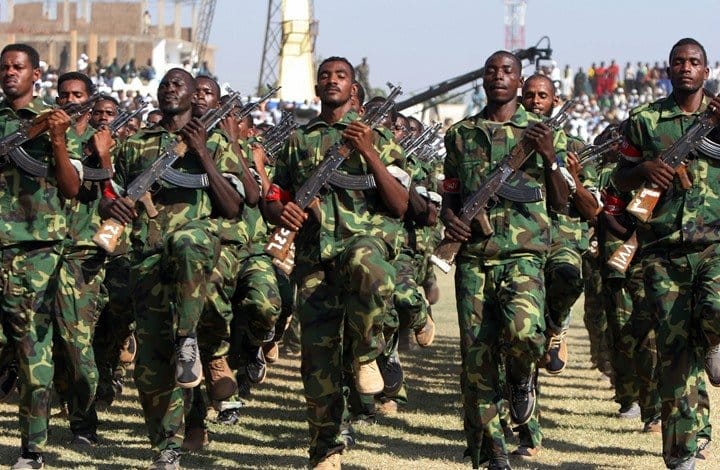
Over successive decades, the military institution did not limit itself to developing its defence capabilities. Expertise accumulated in engineering, manufacturing, maintenance, construction, and supply before gradually taking shape in a range of economic institutions, companies, and projects. Over time, the system expanded to encompass defence industries, engineering manufacturing, agriculture, construction, and services, becoming one of the most prominent institutional actors in the Sudanese economy.
This trajectory reveals an important transformation: from an institution that imported a substantial portion of its requirements to one seeking to manufacture them locally, and from a consumer of resources to an actor possessing productive and investment capabilities that could potentially be deployed in support of the national economy.
From the Sudan Defence Force to Economic Activity
The Sudan Defence Force was established in 1925 under the Anglo-Egyptian condominium, with its primary mission centred on security and defence. Following Sudan’s independence in 1956, the military institution was reorganised as a national institution responsible for protecting the state and its sovereignty.
As the responsibilities of the state expanded and its needs became increasingly diverse, the Sudanese Armed Forces developed extensive technical, engineering, and logistical capabilities that were inseparable from military requirements. Maintaining vehicles, managing workshops, constructing roads and facilities, and providing supplies all required the development of internal production and engineering expertise.
It was from this foundation that the relationship between the military institution and economic activity gradually began to take shape. In 1982, military economic institutions were established as part of this process. Initially, their role was to meet the needs of the armed forces and participate in economic activity, before the system expanded significantly over subsequent decades.
The Road Towards Building Industrial Capabilities
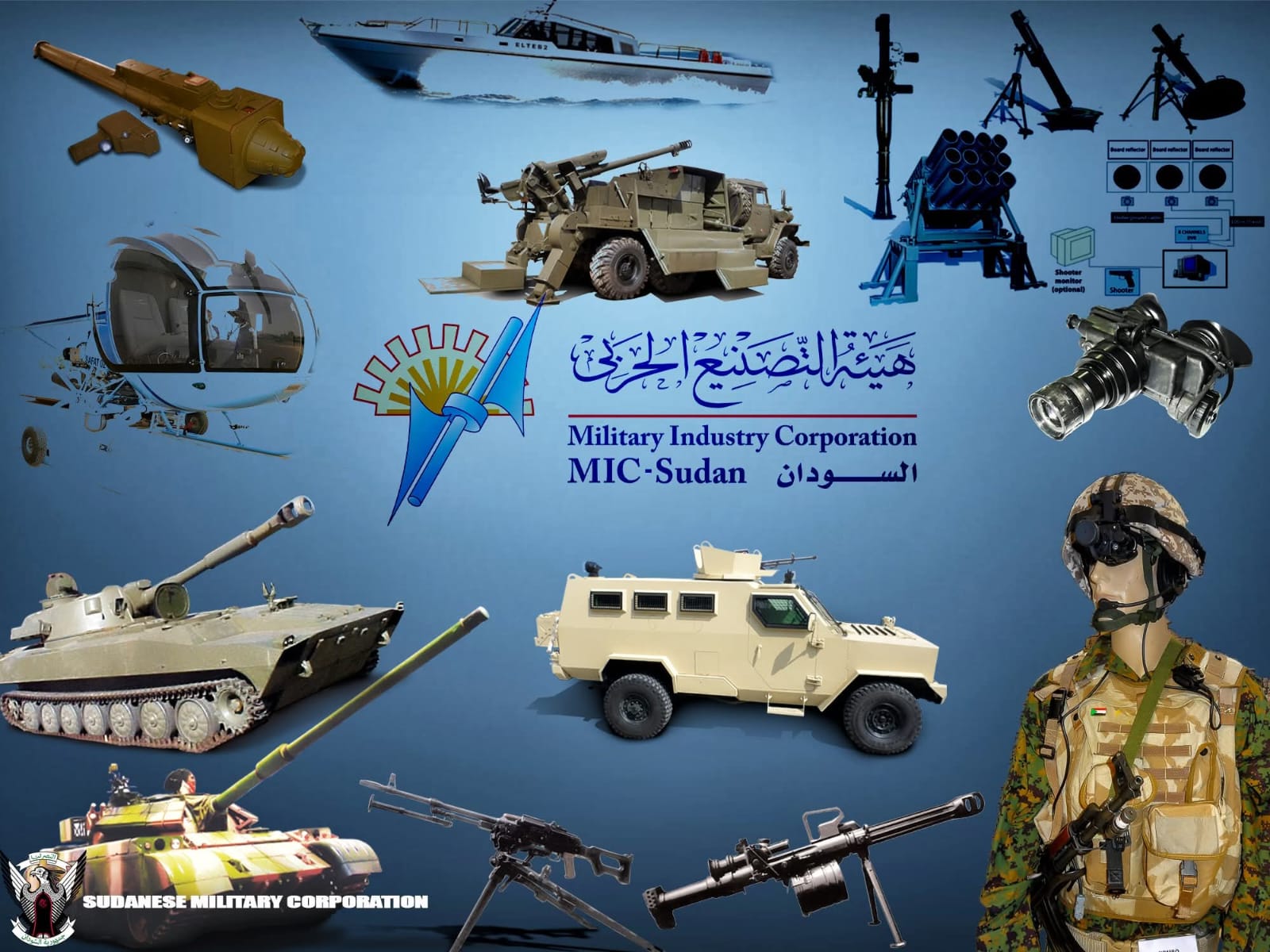
The period following 1989 represented a turning point in the development of Sudan’s defence-industrial capabilities. In 1993, the Military Industry Corporation was established and later evolved into the Defence Industries System, marking a major step towards developing a domestic defence industry.
According to the organisation’s official website, its establishment represented the actual launch of Sudan’s defence industry, with the aim of meeting defence requirements and strengthening the capabilities of the armed forces and other uniformed services.
The concept evolved around building an industrial and engineering base capable of producing, maintaining, and developing a wide range of equipment. The organisation’s official profile indicates that its activities expanded into ammunition, weapons, armoured vehicles, aviation, naval industries, electronics, metal industries, automobile manufacturing, agricultural equipment, and other fields.
Defence manufacturing thus became an entry point for developing broader industrial expertise, bringing together engineering, technology, maintenance, and manufacturing.
Sanctions and the Blockade: A Push Towards Self-Reliance
The development of Sudan’s defence industry took place at a time when the country faced international restrictions, sanctions, and difficulties in accessing certain markets, technologies, and equipment. Under such circumstances, local manufacturing acquired an importance that extended beyond immediate economic considerations.
The ability to produce certain defence requirements domestically meant reducing dependence on external supply chains and developing local alternatives that could be relied upon under exceptional circumstances.
Defence manufacturing therefore became part of a broader concept of national security—not merely the ability to wage war, but also the capacity to sustain defence, supply, maintenance, and production systems during crises.
This approach was reflected in the nature of the industries developed by the defence-industrial system, which, according to its official profile, extended from weapons and ammunition to vehicles, electronics, aviation, and agricultural equipment.
The Defence Industries System: The Beginning of a Development-Oriented Economy
As the experience evolved, the Military Industry Corporation developed into a broader system later known as the Defence Industries System (DIS). By 2020, the system reportedly included more than 200 companies, with annual revenues estimated at approximately 110 billion Sudanese pounds, equivalent to nearly US$2 billion at the official exchange rate at the time.
These figures reveal the scale the system had reached before the war and illustrate its transformation from a narrowly focused defence-industrial structure into a broad economic network.
The Defence Industries System, formerly known as the Military Industry Corporation, became involved in the production of military equipment, vehicles, aircraft, and ammunition, while also maintaining links with companies within the GIAD group.
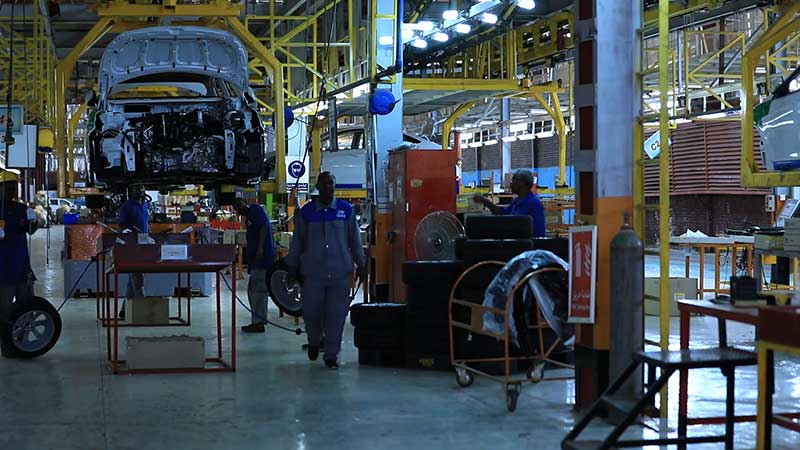
This highlights one of the defining characteristics of the Sudanese experience: military manufacturing did not remain an isolated sector detached from the wider economy. Instead, it developed into a diversified industrial base encompassing multiple activities.
GIAD: Building an Integrated Production Value Chain
The GIAD Group represents one of the most prominent examples of the transfer of engineering and industrial expertise from the military sphere into the broader economy.
The Defence Industries System and GIAD encompass companies operating in automobile manufacturing, trucks, heavy industries, metal industries, and automotive services. The GIAD Group includes more than 24 subsidiaries and operates across a range of industrial sectors.
Such expansion is particularly significant for a country that needs an industrial base capable of locally supplying vehicles, machinery, spare parts, and production inputs.
Ultimately, every factory capable of manufacturing equipment, vehicles, or industrial components locally can contribute to reducing the import bill, creating employment opportunities, developing technical skills, and building an integrated value chain within the Sudanese economy.
ZADNA: Agriculture as an Extension of the Economic Role
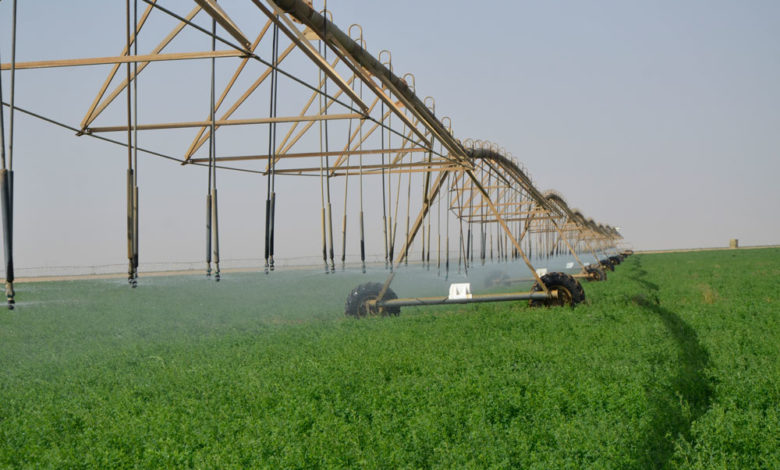
If GIAD represents the industrial and engineering dimension, Zadna represents one of the most prominent agricultural and investment extensions of the economic network associated with the armed forces.
Established in 1997, Zadna focuses on agriculture, construction, and investment. A recent study indicates that the company initially specialised in agricultural construction and irrigation projects in River Nile State before expanding its activities across the agricultural value chain, including nurseries, seedling production, and research related to crops and horticulture. The study also refers to the existence of a large-scale plant tissue-culture facility.
Zadna subsequently developed into a holding company operating in agriculture and construction.
Here, the significance of such activity goes beyond investment alone. Sudan, with its vast agricultural land, water resources, and livestock wealth, needs institutions capable of investing in agricultural production, developing technologies, and connecting production with processing, marketing, and exports.
Security and Development: Cooperation that Builds State Stability
Economists and strategic studies experts view the relationship between security and development as complementary. Sustainable development cannot flourish in the absence of security, while long-term security requires a strong economy and a productive base capable of providing the resources necessary to protect the state and maintain its stability.
In an in-depth analysis of the economic dimensions of military institutions owning their own commercial enterprises, economist Dr. Mohamed Al-Nayer, speaking to Sudanow, presents a strategic perspective that goes beyond immediate financial returns to address the core of national security and sustainable development.
Al-Nayer highlights the reality that strategic military industries represent a globally established practice, as states seek to secure their defence requirements through domestic capabilities. Yet the more intriguing aspect lies in the broader economic dimension of such development.
Civilian enterprises affiliated with the military institution, while generating revenues, ultimately serve a broader objective of achieving comprehensive self-sufficiency. This begins with meeting the needs of military and security personnel and extends to supplying surplus production to local markets, thereby strengthening the country’s economic sovereignty.
Al-Nayer argues that, regardless of their size, national budgets remain unable to meet every requirement of the armed forces. Additional revenues generated by these institutions can therefore provide an important foundation for maintaining continuous logistical support and building a resilient military capable of protecting the country’s borders and safeguarding state authority.
Regarding concerns that military economic activity could affect combat readiness, Al-Nayer maintains that its impact is undoubtedly positive, contributing to the efficiency and preparedness of the armed forces.
At the same time, however, he points to a sensitive issue: concerns within the private sector over the possibility that special privileges granted to military institutions could create an uneven competitive environment.
Military Economic Activity: Fair Competition
Al-Nayer stresses that the real key to the success of this model lies in creating a comprehensive and fair competitive environment. Only then, he argues, can military economic activity have a positive impact on both combat readiness and the national economy.
Regarding the strengthening of domestic production and addressing economic challenges, Al-Nayer believes that the expansion of military institutions into agriculture and industry—provided that this does not compromise their core military responsibilities—could provide a strong boost to the broader economy through:
▪︎ Increasing productivity and creating an adequate supply of essential goods.
▪︎ Expanding the national export base.
▪︎ Supporting import-substitution policies and reducing pressure on foreign currency.
He cautions, however, that the success of this vision depends on sound governance that guarantees transparency and equal opportunities. Any exceptional privileges, he notes, could distort the market and weaken the private sector.
Al-Nayer proposes an ambitious model for the relationship between the military economy and the private sector: public joint-stock companies, in which the military institution would retain an indirect investment stake while the remaining shares would be made available to investors and citizens.
He views this as a distinctive development model capable of enhancing national participation.
Al-Nayer concludes by calling for stronger partnerships with national investors, arguing that their participation alongside military institutions can provide greater guarantees for success.
He nevertheless places one fundamental condition on such partnerships: these institutions must be managed with a business-oriented mindset and a clear profit-driven vision, while ensuring fair representation on boards of directors and within senior management structures.
Such an approach, he argues, can serve the shared interests of the military institution, national investors, and the Sudanese economy simultaneously.
Post your comments
Photo of the Week

Khartoum (Sudanow) Each year, the anniversary of the founding of the Sudanese Armed Forces serves as a national occasion to recall the institution's distinguished history in safeguarding the country's sovereignty, protecting its borders, and preserving its unity. Beyond commemorating these achievements, the occasion also provides an opportunity to reflect on the multiple roles t...
More-

19 July, 2026
Stories from the Frontline War Changed Faces Before It Changed Cities
War: Challenges and Resilience The daily struggle for survival... The pulse of the streets Earning a living has become a daily battle... Rising prices and families' hardship Children leave classrooms for marketplaces... Overwhelming circumstances Returnees to Khartoum await government action... Hope and optimism There is little disagreement that the war which erupted on 15 April 2023, ignited by the Rapid Support Forces (RS...

Contact Us

Address: Sudan News Agency (SUNA) Building, Jamhoria Street, Khartoum - Sudan
Mobile:+249 909220011 / +249 912307547