


The Sudanese Flag Flutters Above the Presidential Palace: A Renewed Era of Sovereignty
16 August, 2026
Khartoum (Sudanow)
In a moment that encapsulated the profound significance of the current phase, the President of the Sovereignty Council and Commander-in-Chief of the Armed Forces entered the Presidential Palace in the heart of the capital. The scene transcended the boundaries of protocol and official ceremony to convey a deeper meaning: the return of the state to one of its most prominent symbols of sovereignty.
The procession carried a powerful national significance, visible in the expressions of the guards, in the palace doors reopening, and in the eyes of Sudanese people who had waited a long time to see the flag of their state return to its rightful place.
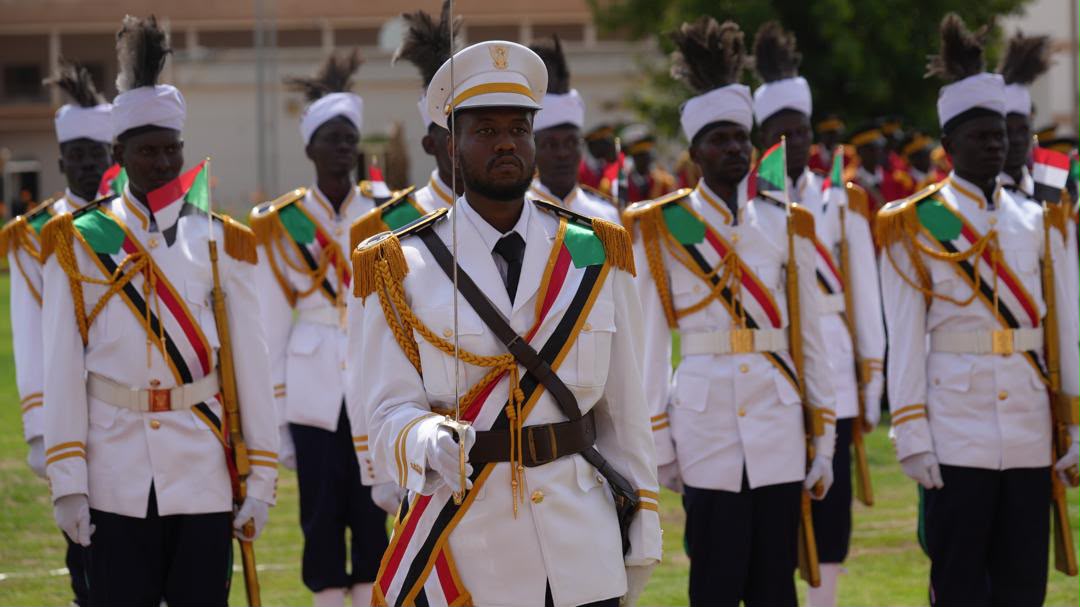
The scene was akin to a symbolic declaration that state institutions were reclaiming their presence and authority, and that the Presidential Palace was once again becoming a symbol of sovereignty and the center of governance. It was a moment that encapsulated an entire chapter and opened a new page in Sudan’s journey—one in which the state regains its authority and the nation recovers the features of stability and dignity.
At that moment, the palace doors opened after years weighed down by war, bloodshed, and gunfire. The Republican Guard stood in formation in a scene combining discipline and pride: upright postures, rifles raised in salute, and eyes that seemed to say through the eloquence of silence: This is the commander, and this is the state.
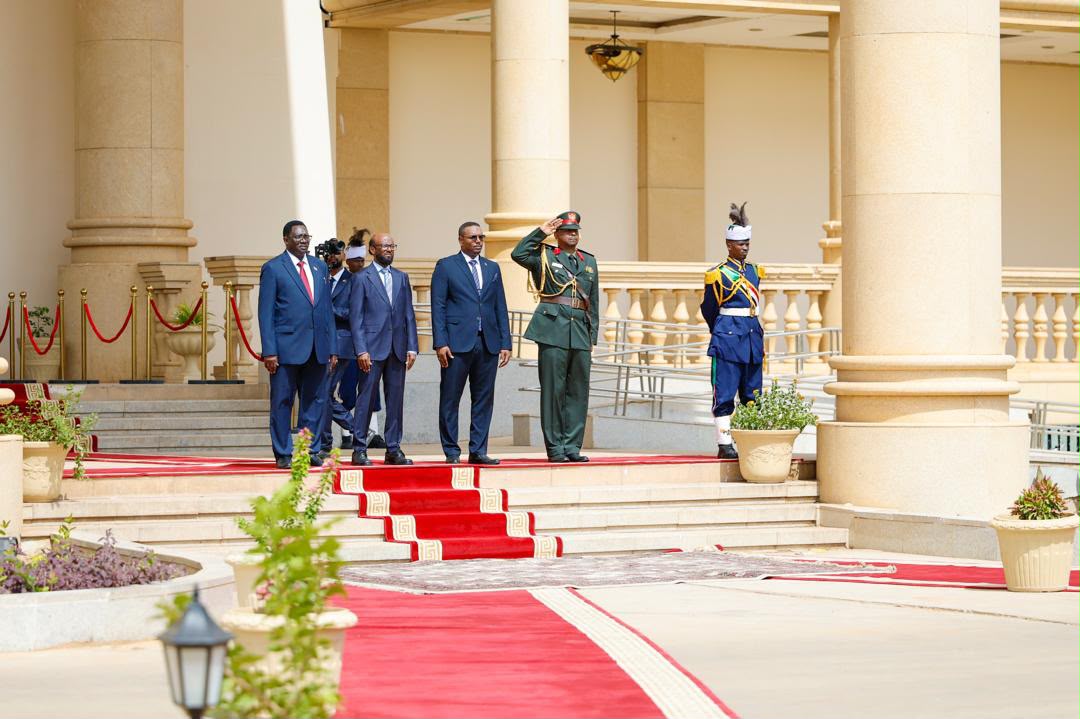
The ceremony was a complete sovereign tableau—a scene embodying a deeply rooted doctrine: that the nation is protected through steadfastness, and that authority and prestige are restored through determination and sacrifice.
When the Commander-in-Chief enters the palace with his head held high, the meaning goes far beyond a move to an official headquarters. It signals that the era of chaos is receding, that state institutions are reclaiming their role, and that the rule of law is returning to its rightful place: above everyone and for everyone.
It is the return of the state to its home—not merely as an authority, but as a guarantor of security, protector of sovereignty, and a unifying framework for the future of the Sudanese people.
The image of the Republican Guard standing in formation for the inspection alone is enough to speak volumes. In the dignity of the Sudanese soldier, with all its solemnity and discipline, people saw a reflection of a dignity that had never been broken. And in a capital gradually recovering its vitality, the scene delivered a clear message to every Sudanese person at home and abroad: the dignity that was wounded has not been defeated, and the nation, no matter how severe its trials, is capable of rising again.
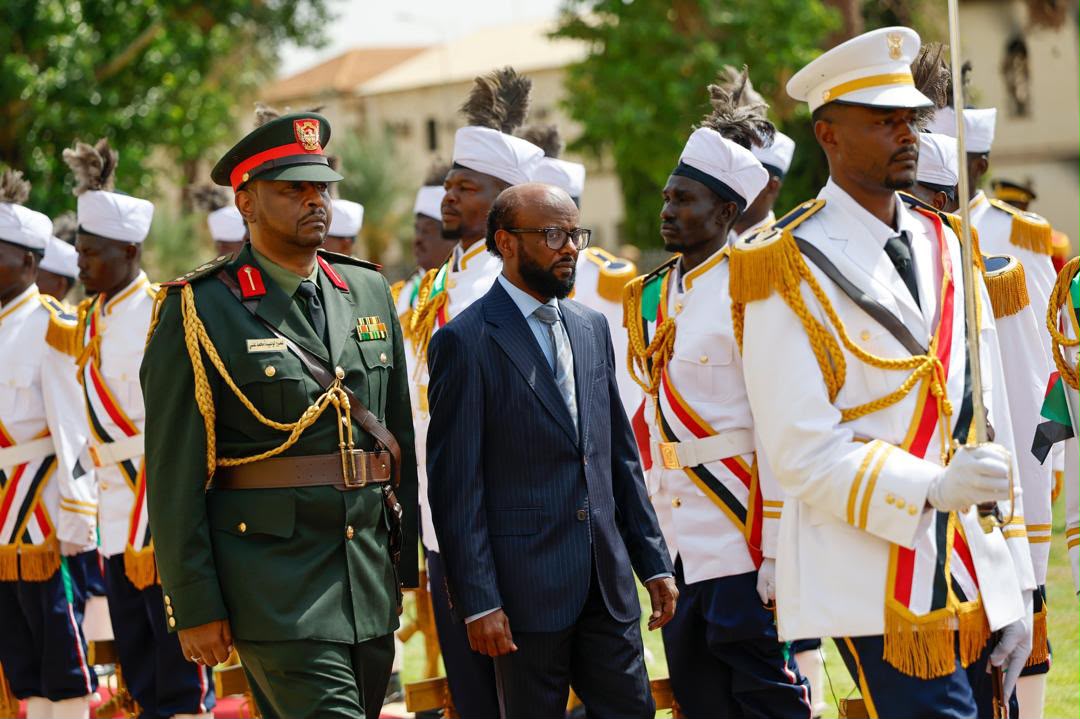
Yet this procession was not merely a military procession, nor was that formation solely about the guards. Behind every soldier standing firmly at his post stands a patient people and countless hopes. Behind every vehicle moving toward the palace are the prayers of mothers in Umm Sayala, Bara, and Al-Rahad, as well as the sacrifices of families who have borne the burdens of war. With them travels the determination of Sudanese people to keep their country united, secure, and proud.
One Army, One People. This is no longer merely a phrase raised on ceremonial occasions; it has become a reality forged by difficult days. Victory is not achieved by one institution alone, nor is it complete until the steadfastness of the soldier on the battlefield meets the patience of the citizen at home—until the rifles protecting the nation unite with the hearts that believe in it.
That is the truest meaning of a shared destiny: a nation rallying around its army, and an army carrying the trust of its people.
From the smoke of battles in Jabra Al-Sheikh, to the sweat of victory in Umm Sayala, and finally to the solemnity of entering the Presidential Palace, a circle of sacrifice has been completed.
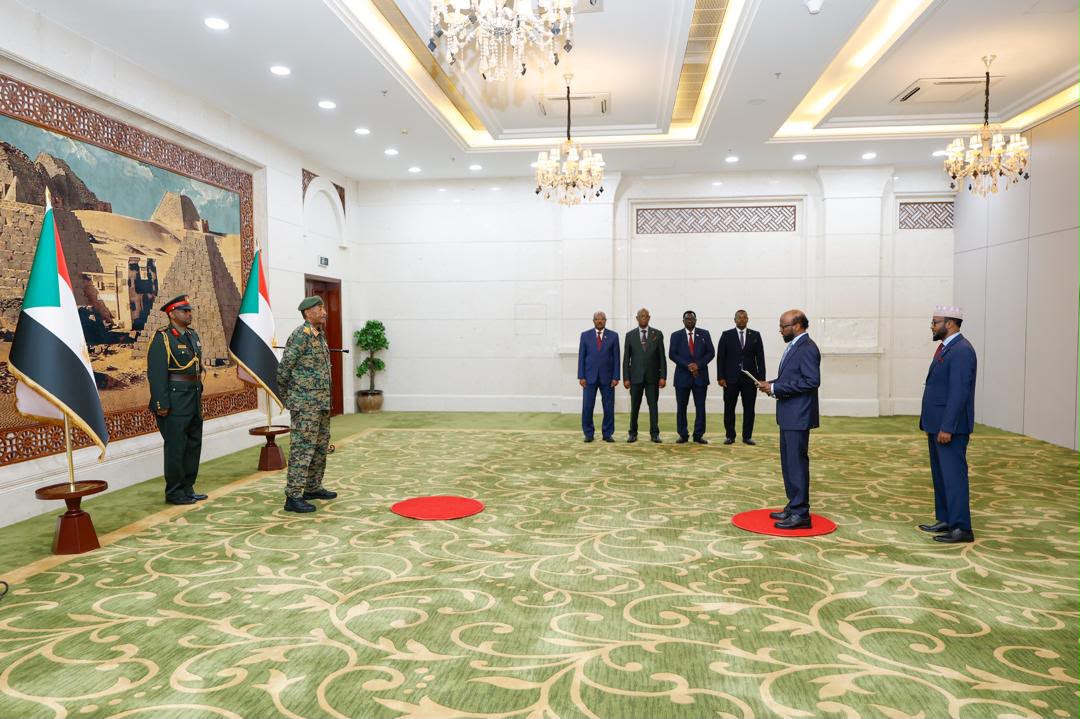
The battle may have been decided on the battlefield, but what comes after the battlefield is no less important: rebuilding the state, strengthening the rule of law, restoring vitality to institutions, and opening the way toward a future worthy of the sacrifices made by the Sudanese people.
Today, Sudan has the right to say with confidence: We have prevailed.
We have prevailed through the blood of the martyrs, the steadfastness of the soldiers, the patience of the citizens, and the faith of a people who never lost their belief in their country.
We have prevailed because sovereignty was never a passing slogan. It is a commitment that cannot be abandoned, and a promise for which the land and dignity must be protected.
The palace has returned, and with it has returned its greater significance: the state endures, sovereignty is preserved, and Sudan’s dignity is not merely a memory of the past, but a promise for the future.
Glory to the Sudanese Armed Forces, dignity to Sudan, salute to the President of the Sovereignty Council and Commander-in-Chief, and to all those who remained faithful to the nation’s pledge and protected its land and dignity.
Post your comments
Photo of the Week

Khartoum – Sudanow The Sudanese nation celebrates, on August 14, the 72nd anniversary of the Sudanese Armed Forces, a national occasion that recalls the bright chapters of an army that, for decades, has remained one of the foremost pillars of the state and a guardian of its sovereignty and security. The editorial team of Sudanow Magazine extends its highest congratulation...
More-
15 August, 2026
The Abdulla Tayeb Hall Rises Out of the Ashes Anew
Like the ancient phoenix myth, taught to hundreds of its graduates within this Hall 102, the graduates are enacting it once again, in real life, in action, and contribution.The Sudanow magazine (https://sudanow-magazine.net/page.php?subId=31&Id=1686) has earlier written about the devastation that hit the famous 102 (one-o-two) Hall, the beating heart of the faculty of arts, at the hand of barbaric militias, an orchestrated a...


Contact Us

Address: Sudan News Agency (SUNA) Building, Jamhoria Street, Khartoum - Sudan
Mobile:+249 909220011 / +249 912307547