


Defense, Production, and Reconstruction: An Analysis of the Sudanese Army’s Economic Experience
16 August, 2026
Khartoum (Sudanow)
The economic strength of any military cannot be measured by the number of companies it owns or the breadth of its commercial activities. What matters more fundamentally is its ability to support defense readiness, develop technical expertise, strengthen local suppliers, and contribute to the national economy within a framework characterized by transparency and fair competition.
This distinction is particularly important for Sudan as it faces the enormous task of recovering from war. Reconstruction involves restoring infrastructure and public services, restarting production, reconnecting markets, and creating conditions conducive to the return of investment and livelihoods. In this context, the accumulated expertise of the military establishment in engineering, industry, and logistics could become an important national asset, provided that these capabilities are directed toward a clearly defined public purpose.
From Defense to Civilian Support
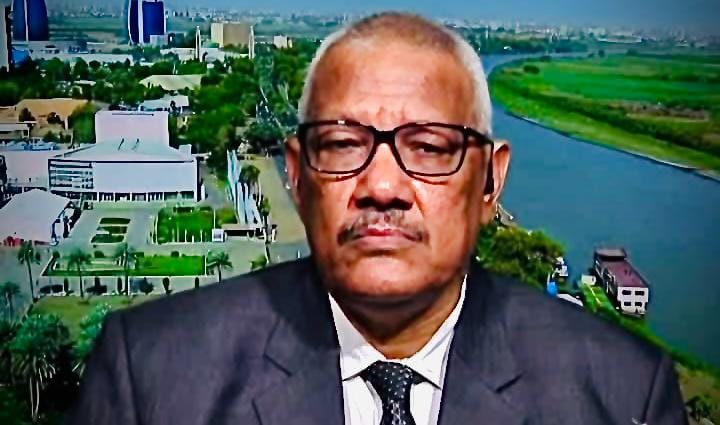
Dr. Amin Ismail Majzoub, a strategic expert, told Sudanow that the Sudanese Armed Forces could play a pivotal role in the reconstruction phase, drawing on their experience in managing major projects and operating in difficult environments and during emergencies and crises. However, he sets a fundamental condition for such a role: economic capabilities associated with the military institution should support the state’s productive base rather than become a permanent substitute for civilian institutions.
Majzoub stresses that engineering and production institutions affiliated with the armed forces could contribute, in coordination with state agencies and private companies, to implementing priority projects. These include rehabilitating roads, bridges, and airports; restoring water stations, electricity networks, and sewage systems; and repairing strategic facilities damaged by the fighting. The potential added value lies in the availability of technical personnel, engineering expertise, and logistical systems capable of responding quickly when public infrastructure has suffered extensive destruction.
The importance of these capabilities becomes particularly evident during the early stages of recovery, when the ability to reach affected areas can be just as important as the construction work itself. Delivering aid, reopening roads and crossings, transporting equipment, and securing supply chains for strategic projects all require rapid response and strong organizational capacity. In areas where basic infrastructure has been extensively damaged, such capabilities could help narrow the gap between emergency relief and sustainable recovery.
Reconstruction as a Gateway to Production
Majzoub also points to the possibility of restarting some productive and industrial sectors associated with construction materials, including cement, steel, and engineering equipment. Strengthening domestic production of these inputs could reduce dependence on imports, lower project costs, and stimulate local industrial activity. The objective should not simply be to rebuild what was lost, but to use the reconstruction process as an opportunity to renew Sudan’s productive capacity.
The link between national security and economic security is central to this approach. Roads, airports, energy and water resources, and agricultural and industrial production are not merely development targets; they are also components of the state’s ability to restore stability, exercise sovereignty, and withstand future crises. Recovery, therefore, cannot be separated from the broader question of how to rebuild state capacity.
The Productive Army and State-Building

Dr. Rashid Mohamed Ali Al-Sheikh, a professor of international relations, places the debate within a broader reconsideration of the concept of the “productive army.” In the post-war period, he believes Sudan may need to review its defense doctrine so that it is not limited to responding to conflicts, but also encompasses preparedness and deterrence—using national capabilities to reduce the likelihood of war in the first place.
Al-Sheikh considers technology and technical capabilities to be areas in which military institutions may possess particular advantages. However, he places their contribution to manufacturing, food security, and reconstruction within a comprehensive national strategy, rather than viewing these as independent military missions. He argues that energy and defense industries, in particular, represent pillars of deterrence and the protection of national interests in a volatile regional environment.
Any serious vision for the post-war period must look beyond repairing damaged physical assets. Minerals, agriculture, and water resources can become pillars of recovery, but their value depends on how they are managed. Al-Sheikh emphasizes the importance of moving from the export of raw materials toward greater local processing and value addition, allowing the Sudanese economy to retain a larger share of the returns from its resources and strengthen its export base.
Partnership Instead of Expansion
The role of economic institutions associated with the military establishment cannot be separated from the importance of governance. Majzoub stresses that participation in reconstruction requires a clear institutional framework defining the areas in which these institutions operate, ensuring their integration with state agencies and private companies, and protecting the principle of fair competition.
The goal should be a national partnership that combines the military institution’s engineering and logistical expertise with the capital, management, and technology provided by the private sector.
Applying this principle may be difficult in a country emerging from an exceptionally costly war. Al-Sheikh notes that the scale of destruction could weaken normal competitive conditions in the domestic market and may also limit international competition in the short term. Yet these challenges make transparency, economic viability, and public accountability more important—not less.
Exceptional circumstances should not eliminate the need for rules, particularly when strategic resources and national security are involved.
Foreign Investment and Knowledge Transfer
Foreign investment represents another parallel challenge. Al-Sheikh believes that partnerships with the private sector are possible, while foreign investment in sensitive sectors requires careful assessment. In defense industries, the issue is not limited to financing or production capacity; it is also linked to safeguarding national security and avoiding vulnerabilities or external penetration.
Conclusion
Sudan’s reconstruction will depend on mobilizing all reliable national capabilities. The armed forces may have a constructive role to play through engineering, logistics, technology, and strategic production.
However, the long-term measure of success should not be the expansion of the military institution’s economic presence. Rather, it should be the extent to which these capabilities contribute to building a stronger state, revitalizing a competitive national economy, and creating space for civilian institutions and the private sector to drive sustainable prosperity.
Post your comments
Photo of the Week

Khartoum – Sudanow The Sudanese nation celebrates, on August 14, the 72nd anniversary of the Sudanese Armed Forces, a national occasion that recalls the bright chapters of an army that, for decades, has remained one of the foremost pillars of the state and a guardian of its sovereignty and security. The editorial team of Sudanow Magazine extends its highest congratulation...
More-
15 August, 2026
The Abdulla Tayeb Hall Rises Out of the Ashes Anew
Like the ancient phoenix myth, taught to hundreds of its graduates within this Hall 102, the graduates are enacting it once again, in real life, in action, and contribution.The Sudanow magazine (https://sudanow-magazine.net/page.php?subId=31&Id=1686) has earlier written about the devastation that hit the famous 102 (one-o-two) Hall, the beating heart of the faculty of arts, at the hand of barbaric militias, an orchestrated a...


Contact Us

Address: Sudan News Agency (SUNA) Building, Jamhoria Street, Khartoum - Sudan
Mobile:+249 909220011 / +249 912307547