


Sudanese Navy: Guardian of the Coast and an Emblem of Military Discipline and Creativity
23 August, 2026
Khartoum (Sudanow)
Along Sudan’s Red Sea coastline, the Sudanese Navy occupies a role that extends beyond the traditional boundaries of military duty. It is one of the pillars responsible for protecting territorial waters, the coastline, ports and maritime facilities, while also forming part of the country’s broader maritime security system, shaped by Sudan’s strategic position along one of the world’s most important maritime corridors.
Since its establishment, the development of the Sudanese Navy has been closely linked to the need to build a national force capable of operating in the maritime environment, securing the coastline, and developing specialized expertise in navigation, engineering, maintenance and naval operations.
Origins: The Foundations of a Naval Force
The first steps toward establishing the Sudanese Navy were taken in the late 1950s, before it formally emerged as a naval force in 1962, during the early period of institution-building in post-independence Sudan.
Cooperation with Yugoslavia played a prominent role in laying the foundations of the naval force, contributing to personnel training and the provision of patrol boats. Sudan later expanded its military relations with a number of countries, including the Soviet Union, Iran and China.
The establishment of the Navy was therefore not simply a matter of acquiring vessels. It was a broader effort to build a specialized institution founded on training, technical expertise and military discipline.
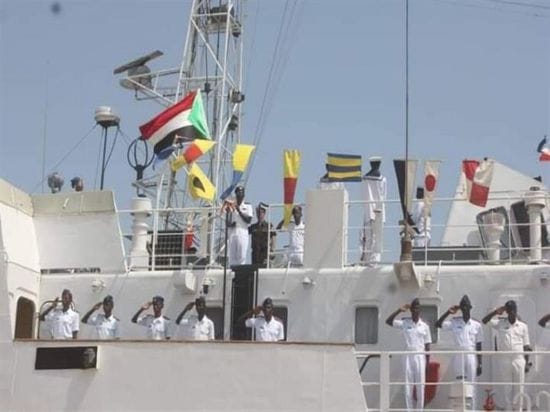
Port Sudan: Sudan’s Maritime Gateway
The history of the Sudanese Navy has been closely associated with Port Sudan, the country’s most important coastal and port city.
The Flamingo Naval Base stands out as one of the key facilities associated with the Navy. It has played an important role in supporting maritime activities, training, maintenance and operations related to coastal security.
Port Sudan derives its significance from its location on the Red Sea and its connection to the port and the movement of maritime trade and transportation. This makes the protection of the coastline and maritime facilities an integral part of safeguarding Sudan’s national and economic interests.
Multiple Missions: From Territorial Waters to Port Security
The Navy’s core responsibilities include protecting territorial waters and the coastline, conducting maritime patrols, securing relevant facilities and infrastructure, and contributing to maritime security.
Historically, the Sudanese Navy has also operated riverine units in inland waters, reflecting the breadth of Sudanese maritime expertise across both marine and river environments.
Such responsibilities require an integrated system of specialized personnel trained in navigation, engineering, communications and maintenance, supported by continuous training and technical readiness.
A Diverse Fleet and Gradual Development
The Sudanese naval fleet has undergone several stages of development throughout its history. It has included various types of vessels, most notably patrol boats, fast boats, riverine units, landing vessels and support ships.
The sources of equipment and technical cooperation have also varied, reflecting the different phases of Sudan’s military and diplomatic relations.
The strength of a naval force, however, is not measured solely by the number of vessels it possesses, but by its ability to operate, maintain and integrate them within a comprehensive maritime security system.
In this regard, maintenance and rehabilitation have remained essential to sustaining operational readiness. In July 2025, the Sudanese Sea Ports Corporation announced the relaunch of the naval vessel Zamzam, operated by the Sudanese Navy, following maintenance work that included repairs to its hull, protective treatment, painting and the replacement of spare parts.
Such technical cooperation between maritime and military institutions represents an important aspect of preserving and developing naval capabilities.
Coast Guard: An Arm of Maritime Security
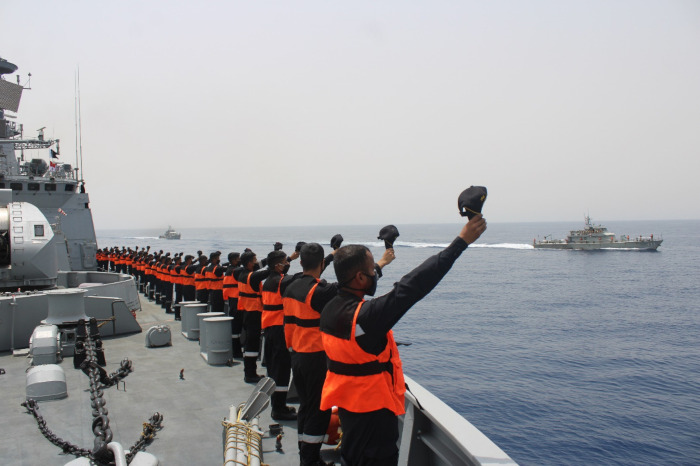
Alongside the Navy, the Coast Guard plays a role in securing ports and coastal waters and providing rapid response capabilities.
In July 2025, the Sea Ports Corporation announced the commissioning of the Coast Guard launch Trnktat, designated to support and secure ports and provide rapid intervention, with a speed of up to 35 knots.
The development of such capabilities reflects an effort to strengthen the various components of Sudan’s maritime security system in line with the strategic importance of its coastline and port activity.
The Human Element: The Foundation of Naval Strength
Behind the ships, boats and facilities lies the most important element of naval power: human competence.
Naval service demands a high degree of discipline, teamwork and continuous professional development in technical, navigational and leadership fields. The nature of maritime life also places considerable demands on personnel in terms of commitment, precision and responsibility.
Training therefore remains one of the fundamental pillars in building naval capabilities, alongside fostering discipline, teamwork and dedication to duty.
Creativity and Discipline: Achievement Beyond the Field
The Navy’s contribution extends beyond its professional and military responsibilities into cultural and artistic activities that reflect discipline, teamwork and a spirit of creativity and competition.
In this context, the Sudanese Navy won first place overall at the Military Creativity Festival, held in Khartoum as part of celebrations marking the 72nd anniversary of Army Day.
The Navy secured first place in several competitions, including religious chanting, Nabr Al-Hamas (military motivational chanting), poetry recitation by officers and Al-Jalala Al-Mu'tada (the traditional military chant). It also took second place in Al-Jalala in the fast-step category and in poetry recitation by non-commissioned officers.
The achievement carries significance beyond success in military and artistic competitions. It reflects the level of preparation and training while highlighting the ability of naval personnel to combine military discipline with cultural presence and creativity.
It also demonstrates that building a military institution is not based solely on operational readiness, but includes strengthening morale, fostering a sense of belonging and promoting teamwork and positive competition.
The Red Sea: Strategic Value Beyond Geography
Much of the importance of the Sudanese Navy derives from the strategic significance of the waters in which it operates.
Sudan’s coastline on the Red Sea forms part of a vital maritime link between the Indian Ocean and the Mediterranean, carrying major international trade and shipping routes.
Consequently, protecting Sudan’s coastline is not merely a military responsibility. It is also closely connected to safeguarding ports, commercial activity, economic interests and maritime security.
This strategic location gives the Sudanese Navy a responsibility that extends beyond protecting territorial waters to contributing to the security of one of Sudan’s most important strategic gateways.
Conclusion
Since its establishment in the 1960s, the Sudanese Navy has followed a path of institution-building and development based on training, professional development and technical cooperation, while operating within a geographic environment that gives it particular strategic importance.
From protecting the coastline and territorial waters to securing maritime facilities, supporting maritime security and maintaining technical readiness, the Navy continues to perform its role as an integral component of Sudan’s military institution.
Its victory in the Military Creativity Festival adds another dimension to its institutional image: a force whose strength rests not only on equipment and facilities, but also on disciplined and well-trained personnel capable of combining professionalism with creativity.
At sea, readiness and discipline prevail; in the arenas of creativity, it is the human being who sustains that readiness and gives the institution its spirit.
Post your comments
Photo of the Week

Khartoum | Sudanow Muslims around the world commemorate the birth of the Prophet Muhammad, peace and blessings be upon him (PBUH), during the month of Rabi’ al-Awwal, recalling a message that transformed human society and emphasized mercy, justice, brotherhood and human dignity. On this occasion, the editorial team of Sudanow Magazine extends its sincere greetings to Musl...
More-

23 August, 2026
“A Full Year Behind the Militia lines”
Khartoum, Sudanow (A book review) This is a book that related the personal experience of a journalist, a Sudanow reporter caught behind the lines of the Rapid support forces (RSF) militia lines and as such it reflects the view and experience of the journalist. However this personal experience is a miniature representation of what millions of Sudanese have experienced. It is not a historical recording of events; rather, it is ...

Contact Us

Address: Sudan News Agency (SUNA) Building, Jamhoria Street, Khartoum - Sudan
Mobile:+249 909220011 / +249 912307547