


Stories from the Heart of the Battlefield Zainab: When Staying Becomes an Act of Courage
20 September, 2026
The Courageous Zainab: A Woman Who Stayed When Everyone Left — and Returned to Bring Life Back to Wad Nubawi
From a home that opened its doors to displaced families, and a garden that flourished amid fear, to the homes of those who were away and the power stations she helped restore — the story of a Sudanese woman who shows how ordinary people can perform extraordinary acts during wartime.
Khartoum – (Sudanow)
Zainab Abdullah Al-Shafie did not carry a gun, nor did she seek a heroic story to tell.
She simply chose to do what her conscience demanded when war narrowed the space for life: she stayed in Wad Nubawi for as long as she could, opened her home to relatives and neighbors, helped displaced people, shared food and clothes with those in need, and planted vegetables and flowers in the midst of shelling.
When she was eventually forced to leave, her connection with the neighborhood did not end. She returned to Wad Nubawi with her son, Mohamed, when it became possible to do so. She helped clean homes and streets, checked on the houses of those who had left, worked to restore water and electricity, and eventually returned to her job at the Sudanese Thermal Power Generation Company, contributing from her position to the restoration of facilities damaged by the war.
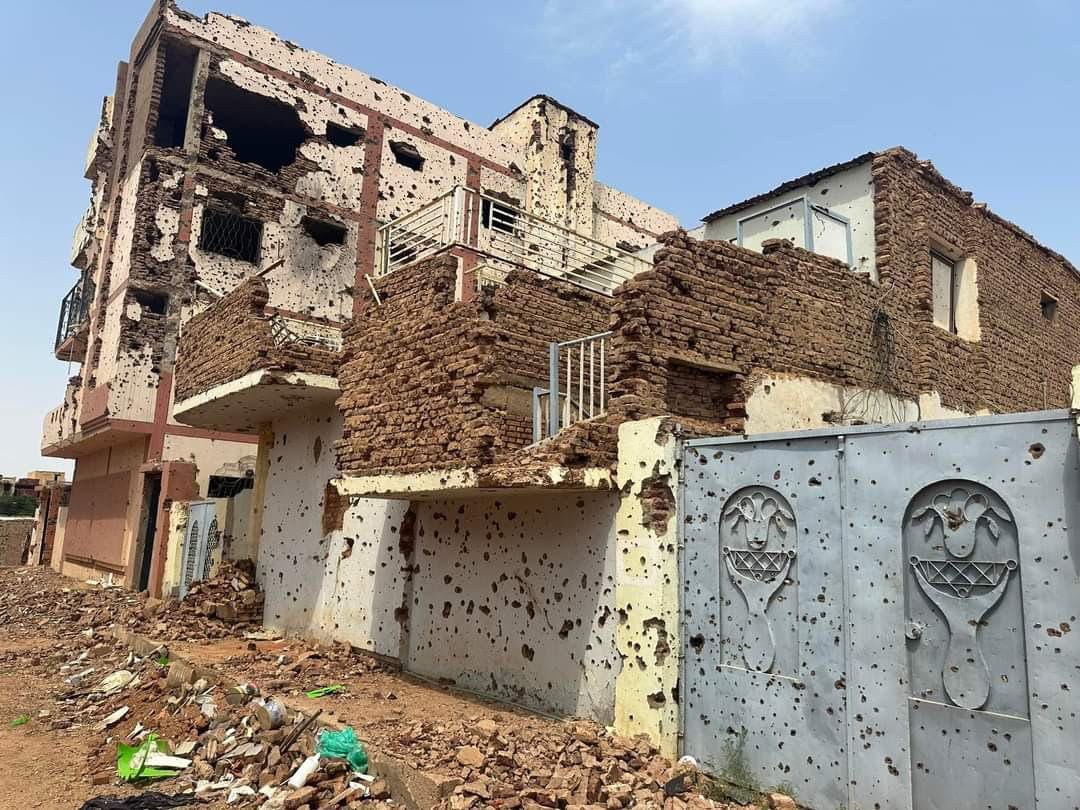
This is not the story of a woman who knew no fear. It is the story of a woman who knew fear and chose, nevertheless, to keep life going.
From Wad Nubawi to Al-Thawra, from neighborhood kitchens and communal food centers to electricity offices, and from caring for displaced people to looking after the homes of those who had left, the story of Zainab Abdullah Al-Shafie runs like a human thread through the harsh landscape of war.
She saw the devastation around her, but she kept looking for something else.
When vendors returned to Saberine Station after the shelling, she saw in the onions, rice, lentils and vegetables more than mere commodities. She saw life returning.
When she planted molokhia, okra, pumpkin, cucumbers, tomatoes and eggplants, followed by bougainvillea and Sabah Al-Khair flowers, she was doing more than cultivating a garden.
She was saying that life still had a place, even in the heart of war.
And when a light returned to a home that had remained dark for months, she did not see merely electricity flowing through wires. She saw a message:
We are still here. We did not die.
That is why Zainab's story deserves to be told.
Wars do not write their history through battles alone. They also write it through what ordinary people do in the spaces left behind by those battles: a mother feeding her children, a neighbor guarding an absent family's home, a doctor treating patients under shelling, a young man rescuing his neighbor, a teacher continuing to educate children, and a woman planting a flower in the soil of fear.
Zainab is one of them.
Her story, told to Sudanow by Professor Hisham Habbani, opens a wider door to documenting the stories of Sudanese people who quietly performed extraordinary acts throughout the war.
A Home That Understood the Meaning of Solidarity
The story of Zainab Abdullah Al-Shafie reminds us that courage is not always a gun on a battlefield, a cry repeated in news bulletins, or a fleeting moment that shines briefly before disappearing.
Sometimes courage is quieter — and its impact deeper.
It is standing when everything around you is collapsing.
It is opening your home to someone who has no home.
It is feeding a hungry person when you do not know where tomorrow's food will come from.
It is protecting an absent neighbor's home as if it were your own.
It is returning to a neighborhood devastated by war, sweeping away the dust, closing an open water pipe, planting a tree, and saying through action rather than words:
We will live here again.
In this sense, the story of Zainab Abdullah Al-Shafie embodies a distinctly human form of courage.
A Sudanese woman who experienced the April 2023 war not as a distant observer, but as someone caught in its heart — between Wad Nubawi and Al-Thawra, between fear, displacement and return, and between the family home, the electricity company and the homes of those who had left.
And whenever the circle of life grew narrower, she widened her circle of responsibility.
Zainab grew up in an environment where honoring guests, maintaining family ties, checking on those who were absent and standing beside people in need were everyday practices rather than slogans.
She attended Wad Nubawi Primary School, followed by Omdurman Secondary School, and later joined Omdurman Islamic University, where she studied economics.
She began her professional career in the electricity sector and progressed through various positions until she became Head of the Procurement Unit at the Sudanese Thermal Power Generation Company.
She was known for her seriousness, determination and sense of responsibility.
Then the war put those qualities to a very different test.
Responsibility was no longer confined to an office, a job or working hours.
It became a family that needed protection.
A neighbor who needed to be checked on.
A displaced person who needed food.
An absent family's home that needed to be safeguarded.
And a national institution that needed people committed to restoring its ability to operate.
Wad Nubawi… When a Home Becomes a Small Homeland
When war broke out in April 2023, Zainab remained in Wad Nubawi during the early stages.
She was accompanied by several aunts, an uncle and other relatives, along with people who had sought refuge in the house from among family members and neighbors.
At a time when gunfire and shelling had become part of everyday life, the house itself became a sanctuary.
People shared whatever food was available and asked one another:
Who is still here?
Who has left?
Who needs medicine?
Who needs food?
Who has lost contact with their family?
These were not simply days of fear.
They were days that revealed the true character of people.
During Eid, whatever food was available was gathered, and young people, relatives and neighbors came together to share a meal.
The value of that gathering was not in the food.
It was in the message it carried:
War can destroy a wall, but it cannot necessarily destroy the spirit of community.
The gathering itself was an act of resistance.
Leaving When Staying Became Too Dangerous
But the danger intensified.
Residents began to leave. The young men who had been guarding the homes departed, while elderly people remained within the group.
At that point, leaving became a necessity.
Zainab and her son Mohamed walked to Al-Omda neighborhood in search of a large vehicle that could transport members of the family to Al-Thawra, Block 38.
Finding transportation was itself an adventure.
Many drivers were afraid to enter southern Wad Nubawi because of shelling, destruction and dangerous checkpoints.
But the search continued until transportation was finally secured.
The group left a neighborhood that had almost emptied of its residents, crossing checkpoints and barricades until they reached Al-Thawra.
They were among the last groups to leave the area.
Block 38… When a Neighbor Becomes Family
At the home of her brother, Mohamed Abdullah Shafie, Zainab found a small community resisting the war in its own way.
Residents cooked whatever was available — lentils, balila and other simple foods — and distributed meals to families according to their needs.
One of the schools was sheltering displaced families.
Zainab and her neighbor, Najlaa, began preparing food, including rice pudding, and carrying it to the families staying at the school.
Clothes were collected from residents of the neighborhood.
They were washed and sorted before being distributed to people who had fled the fighting with nothing but the clothes they were wearing.
Her sister, Maryam Abdullah Shafie, sent flour to her from Al-Damer. Zainab and those working with her divided it into small bags and distributed them to people in need.
Rice and other food supplies were also distributed.
Some shopkeepers helped make basic necessities available.
In this way, assistance was no longer an occasional act.
It became a way of life.
Under Shelling
But the war was not far from Block 38.
Saberine Station and the surrounding areas came under shelling, resulting in deaths and injuries.
One night, the shelling became so intense that members of the family were forced to take shelter under beds and in the safest corners of the house.
Zainab saw three funeral processions pass before her.
She saw the faces of families who had lost children and young people.
One of the scenes that remained etched in her memory was the impact of a shell at a location near Saberine Station.
She passed by the site after the incident.
It was completely deserted.
She thought no one would return.
But she came back two days later.
The vendors had returned.
Onions.
Rice.
Lentils.
Vegetables.
And people.
As if life itself were saying to the war:
You will not have the whole place.
It was then that she understood that resilience does not mean a person is unafraid.
It means returning to life despite fear.
A Garden in a Time of Death
At her brother's home, Zainab found an empty space in the courtyard.
She planted it.
Molokhia.
Okra.
Pumpkin.
Cucumbers.
Tomatoes.
Eggplants.
The crops grew despite Omdurman's rocky soil.
She then began sharing the harvest with neighbors.
But she did not stop with vegetables.
She planted flowers too.
Bougainvillea.
And Sabah Al-Khair flowers.
Yellow, red and pink blossoms.
The vegetables provided some food.
The flowers provided something else no less important:
hope.
To plant a flower during wartime is to believe, despite everything, that tomorrow will come.
What the War Taught Her
The war taught her patience and contentment.
It taught her that many things that people become angry about in ordinary times can lose all meaning when safety itself becomes a blessing.
She left her home with only the simplest belongings.
She lived through days in which having her family together and knowing that people were safe mattered more than any possession.
She learned that a person can live with very little.
But some things have no substitute:
Safety.
Health.
Family.
And the person who stands beside you when life becomes unbearable.
Returning to Wad Nubawi
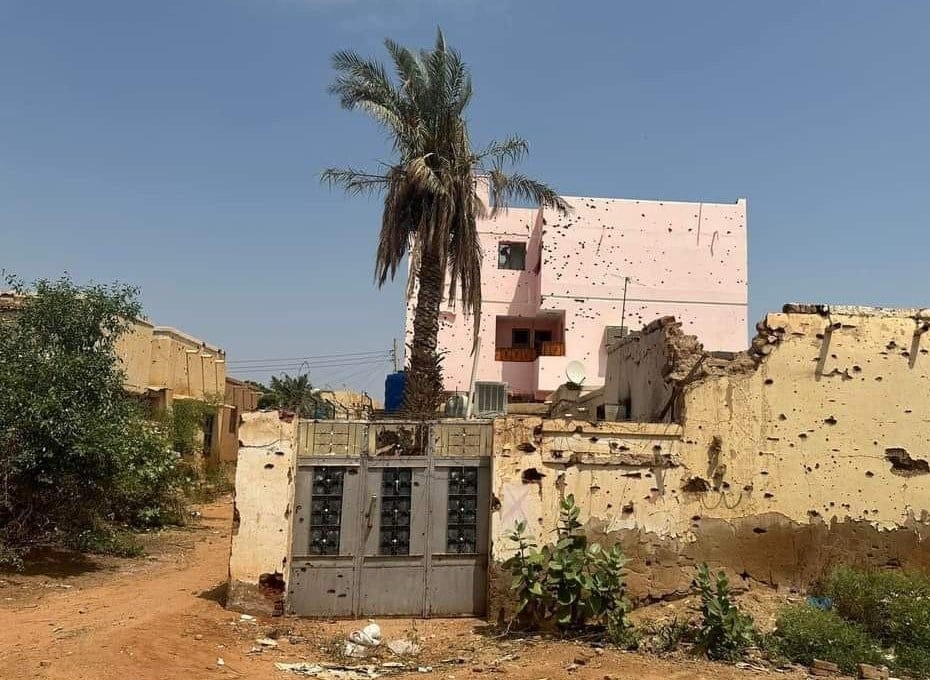
When it became possible to enter Wad Nubawi, returning was not a leisurely visit.
People needed permits and security escorts, traveling along a route that had been cleared and opened for residents to inspect their homes.
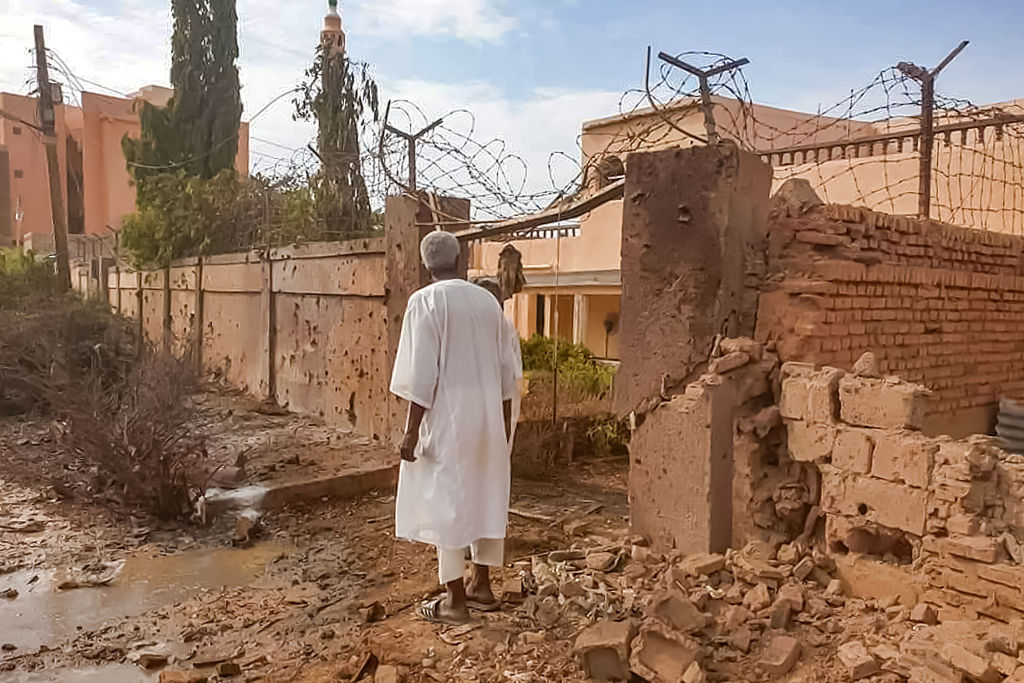
The scene was painful.
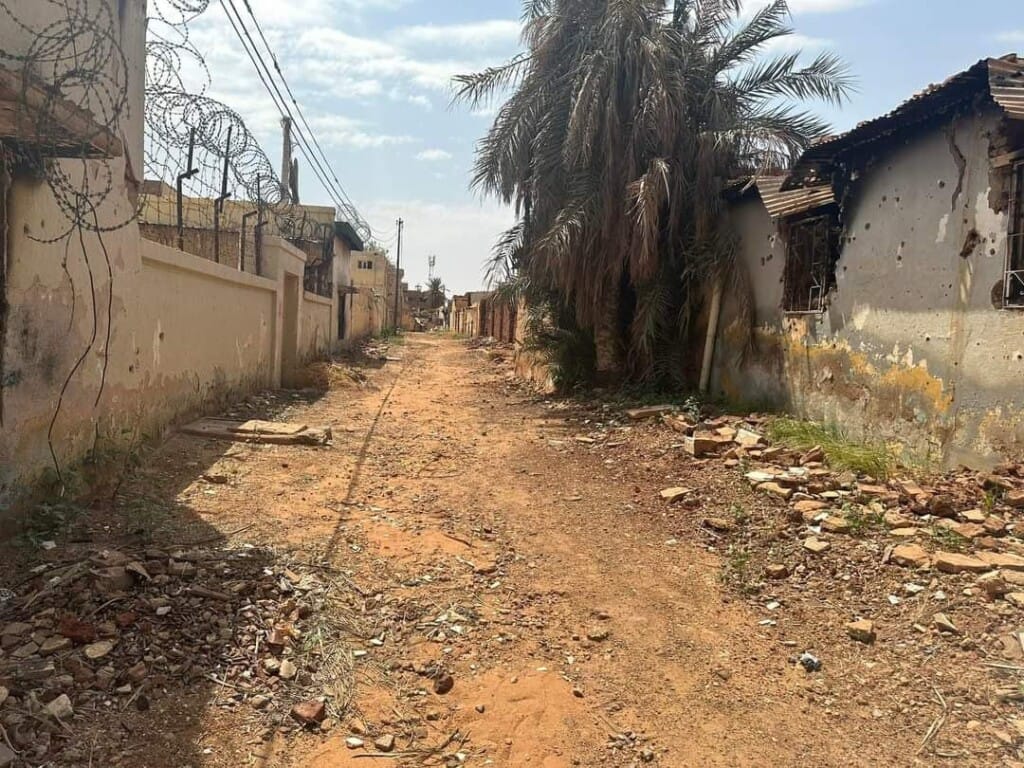
Spent ammunition casings.
Destroyed vehicles.
Burned houses.
Rubble.
Streets bearing the scars of a merciless war.
Zainab walked with her son between the houses, needing time to absorb the fact that this devastation was the neighborhood where she had been born and lived.
But she did not surrender to the shock.
Young people returned.
They began cleaning houses and streets.
Removing rubble.
Checking the homes of those who were absent.
When the water supply was restored, they entered abandoned houses to inspect the networks and close open water sources to prevent the homes from flooding.
A communal kitchen was established at the home of Mrs. Mardiya Abdel Majid, opposite Zainab's house, providing people who came to clean their homes with food, drinks and a place to rest.
At first, many people would arrive in the morning and leave in the afternoon.
Zainab and her son Mohamed stayed.
Their presence itself was an announcement:
The return had begun.
Then the first shop reopened.
Water returned.
Then electricity.
Then residents.
Then schools, universities and student dormitories.
The area gradually began to regain its pulse.
A Return That Went Beyond Her Own Home
Zainab's return to Wad Nubawi was not simply a return to her own house.
She continued checking on people and distributing aid sent by family members and relatives abroad.
There was also a communal kitchen at Imam Abdulrahman Al-Mahdi Mosque, receiving food, balila, luqaimat, rice and donated livestock.
Sudanese living abroad sent money to purchase livestock and feed people.
Support also reached the Quranic school and its students.
For Zainab, returning meant reconnecting what the war had torn apart.
In Times of Sorrow — and Joy
During and after the war, deaths became frequent.
Zainab was among the first to stand beside bereaved families.
She performed her duty.
Offered condolences.
And stayed wherever people needed her.
Then joy slowly began to return.
Weddings resumed.
She helped families within her extended family arrange marriages for their sons.
The weddings were simple.
But they carried enormous meaning.
After months of death, a single smile became an act of triumph.
From Rebuilding the Neighborhood to Restoring Electricity
In September 2025, Zainab was asked to return to her work at the Sudanese Thermal Power Generation Company.
She was among a small number of employees present in Khartoum.
As Head of the Procurement Unit, her presence was important at a stage when the institution needed to rebuild its offices and provide the materials and equipment required to repair electricity facilities damaged by destruction, looting and fire.
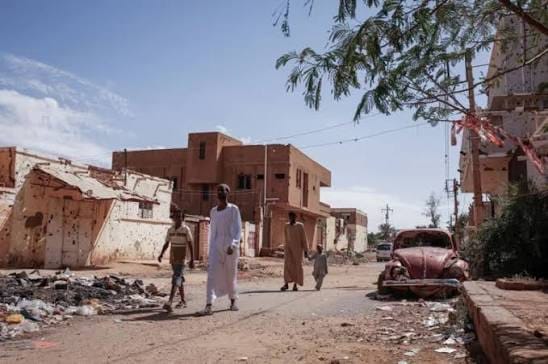
Her daily journey to work revealed the scale of the disaster.
From Wad Nubawi to Al-Shuhada Station.
Bahri, Al-Halfaya.
Shambat and Al-Safia.
Al-Nile Street.
Areas that were almost deserted.
Burned-out vehicles.
Trees blocking roads.
Collapsed electricity poles.
A city that sometimes appeared as though life had withdrawn from it.
Then the small details began to change.
Street-cleaning workers appeared.
Roads reopened.
Residents returned.
Cars began to appear.
For someone who had seen the city empty, the sight of several cars at the entrance to Omdurman Bridge was enough to bring genuine joy.
For her, the cars carried a simple message:
Khartoum is coming back.
When the Light Comes Back
At the institution itself, the return began with a small team.
Employees later returned from Port Sudan.
The Procurement Unit helped provide the needs of power stations and operation and maintenance teams, including work supplies, accommodation requirements and food provisions.
Zainab speaks with pride about the engineers, technicians, administrators and workers who returned with determination to restore the stations to service despite shortages of equipment and difficult conditions.
Communities living near some of the power stations also provided food for the workers.
Another image of Sudanese solidarity.
For Zainab, electricity was more than current flowing through wires.
When a light comes on in a home that has remained dark for months, that home says:
We are here.
And the city as a whole says:
I did not die.
Guardian of the Homes of Those Who Left
Alongside her official work, Zainab took on a responsibility that came with no official order and no salary.
She cared for the homes of relatives who had left the country.
Many of them were abroad, particularly in Egypt.
She began checking on their homes.
Entering them.
Making sure they were safe.
Informing their owners about any damage.
Following up on repairs.
She also helped some owners rent out their homes, collect the rent and send it to them.
She became someone people trusted when they wanted to send money or assistance to families in need.
Perhaps this is one of the noblest responsibilities a person can assume during wartime:
Keeping a trust.
Why Call Zainab Courageous?
Because courage is not always found in those facing bullets.
Sometimes it is found in the person who protects a family from hunger.
In the person who feeds someone displaced by war.
In the person who collects clothes for someone who fled home with nothing.
In the person who plants vegetables in the soil of fear.
And plants flowers so that ugliness does not prevail.
In the person who returns to a devastated neighborhood instead of fleeing its memories.
In the person who protects the homes of absent families as carefully as her own.
And in the person who returns to work to help restore electricity — one of the essential lifelines of a city.
Zainab Abdullah Al-Shafie did not create a single heroic moment.
She created a long chain of small acts.
When those acts are brought together, her name becomes something greater than a collection of everyday details.
It becomes:
A story of courage.
She saw Wad Nubawi when it was almost emptied of its people.
Then she saw footsteps return to its streets.
She saw Khartoum reduced to silence and destruction.
Then she watched cars return to its bridges.
Students return to their universities.
Vendors return to their markets.
Electricity return to homes.
And she was one of those who did not wait for life to return on its own.
They went out and helped bring it back.
Zainab Abdullah Al-Shafie is not courageous because she never knew fear.
She is courageous because she continued to do good despite fear.
She continued serving people despite danger.
She continued planting despite shelling.
She continued returning despite destruction.
And she continued believing that Sudan, no matter how heavily burdened by war, can stand again.
Perhaps this is one of the most beautiful forms of courage:
To be surrounded by destruction and say, through action rather than words: Nothing is impossible for those who choose life.
A Call to Document These Stories Before They Are Lost
Zainab's story is certainly not the only one.
This war, with all the death, destruction and displacement it has brought, has also revealed thousands of stories that deserve to be told:
A mother who saved her children.
A young man who risked his life to rescue a neighbor.
A doctor who continued treating the wounded under shelling.
A driver who transported people away from areas of death.
A woman who fed an entire neighborhood.
A neighbor who guarded the homes of those who had left.
A teacher who continued educating children in displacement.
A volunteer who carried medicine and food along dangerous roads.
And perhaps an unknown hero who performed an extraordinary act and then returned to ordinary life without anyone knowing what he or she had done.
These stories must not be lost.
Nations preserve their history not only through the biographies of leaders and famous figures, but also through the stories of ordinary people when they perform extraordinary acts.
That is why I appeal to anyone who has a story of courage, bravery, generosity, sacrifice or human solidarity that took place during this war and deserves to be documented: do not hesitate to send it to me, together with any available information, photographs and testimonies.
I will publish these stories as a tribute to their protagonists and as a way of honoring them, so that Sudanese people and the world may know that, amid all this devastation, there were still people protecting the beautiful essence of Sudan.
Documentation is not merely a tribute to the person whose story is being told.
It is also a way of preserving a nation's memory, drawing lessons from its experience, and teaching future generations that even in the darkest circumstances, a human being can choose courage over fear, solidarity over indifference, and generosity over selfishness.
Let us write these stories before they are lost.
Let us give their heroes the names they deserve in Sudan's collective memory.
For there may be thousands of people like courageous Zainab among us — waiting only for someone to tell their stories.
It is worth noting that Mrs. Zeinab belongs to the well-known Al-Shafie family, a family distinguished by its tradition of scholarship, religious learning, social standing, and service to the community.
Her Father
Her father, the educator and Sheikh Abdullah Mohamed Al-Shafie, was one of Sudan’s pioneering educators and one of the founders of Karrari Private Schools, formerly known as Al-Shaabi Schools.
Her Uncles
- Judge Ahmed Mohamed Al-Shafie: One of Omdurman’s prominent scholars of Islamic jurisprudence and Qur’anic sciences. During the 1950s, he contributed to spreading Islam in the Nuba Mountains and Kadugli. He also held a Qur’anic interpretation teaching circle at the Grand Mosque of Omdurman and served as imam of the Majzoub Mudathir Al-Hijaz Mosque.
- Sheikh Ibrahim Mohamed Al-Shafie: He established a khalwa and religious school in Al-Azuzab dedicated to teaching and memorizing the Qur’an.
All three were graduates of the Omdurman Scientific Institute and had memorized the Qur’an from an early age. They combined their professional careers with religious teaching and community service.
Her Mother, Mrs. Umm Al-Hassan Hassan Sharif
A Link Between Generations
Her mother, Mrs. Umm Al-Hassan Hassan Sharif, was born in Omdurman at the home of her paternal grandmother, Zeinab, daughter of Imam Al-Mahdi. She was raised in her grandmother’s compound in Wad Nubawi, known as “Hosh Al-Sayyida Zeinab”, where she was deeply influenced by her grandmother’s values, generosity, and hospitality.
She received her education in Wad Nubawi and became one of the early female nutrition teachers in Sudan. She worked in Wad Al-Bakhit, Al-Jereif, Khartoum, Omdurman, Karrari, and other areas.
She was also deeply committed to adult literacy. At the Imam Abdulrahman Al-Mahdi School opposite the family home, she taught older women how to read and write and helped them learn the Qur’an. She was widely known for her kindness, generosity, wisdom, and sound judgment.
She often shared with her children stories of her grandmother, Zeinab bint Al-Mahdi, particularly her generosity, her practice of opening her home to relatives and strangers alike, and the way she cared for the family following the hardship of Al-Shakkaba and their relocation from Gezira Al-Fil to Wad Nubawi.
These were not merely family stories. They became a living family tradition: opening the home to others, feeding people, asking after those who were absent, and caring for those in need.
Her daughter, Mrs. Zeinab Abdullah Al-Shafie, inherited this legacy. She bears the same name and inherited from her mother a love of education, work, service to others, maintaining family ties, generosity, and kindness.
During the years of war, Zeinab found herself naturally assuming the same roles, without planning or preparation: opening her home, bringing people together, feeding them, caring for those in need, and protecting the homes of those who had been forced to leave.
Thus, the values of Zeinab bint Imam Al-Mahdi passed from her to her granddaughter, Umm Al-Hassan, and then to her daughter, Zeinab—a living legacy of generosity, education, and service to others.
Post your comments
Photo of the Week

Cairo – (Sudanow) Taqa Al-Noor Mohamed Al-Noor, who topped Sudan's 2026 Secondary School Certificate examinations with a score of 97.7%, did not achieve this result on an easy, trouble-free path. Her journey was shaped by hard work, perseverance, and determination, amid educational and social circumstances that presented their own challenges. What makes her experience par...
More-
20 September, 2026
Stories from the Heart of the Battlefield Zainab: When Staying Becomes an Act of Courage
The Courageous Zainab: A Woman Who Stayed When Everyone Left — and Returned to Bring Life Back to Wad Nubawi From a home that opened its doors to displaced families, and a garden that flourished amid fear, to the homes of those who were away and the power stations she helped restore — the story of a Sudanese woman who shows how ordinary people can perform extraordinary acts during wartime. Khartoum – (Sudanow...

Contact Us

Address: Sudan News Agency (SUNA) Building, Jamhoria Street, Khartoum - Sudan
Mobile:+249 909220011 / +249 912307547