


From Coral to Amber: A Guide to Sudan’s Traditional Stones Sayyida Siddiqa Ismail al-Mahdi: Jewellery That Carries Suda
27 September, 2026
Khartoum — Sudanow
In Sudan, jewellery is worn for more than adornment. Many pieces carry stories of family, place and custom, preserving fragments of a cultural memory passed from one generation of women to the next. Among those devoted to this heritage is Sayyida Siddiqa Ismail al-Mahdi, who transforms stones into jewellery that brings together the beauty of nature and the distinctive character of traditional Sudanese craftsmanship.
Siddiqa’s fascination with stones began early. Drawn to their shapes, colours and variety, she took particular pleasure in selecting and arranging them, then combining them with Sudanese ornaments to create pieces with a character of their own. According to writer and researcher Dr Tayba Hassan Sharif, Siddiqa developed her craft gradually, guided by her personal taste and knowledge of stones. She explored a range of approaches: pairing different stones, adding fittings and decorative elements, and combining stones with silver or traditional Sudanese goldwork.
She continued this work until the COVID-19 pandemic brought a downturn in the market. The upheaval Sudan has experienced in recent years has since curtailed her regular activity.
Describing her relationship with the craft, Siddiqa says:
“I love stones and their shapes, and I take great pleasure in working with them. Sudan truly has beautiful things, and among the most beautiful are the treasures of our heritage.”
A Distinctive Approach to Jewellery Design
Siddiqa looks beyond a stone’s conventional use. She considers its colour, size and form, then pairs it with metals and other materials to create designs that unite tradition with invention.
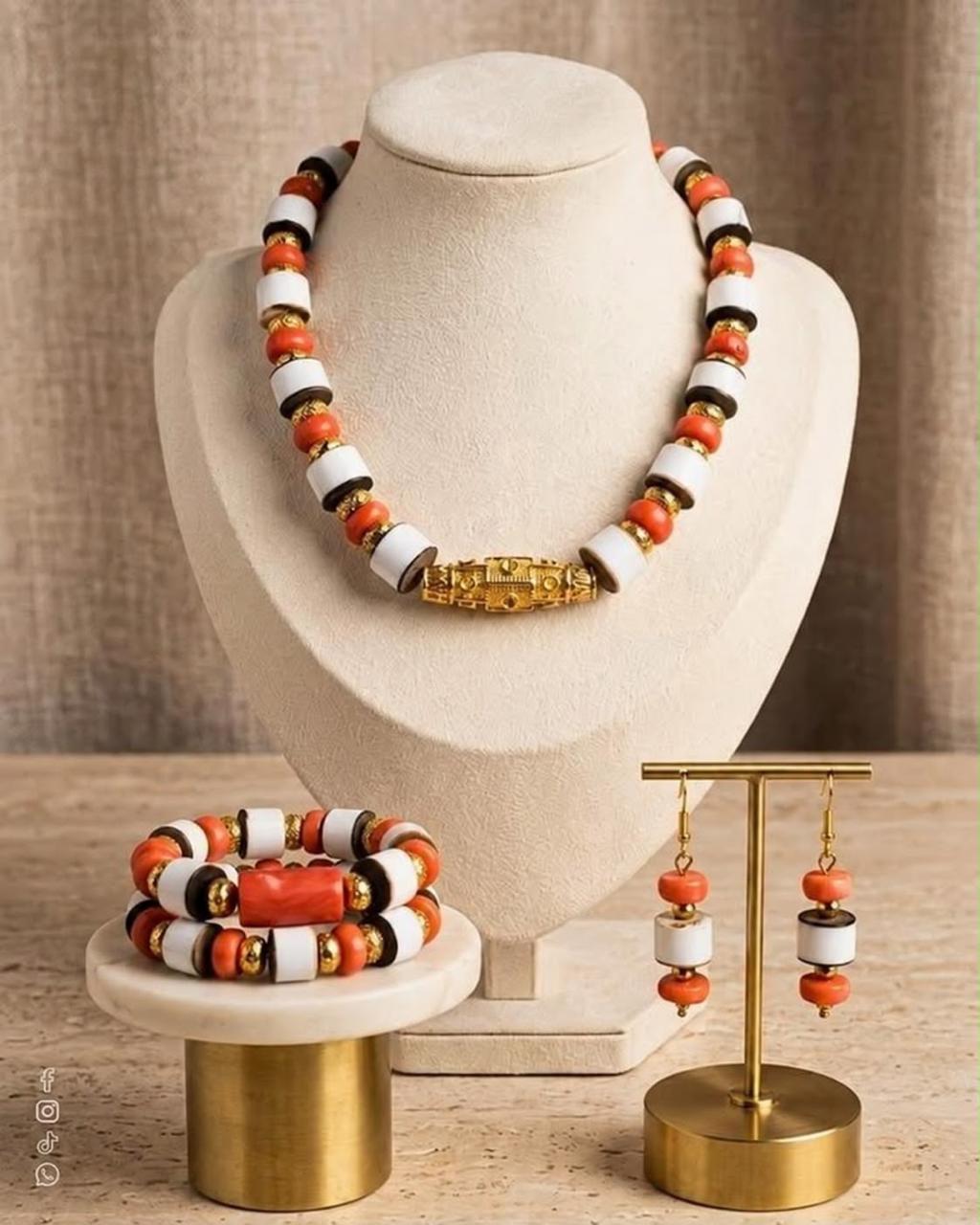
Her work incorporates traditional Sudanese gold ornaments made by local goldsmiths. These pieces, particularly those used in long necklaces, are often decorated with small black and white beads known as qusayyis. Siddiqa gives them a new setting by combining them with agate, coral, silver and other materials.
She began with a small circle of customers who recognised the distinctive quality of her designs. As her clientele grew, she also began creating jewellery for the jirtig, Sudan’s traditional wedding ceremony, and preparing ornaments for brides. She took part in several bazaars at a time when relatively few people in Sudan specialised in designing jewellery with stones.
Agate, Coral and Amber
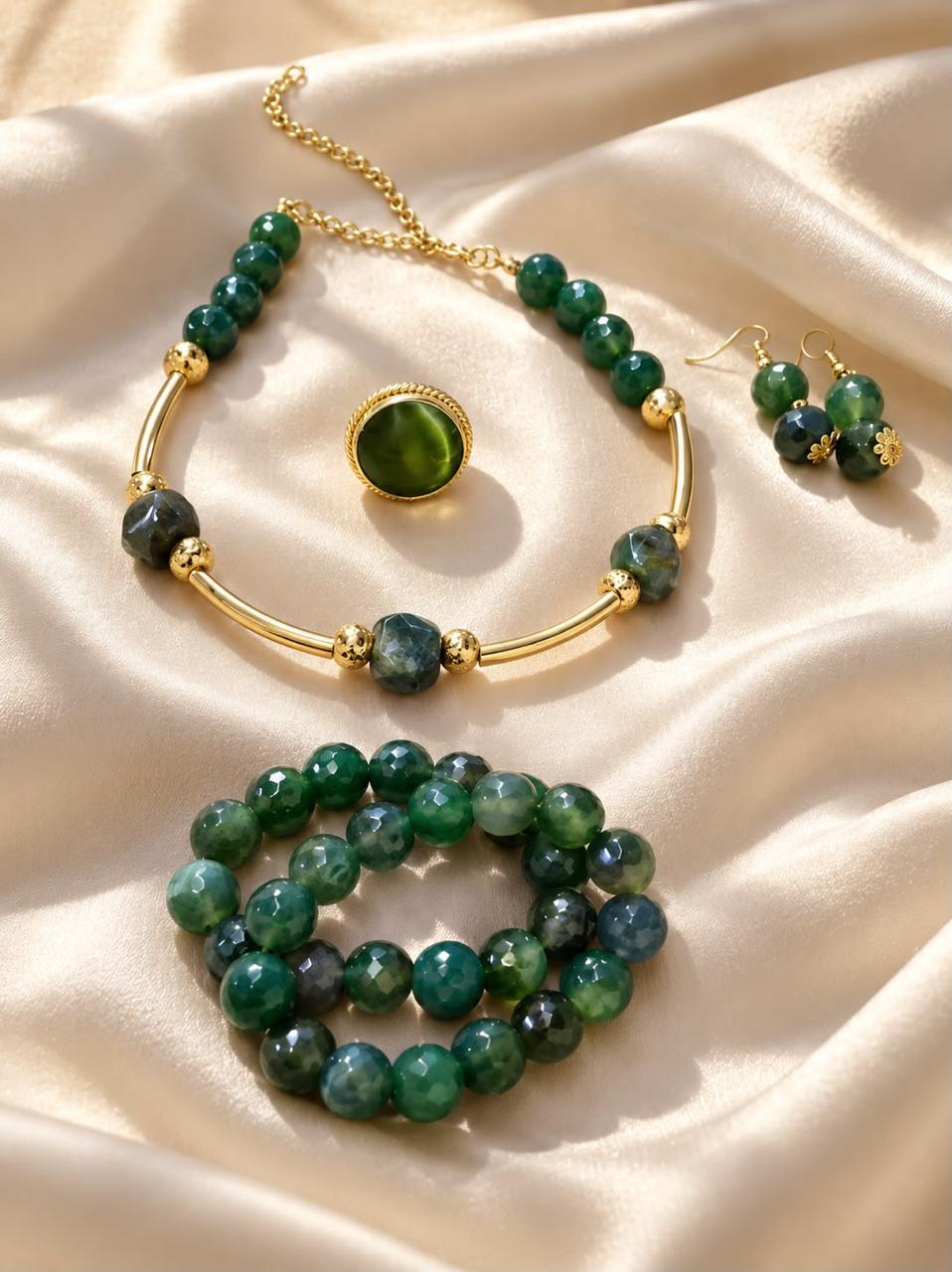
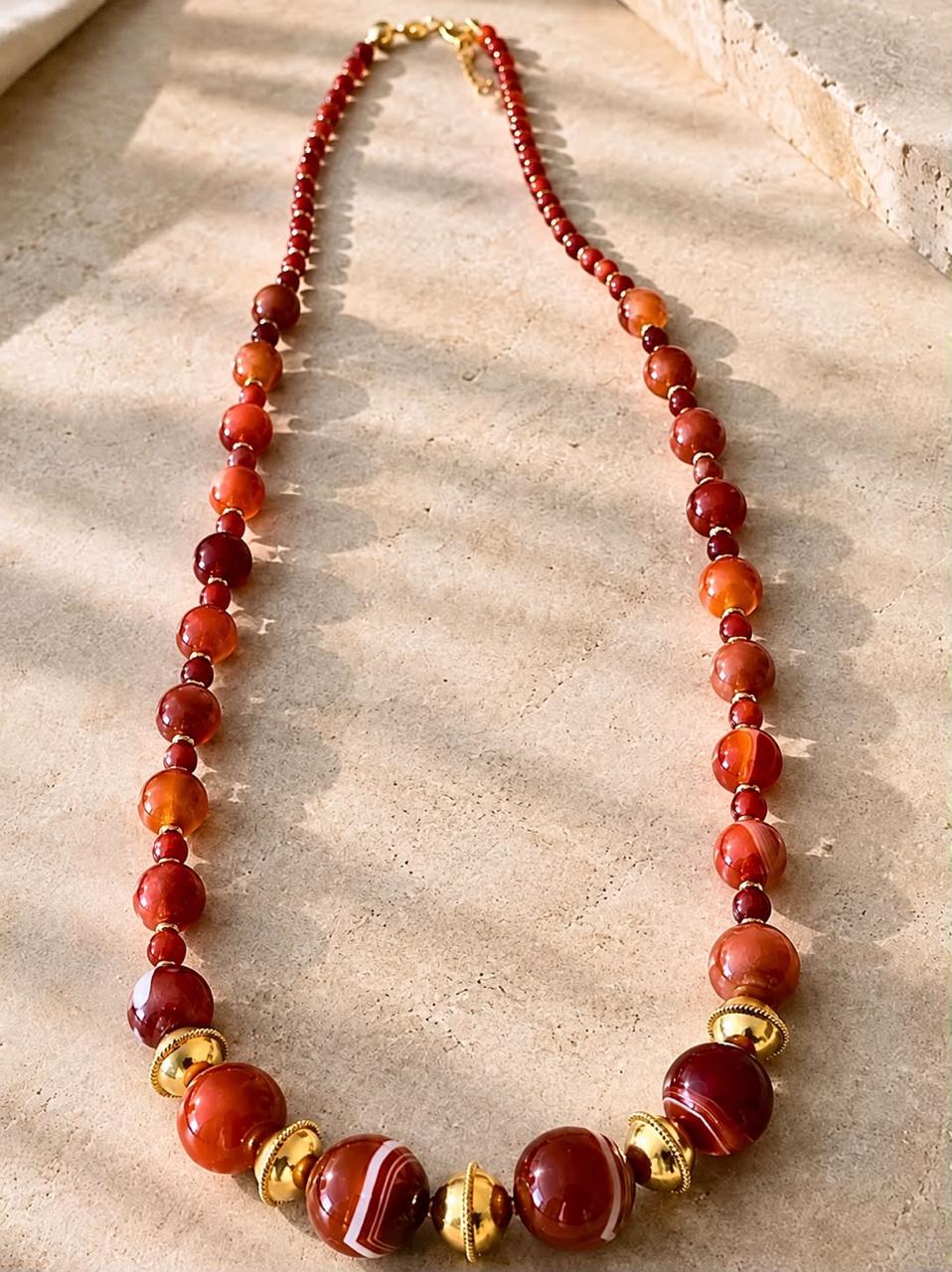
Agate is among the stones Siddiqa uses most often. Popular and widely worn in Sudan, it offers a broad range of colours and forms. She may make a necklace entirely from agate in a single colour, combine several shades, or pair the stone with gold or silver.
She also works with Sudanese qusayyis, small beads usually found in black and white, as well as the larger Indian variety. Used alongside another stone or a contrasting colour, they add variety to a design.
Coral, amber and white pearls of different sizes and shapes are also central to her work. Because natural pearls are difficult to obtain and expensive, she generally uses cultured pearls.
Amber has been known for generations in Sudan and elsewhere in Africa. Large, round yellow beads were traditionally worn with silver. Coral, meanwhile, has a recognised place in West African adornment, including both traditional and ceremonial jewellery.
Sumayta and Bloodstone
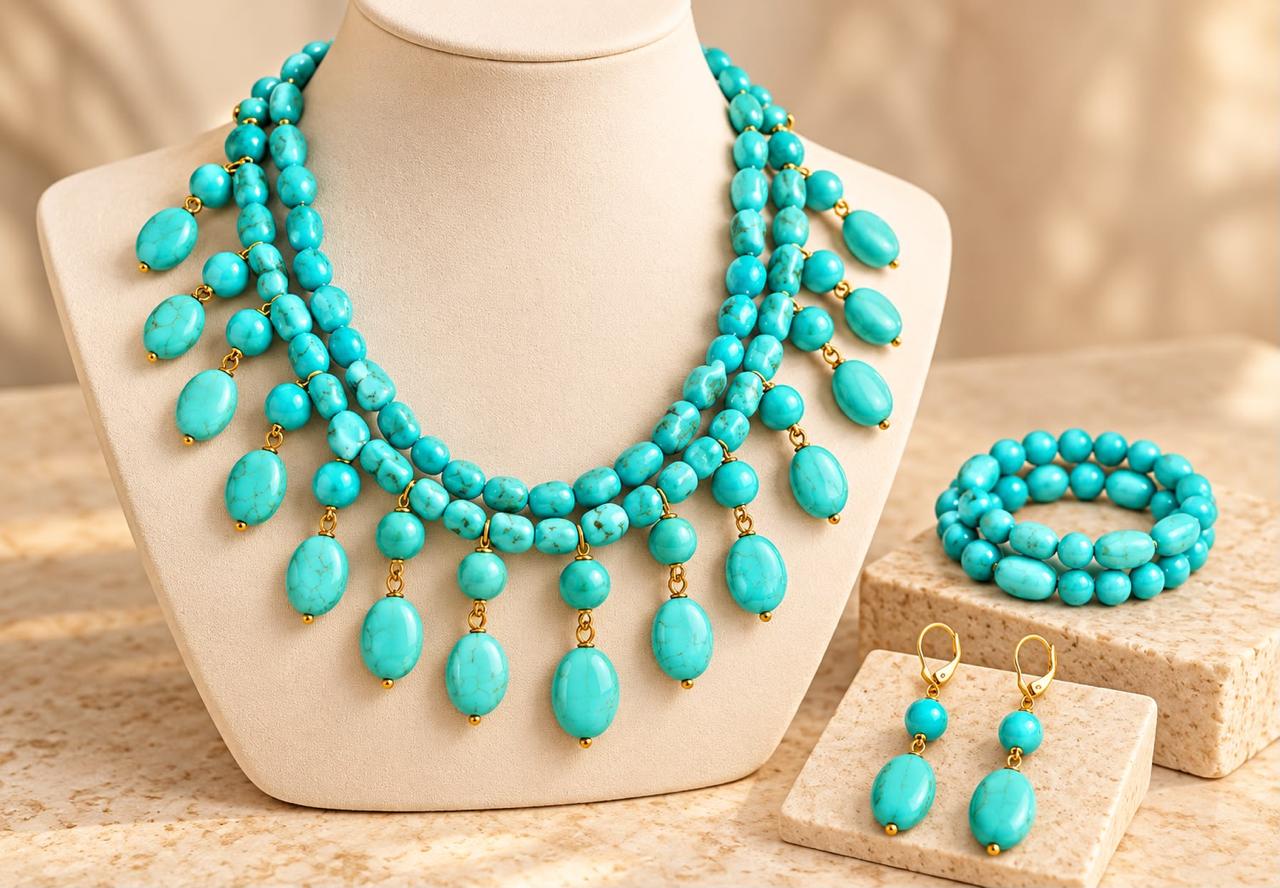
Sumayta is another distinctive heritage stone, found in various shapes and sizes, including an elongated form. Sudanese people use it in weddings and jirtig ceremonies, and wearing it has long been associated with hopes for good fortune.
It is especially prevalent in western Sudan, particularly Darfur, where it is made into long decorative necklaces. While some women in central Sudan wear long necklaces set with gold coins, women in the west have made comparable pieces using sumayta.
The stone was once highly valued. Some long pieces commanded considerable sums, and traders bought it in quantity. In certain communities, its standing came close to that of gold.
Another traditional stone is bloodstone, formerly used in jirtig ornaments and worn by young girls and boys. Older pieces have become rare, however, and the stone is no longer readily available in the sizes and quality remembered from the past.
Knowledge Passed Down Through the Family
Siddiqa’s interest in stones grew out of family life. She was raised among relatives who knew the different varieties and cared about how they were arranged and worn. Older family members had extensive knowledge of them, while her maternal cousins also collected stones and took an interest in their use. Such objects were part of the household’s everyday culture.
Siddiqa recalls a family tradition that the daughters of Imam al-Mahdi did not rely on gold and silver alone. They wore stones, strung necklaces and made some ornaments themselves. The women of the family also knew which materials were used to prepare a bride’s jewellery and headpieces.
She remembers in particular her aunt, Sayyida Qamar Abdallah al-Fadil al-Mahdi, who was skilled at preparing bridal accessories and head ornaments. She used siksik beads to devise a variety of designs. Other women in the family made beautiful pieces from siksik, cowrie shells and other traditional materials.
This intricate handwork is less common today. Many of the women who held that knowledge have passed away, taking with them a wealth of skill and experience. Even pieces made today do not always have the precision and beauty that Siddiqa remembers in the work of earlier generations.
The Baloum: A Bridal Ornament
The baloum is a traditional bridal ornament worn around the upper arm. It is made from threads arranged and shaped with care, then embellished with stones and other decorations. Small hanging elements resemble jasmine blossoms.
Modern versions of the baloum have appeared in recent years, but its traditional form remains closely bound to memories of the Sudanese jirtig and the rituals of preparing a bride.
Beauty and Popular Belief
For Siddiqa, adding a stone to gold or silver changes the character of a piece. Stones bring colour and texture, while giving a designer room to experiment with new compositions.
Their place in Sudanese culture extends beyond appearance. Some have long been associated with good fortune and other popular beliefs. Bloodstone was regarded as auspicious, while agate and coral were linked in popular tradition to health, well-being and the hope of good things to come.
Some wearers took care to ensure that agate touched their skin. These beliefs remain part of the cultural history of stones in Sudan; they are traditions, rather than scientific claims.
Black Coral and Yusr
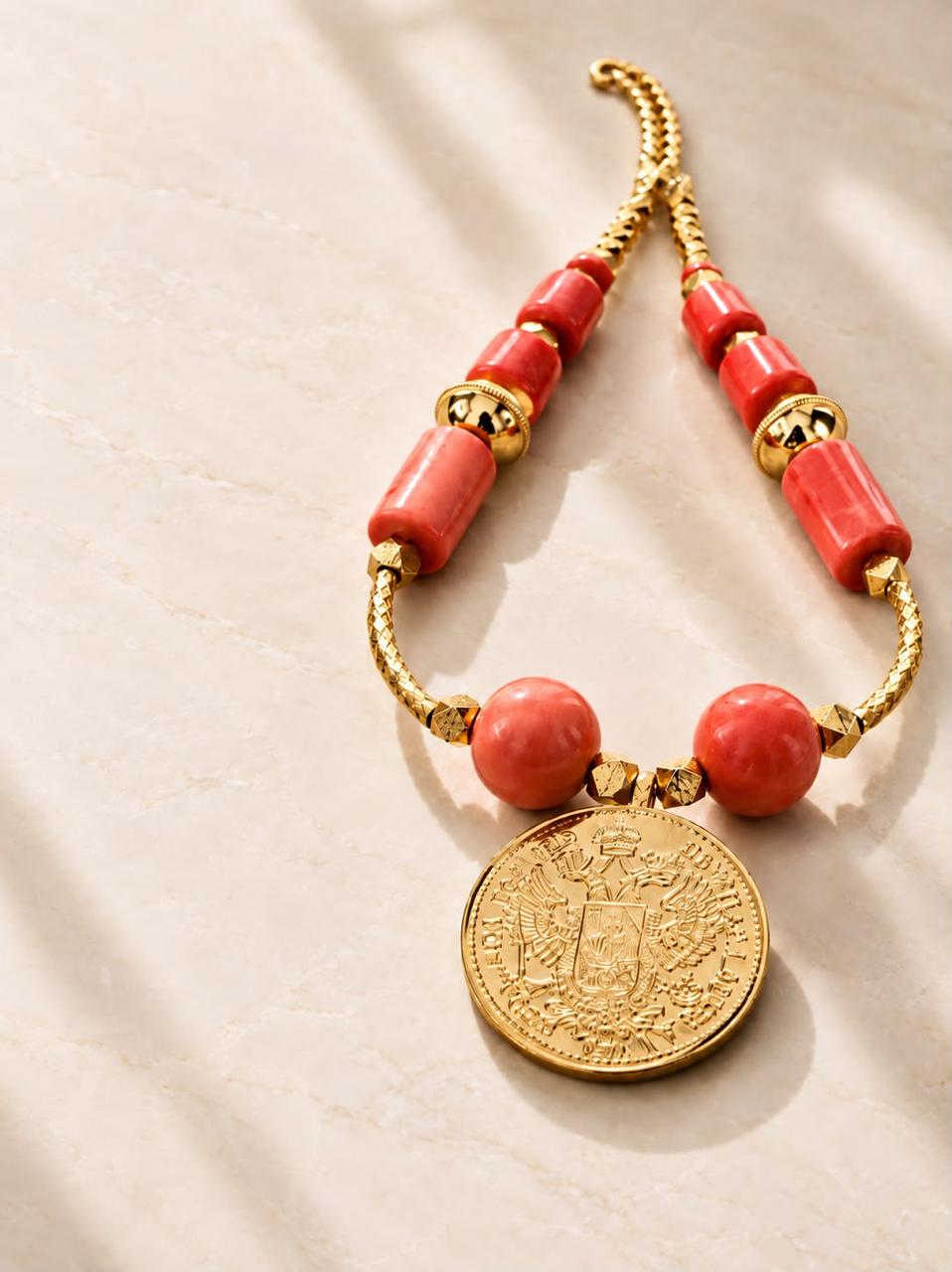
Black coral, known in Sudan as yusr, has a longstanding place in local adornment. It has been used to make large prayer beads and jewellery, sometimes inlaid with silver and red coral.
Many Sudanese families kept yusr prayer beads at home, and they were owned by numerous women. Popular spiritual beliefs also became attached to them: some people held that using the beads in prayer brought blessings and that supplications made with them would be answered.
Today, yusr is rare and costly. When it cannot be found, designers may use other stones to make similar pieces, sometimes adding coral. For those who value the original, however, these substitutes do not carry the same significance.
Silver and Stones: Room to Create
Silver is an essential element in many of Siddiqa’s designs. It brings out the colours and details of the stones and gives her greater freedom to develop new forms.
She has worked with Sudanese artisans whose skill and integrity she values. Siddiqa selects the stones and colours and sets out the overall concept and details of each piece; a silversmith or goldsmith then makes it to her design.
In Siddiqa Ismail al-Mahdi’s work, stones are more than materials for adornment. They hold memories of family and community. Through her jewellery, she gives renewed form to a part of Sudanese women’s heritage, bringing inherited craftsmanship, careful detail and a spirit of innovation together in each piece.
Post your comments
Photo of the Week

Tunis – Sudanow Sudanese documentary film “Five Witnesses,” directed by Seif El-Din Hassan, has won the first prize in the General Documentaries category at the 26th edition of the Arab Radio and Television Festival, which concluded in Tunis on September 24, 2026. The film topped a field of Arab productions competing in the category. Produced by Nabta for Arti...
More-

20 September, 2026
Stories from the Heart of the Battlefield Zainab: When Staying Becomes an Act of Courage
The Courageous Zainab: A Woman Who Stayed When Everyone Left — and Returned to Bring Life Back to Wad Nubawi From a home that opened its doors to displaced families, and a garden that flourished amid fear, to the homes of those who were away and the power stations she helped restore — the story of a Sudanese woman who shows how ordinary people can perform extraordinary acts during wartime. Khartoum – (Sudanow...

Contact Us

Address: Sudan News Agency (SUNA) Building, Jamhoria Street, Khartoum - Sudan
Mobile:+249 909220011 / +249 912307547