


Sudan Between the Stability of Legitimacy and Pressure from Washington Dismantling the “Two Sides” Narrative: From the
27 September, 2026
Khartoum (Sudanow) — Sudan’s battle today is no longer being fought solely on the ground. It has increasingly shifted into a struggle over how the state itself is defined: who represents it, who has the right to speak on its behalf, and who determines the shape of the settlement that should bring the war to an end.
This is precisely why the latest developments involving the United States matter. The issue is no longer simply a disagreement over a ceasefire, nor merely a difference in political assessment between Washington and Khartoum. It concerns a much deeper question: Is the war being treated as a conflict between two armed parties of equal political standing, or as a war imposed on a state with established institutions and international representation, confronting an armed rebellion that should be brought to an end through a comprehensive, fair and equitable political settlement?
This distinction is not a matter of wording. It lies at the heart of the issue.
The Institutional Facts Remain in Place
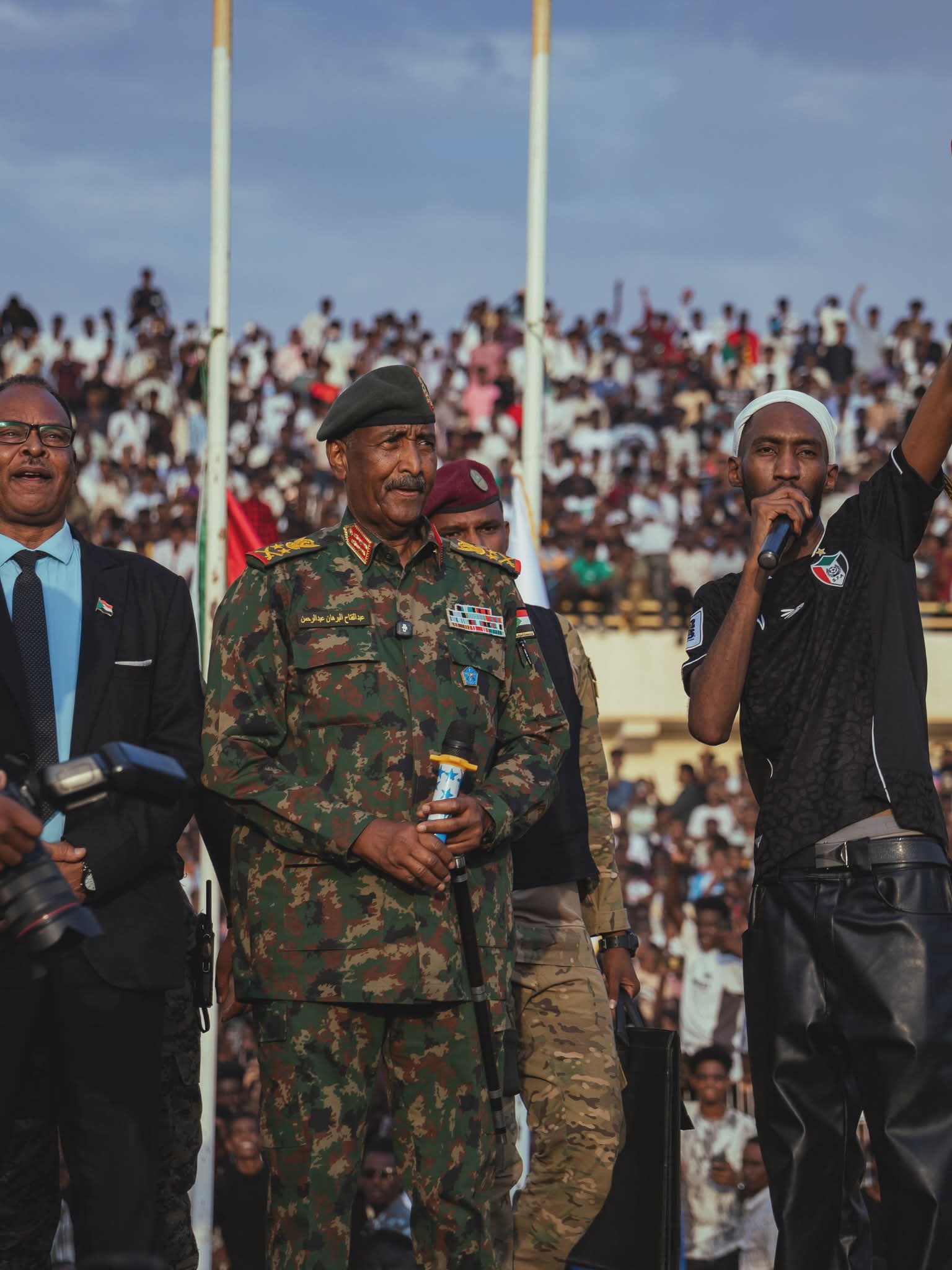
Sudan is a member state of the United Nations, and its official representation at the Organization has not been interrupted. President Abdel Fattah al-Burhan addressed the UN General Assembly in 2023 and 2024 in his capacity as Chairman of the Transitional Sovereignty Council. Prime Minister Kamil Idris subsequently addressed the General Assembly in September 2025 as Prime Minister of Sudan. In September 2025, the President of the General Assembly also met with the Sudanese Prime Minister in his capacity as head of the transitional government, during which he presented Sudan’s peace plan to the Security Council.
These facts do not mean that the United Nations has issued a final judgment on every aspect of Sudan’s constitutional and political situation. They do, however, establish something more specific: at the institutional level, the international system continues to deal with Sudan as a state with official representation that has not been extinguished.
Accordingly, criticizing the government, calling for a civilian transition, demanding political reform, or seeking accountability does not amount to abolishing the institutional status of the state. Nor does it automatically place the official government and an armed rebellion on the same footing in terms of representation.
This Is Where the Problem with the New American Position Begins
On September 22, 2026, the U.S. Department of State stated that the Sudanese Armed Forces and the Rapid Support Forces, as well as their respective leaders, do not constitute “legitimate constitutional governance” in Sudan and that both sides exercise power through armed force. Washington also announced that it would seek to increase the costs of continuing the war for the parties and the networks supporting them.
This American formulation requires careful examination.
It is reasonable for Washington to regard the Sudanese Armed Forces and the Rapid Support Forces as military parties to the conflict and to demand that both cease hostilities and protect civilians. But moving from this military characterization to placing the two sides on the same level when discussing legitimacy, representation and governance raises an entirely different question.
The Sudanese Armed Forces are an official institution of the state, with more than a century of institutional history, even if their conduct and political role may legitimately be questioned and criticized. The Rapid Support Forces, by contrast, are an armed force that launched an open war against the state, its institutions and its people.
Recognizing the existence of two armed parties to a conflict does not necessarily require treating them as equal in institutional status or international representation. This is precisely where the “two sides” narrative must be dismantled.
The State Is Not an Individual, and Institutional Legitimacy Is Not Dependent on Individuals
The international community has every right to disagree with General al-Burhan, to disagree with the government, to demand a civilian transition, and to reject the continued political role of military leaders.
But the state is something else.
Sudan is a sovereign state with continuing legal and institutional standing. A state is not embodied in a single individual.
The state consists of institutions, international membership, diplomatic representation, official bodies, treaties, obligations and legal and political continuity. Therefore, disagreement over a government should not become a disagreement over the existence of the state or its representation.
The clearest paradox is that the United States itself maintains official relations with Sudan and deals with its diplomatic institutions, while the new political formulation suggests that neither of the two parties to the war represents legitimate constitutional governance.
This raises a legitimate question: if the American disagreement is political and constitutional in nature with the authorities currently in place, why should that disagreement lead to a fundamental redefinition of the relationship between the state and the armed rebellion?
The Visa: When Political Pressure Becomes a Negotiating Tool
The issue becomes even more sensitive in relation to the visa of the head of state, General Abdel Fattah al-Burhan.
According to a Reuters report on September 22, the United Nations was informed that the issuance of the visa appeared to be linked to al-Burhan’s acceptance of a U.S. proposal for a 90-day ceasefire. This prompted the UN Secretariat to raise the matter with the U.S. authorities, while Secretary-General António Guterres expressed concern over what had occurred and indicated that the denial of the visa was inconsistent with Article 105 of the UN Charter and the 1947 Headquarters Agreement.
If the visa was indeed linked to acceptance of a specific political or military arrangement, then the matter goes beyond an ordinary diplomatic disagreement. The right of a representative of a UN member state to participate in the work of the General Assembly would, in such a case, have become conditional upon accepting a particular negotiating position.
That is not a legitimate function of the host country.
This is where the provisions of the 1947 United Nations Headquarters Agreement become particularly important.
Article 11 provides for freedom of transit to and from the United Nations headquarters district. Article 12 states that these provisions apply regardless of the nature of the relations existing between the government of the person concerned and the Government of the United States. Article 13 provides for the issuance of visas, where required, without charge and as promptly as possible, in a manner that does not impede the privileges and immunities applicable to access to the Organization’s headquarters.
This does not mean that the United States has surrendered all authority over entry into its territory. It does mean, however, that the obligations of the host state concerning the participation of representatives of UN member states in the Organization’s work are not ordinary matters of immigration or bilateral relations.
The history of the United Nations itself has witnessed serious disputes over the refusal by the United States to grant visas to officials or representatives seeking to participate in UN proceedings, including cases considered by the Committee on Relations with the Host Country in light of the provisions of the Headquarters Agreement.
The Ceasefire Is Not the Problem; The Problem Is Turning It into a Tool for Redefining the Conflict
No serious observer can argue against the need to stop the war and protect civilians.
But a ceasefire is not, in itself, a political settlement. It is a means of creating the conditions for one.
Any viable ceasefire therefore requires clear answers to several questions: Who will monitor it? How will it be implemented? How will the parties be prevented from repositioning forces or rearming? How will humanitarian assistance be guaranteed? What happens if the ceasefire is violated? And how can the military status quo from becoming a new political reality?
Turning a ceasefire into a precondition for political recognition or access to the UN platform is an entirely different matter. More dangerously, a ceasefire could be imposed in a manner that makes the military outcomes of the war the basis for redistributing political legitimacy.
A ceasefire should stop the war; it should not redefine the state.
What About “Sumoud” and the So-Called Exclusive Civilian Forces in the Western-American Interpretation?
All Sudanese civilian forces have the right to make their voices heard in Washington, New York, Addis Ababa, Cairo and elsewhere. It is entirely natural for the United Nations and the United States to listen to different Sudanese constituencies.
But a distinction must be made between selective and politicized political engagement and the official representation and legitimacy of the state.
The presence of a limited civilian or political coalition in New York and its meetings with international officials do not automatically grant it the status of Sudan’s official representative. Nor does the reception it receives from international officials necessarily constitute formal recognition of its representation of the Sudanese state.
The problem begins when the balance becomes distorted: when the representative of the state is prevented from accessing the General Assembly while political forces opposing the existing authorities, denying their legitimacy, or seeking to compete with the state without a clear popular mandate are given broad access to international platforms.
At that point, the question is no longer simply one of freedom of political dialogue. It becomes a question of whether Sudan’s political representation is being rearranged from outside Sudanese institutions themselves.
Where Does the Old Regional Narrative Appear?
For years, Sudan’s official discourse has criticized a regional approach that reduces the war to a military and political binary in which the two sides are treated as equivalent. Ultimately, such an approach risks treating the state and the rebellion as merely two opposing parties in a struggle for power.
Today, some elements of that interpretation appear to be reflected in the new American formulation, making Washington appear to be aggravating the crisis rather than pursuing a serious path toward resolving it.
This does not necessarily mean that the policy was issued by a particular regional actor or that Washington is simply implementing another state’s agenda. However, the alignment between Washington and the UAE, statements attributed to President Trump’s envoy, and what appear to be deeply entrenched policy positions have raised serious questions about the direction of American policy.
The similarity in political outcomes deserves attention: weakening the distinction between state institutions and an armed rebellion; pressuring the governmental side to accept specific arrangements; and treating future political legitimacy as something that can be reconstructed outside the existing institutional framework.
This is precisely why the misleading narrative must be dismantled and rejected: it does not rest on objective grounds and, rather than serving peace and stability in Sudan, risks perpetuating a state of fragility.
The Question Washington Should Face
If the United States genuinely wants to end the war, the question is not whether pressure should be exerted on the parties. The question is how that pressure should be distributed and on what basis.
Even American statements acknowledge that the Sudanese war continues not only because of the internal parties, but also because of external networks of support, financing and arms supplies.
U.S. Secretary of State Marco Rubio stated in New York that the continuation of the war is linked to the active involvement of external actors, calling on those actors to use their influence over the parties they support.
This leads to a more balanced principle:
If the objective is to stop the war, pressure should be directed at all sources sustaining it, rather than turning the state itself into the weakest link in the pressure process in such an overt manner.
Pressure on the government can be legitimate when it concerns protecting civilians, ending violations, opening humanitarian corridors, or advancing a political process.
But pressure becomes problematic when it is accompanied by a redefinition of the government and the rebellion as equal in institutional standing, or when diplomatic instruments connected to the United Nations are used to compel or coerce the state into accepting a political formula that rewards the rebellion and its supporters.
Sudan Does Not Reject Peace — But It Rejects Redefining the State
Sudan calls for an end to the war and is working toward that goal. It needs a fair political settlement, a broad civilian political process, an examination of the roots of the crisis, and the rebuilding of its institutions.
None of these objectives requires erasing the distinction between the state and the rebellion.
Indeed, a sustainable solution requires recognizing these distinctions while subjecting everyone to the law and accountability.
The army is not above accountability. The government is not above criticism. Civilians must not be excluded from the political equation.
At the same time, the Rapid Support Forces rebellion is not the state. Military control over parts of the territory does not, by itself, create political legitimacy. Nor does negotiating with an armed force automatically grant it the status of national representation.
The real challenge for international mediation is to find a formula that achieves broad national consensus and ends the war without allowing the war itself to become a source of new legitimacy.
This is precisely where Washington should reconsider its approach — an approach that is not neutral.
Sudan does not reject pressure aimed at achieving peace. What Sudan rejects is pressure that effectively rewards the party that initiated the war and thereby alters the political and institutional balance of the state.
The peace Sudan needs is not a peace that equates the state with the rebellion. Nor is it a peace imposed from abroad, or a ceasefire used to engineer legitimacy.
It is a peace that stops the war, protects civilians, opens the way for a genuine political transition, and at the same time preserves the unity, institutions and sovereignty of the state.
Legitimacy is not measured by who possesses weapons, nor should it be reconstructed according to the military balance of the war.
The state can be criticized, held accountable and reformed. But it should not be equated with an armed rebellion simply because it is fighting that rebellion.
If ending the war is the objective, pressure should be directed at the sources sustaining it — including the rebellion and its external supporters — rather than turning the state, despite its institutional standing and its constitutional and national responsibilities, into the object of coercion.
Sudan does not reject mediation. It rejects mediation that lacks impartiality.
Sudan does not reject efforts to stop the war. It rejects attempts to use mediation to redefine the state, to make a ceasefire the price of political representation, or to turn a visa into a bargaining instrument for reshaping legitimacy.
Sudan wants peace. It rejects biased mediation, but it does not reject genuine efforts to end the war through fair mechanisms.
What Sudan rejects is making the redefinition of the state the price of peace; turning a ceasefire from a bridge toward a settlement into a settlement imposed according to external agendas; or treating the equality of the so-called “two sides” of the fighting as an equality between the state and the rebellion in terms of legitimacy and representation.
This, ultimately, is where the deeper significance lies in Washington’s apparent return to a narrative long advanced by the United Arab Emirates since April 15, 2023 — a narrative centered, according to the Sudanese official position, on support for the Rapid Support Forces rebellion and its objective of weakening and fragmenting Sudan, for which extensive military, financial and other forms of support have allegedly been mobilized.
Post your comments
Photo of the Week

Tunis – Sudanow Sudanese documentary film “Five Witnesses,” directed by Seif El-Din Hassan, has won the first prize in the General Documentaries category at the 26th edition of the Arab Radio and Television Festival, which concluded in Tunis on September 24, 2026. The film topped a field of Arab productions competing in the category. Produced by Nabta for Arti...
More-

20 September, 2026
Stories from the Heart of the Battlefield Zainab: When Staying Becomes an Act of Courage
The Courageous Zainab: A Woman Who Stayed When Everyone Left — and Returned to Bring Life Back to Wad Nubawi From a home that opened its doors to displaced families, and a garden that flourished amid fear, to the homes of those who were away and the power stations she helped restore — the story of a Sudanese woman who shows how ordinary people can perform extraordinary acts during wartime. Khartoum – (Sudanow...

Contact Us

Address: Sudan News Agency (SUNA) Building, Jamhoria Street, Khartoum - Sudan
Mobile:+249 909220011 / +249 912307547