


International Independent International Fact-finding Mission for Sudan: Calling the Spade a Spaded
27 September, 2026
Geneva, ( Sudanow)
- The international independent experts have finally published their report. As rightly put by the UN Human Rights Commission website report on Tuesday their key findings include the increasing use of long-range drones against civilians and the significant support allegedly provided to paramilitary rebel fighters by individuals and entities in the United Arab Emirates, Chad, southeastern Libya and Puntland in Somalia.
This is a report by the independent international fact-finding mission for the Sudan. One element stands out: it has provided every possible detail that implicates a number of governments, topped by the United Arab Emirates (UAE) government. The report has spelled out facts that even the Sudanese government did not mention. This is why the report publication has been frustrated time and again. The facts, statistics and probe it contains are such that many quarters would be in an embarrassing situation, if and when it comes out-which is now the case- that is why they would not like to see it published.
The 22 page report has provided the Sudanese Ministry of Foreign Affairs and International Cooperation, with solid arguments that it could just use without having to recourse to further arguments.
And it goes without saying that these experts have been selected by the UN, therefore their integrity, expertise and professionalism could never be questioned.
Furthermore these experts and professionals, along with the technical committee assisting them, are neither under pressure from the government of the Sudan, nor are they in enmity with the UAE, Chad, Colombia, south Sudan, or Ethiopia. Thus what it reports stands out as solid professional document. The experts are just doing their job and they did a top notch job for that matter. And one could reckon that this is the beginning of something big.
Summary of the Report
The expert who are not paid by the UN to carry out this task, thus they enjoyed full independence, came out with a report that has on the outset put it clearly that the mission has found that external support is sustaining military operations. It also stated that it has documented attacks affecting civilians, hospitals, schools, markets and displacement sites, including attacks that may amount to war crimes.
The report has stressed in its summary that behind these operations lie wider networks of weapons, fighters, training and logistical support.
The mission finds reasonable grounds to believe that a transnational network supplied the Rapid Support Forces with weapons, logistics, training and foreign personnel, including Colombian contractors involved in advanced weapons and drone systems. Externally trained fighters were identified as participating in operations in Zamzam camp and El-Fasher. A clear accusation that has been going on for years, now the experts stated it as a fact of life. But of course as expected and by way of maintaining neutrality attitude, the commission charges that foreign-supplied drones also expanded the Sudanese Armed Forces long-range strike capabilities, although the missions findings on external support to the Sudanese Armed Forces remain preliminary.
It added that external support warrants heightened scrutiny where it sustains operations involving serious violations and international crimes, including in El-Fasher, where the mission previously documented war crimes, crimes against humanity and conduct displaying hallmarks of genocide.

General Reading observations
In the body of the report the Rapid Support Forces was quoted almost 70 times, of which over 90 percent in a negative and incriminating situation, as whenever you hear the committee says it has The mission has reasonable grounds to believe that it is followed by an incriminating evidence of atrocities committed by the RSF and behind it the United Arab Emirates.
And the committee followed a very interesting formula, it tell each of the governments it charged are behind supplying the militias with weapons,
Following a thorough review of drone attacks the experts report has underlined that the mission finds that expanded and diversified drone capabilities altered the geographical reach and civilian consequences of hostilities. Greater range and operational persistence, enabled both parties to strike far beyond front lines, reducing the practical protection afforded by distance.
It stressed that cases investigated by the mission documented civilians struck in places of residence, refuge, education, markets, medical facilities and community gatherings, including where substantial civilian presence was readily foreseeable.
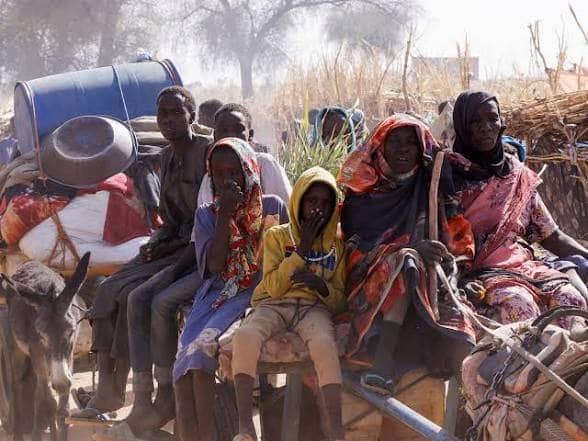
The consequences extended beyond the point of impact. Fear of further strikes delayed rescue and evacuation in some cases, while severe explosive injuries occurred where timely medical care was already constrained. Repeated attacks also eroded the civilian systems on which survival depended, compounding the effects of conflict and deprivation. Drone strikes also caused extensive bodily destruction, complicating identification and burial of the dead, causing extreme distress to survivors, relatives and medical personnel. The report stressed.
It stated clearly and in no ambiguous terms that finds reasonable grounds to believe that the Rapid Support Forces carried out the drone strikes documented above, including those affecting El-Obeid, Nabaa al-Hanan Kindergarten, Kalogi Rural Hospital, and the Kulba displacement shelter. And it further went on to stress that these areas are never used for military purposes therefore their attack by the militia was a serious violation.
The report underlined that the mission “identified no military use that deprived the kindergarten or displacement shelter of their civilian protection or the hospital of its special protection.|
It added that it has reached a conclusion that these attacks failed to comply with obligations of target verification and precautions in attack. Where civilian or protected objects were themselves the objects of attack, the attacks also violated distinction. The repeated strikes affecting Kalogi Rural Hospital indicate a failure to respect the special protection afforded to medical units.
|The mission finds reasonable grounds to believe that the Rapid Support Forces committed serious violations of international humanitarian law. Directing attacks against civilian objects, hospitals or educational facilities may amount to war crimes the report stressed, underlining that there are three cases where the Sudanese Armed Forces was found to have attacked through drone strikes the three areas of Ad-Da'ein Teaching Hospital, Abu Zaima market, and Yabus market.
Foreign Assistance provided mainly to RSF militias
The report has meanwhile indicated an interesting aspect of the work of the mission.
It explained that in this report, the mission focuses on external support to the Rapid Support Forces, it underlined that this reflects evidence arising from its investigations into violations and international crimes associated particularly with the takeover of El-Fasher and the subsequent atrocities.
The report said the ,mission subsequently obtained substantial, converging information concerning external networks supplying the Rapid Support Forces with weapons, advanced military technology, foreign fighters, financing and other forms of support. The nature, scale and apparent continuity of this support, and its nexus to Rapid Support Forces operations in areas where the mission documented grave violations and international crimes, warranted closer examination of these external networks and their possible contribution to the commission or facilitation of such violations
It also underlined that the mission is also concerned by increasing information regarding external support to the Sudanese Armed Forces, including the acquisition and deployment of advanced weapons and technologies capable of materially affecting the conduct of hostilities and civilian protection. Such support may engage international human rights law, international humanitarian law and international criminal law, including where external assistance contributes to the commission of violations or international crimes.
It pointed out that at this stage the investigation is at its initial phase and the information below is consequently preliminary.
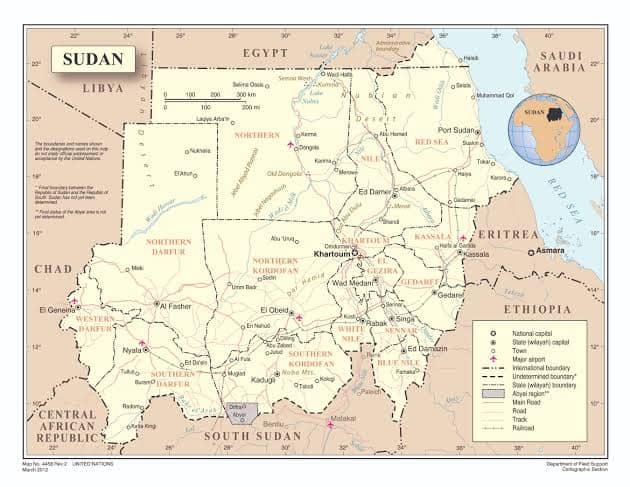
But it stressed that the mission will continue to investigate support to all parties in accordance with its mandate and evidentiary standards and will report further where the evidence permits. It stressed that at present evidence verified by the mission, including from witnesses with first-hand and information provides reasonable grounds to believe that a transnational network facilitated the military operations of the Rapid Support Forces through interconnected air, land, and maritime supply routes linking individuals and entities located in the United Arab Emirates, Chad, southeastern Libya, and Puntland in Somalia.
- Evidenceindicates that locations in Chad, southeastern Libya and Puntland (Somalia) functioned as transit and logistical hubs through which weapons, personnel and other military supplies were moved into Rapid Support Forces-controlled areas.
The mission also obtained evidence linking individuals and entities based in the United Arab Emirates to elements of these supply arrangements, as detailed below.
This support played an important role in advancing the Rapid Support Forces capacity to sustain operations in Darfur, Kordofan, and other regions in Sudan, of which the emblematic cases above are a few examples. Weapons, drones and logistical support
The mission received credible information indicating that, from at least April 2025 through and beyond the takeover of El-Fasher, weapons, military equipment and other supplies transferred to the Rapid Support Forces included material consistent with equipment previously exported to the United Arab Emirates.
- Witnesseswith first-hand knowledge and other independent sources described artillery systems (including NORINCO AH-4 155mm howitzers), air-defence systems (including FK-2000 systems), radars, armoured vehicles, Land Cruisers, uniforms, ammunition, weapons and medical supplies transferred through regional routes involving Bosaso in Puntland (Somalia), Benghazi, Kufra and Jufra (Libya), and Chad before reaching Rapid Support Forces-controlled areas. Authenticated imagery corroborated these accounts, confirming the presence of NORINCO AH-4 155mm howitzers among equipment recaptured by the Sudanese Armed Forces after retaking of Khartoum, and of FK-2000 systems in Dubeibat on at least 10 February and 7 July 2026.
On the recruitment of Colombian contractors,
The report stressed that from at least August 2024, the recruitment and deployment of foreign contractors, particularly Colombian nationals, formed a significant component of the transnational support network for Rapid Support Forces operations. Multiple sources described a structured system through which former Colombian military personnel were recruited, trained and deployed to support the Rapid Support Forces. Estimates of the number of Colombian contractors varied considerably, ranging from 350 to 2000 individuals.
“Based on credible independent sources, including information indicating that recruitment of Colombian contractors for deployment to Sudan remains ongoing, the mission assesses that the total number may approach 2000. 86. Witness testimony and documentary evidence enabled the mission to identify the report stressed.
On Colombian involvement the report has stressed that after review of multiple evidence and verifiable data it has come to the conclusion that viewed collectively, the evidence provides reasonable grounds to believe that the Rapid Support Forces benefited from a transnational support network involving weapons and other military material, logistical assistance, training and foreign personnel. It added that the mission has reasonable grounds to believe that private companies, intermediaries and associated individuals operating across multiple countries, including Colombia, the United Arab Emirates, Chad, Libya and Somalia, facilitated elements of this support network.
This support sustained Rapid Support Forces military operations during a conflict marked by serious violations of international humanitarian law, international human rights law, and the commission of international crimes. This was particularly clear in El-Fasher. The report underlined.
Lack of response from countries accused of providing support to the RSF.
One interesting element touched by the report is that these countries, namely Ethiopia, Libya, South Sudan and Somalia, have declined to respond to queries submitted by the mission of experts.
The report indicated that the mission sent requests for information to Ethiopia, Libya, and Somalia on 11 June 2026 and to Panama and South Sudan on 5 August 2026 but received no substantive responses.”
It said Libya responded on 16 June, stating that the Ambassador was unavailable to meet, but did not address the request for information. South Sudan responded informally on 7 August, requesting more time, which was granted, but provided no further response. Panama responded formally and requested a six-week extension, which was granted. Ethiopia and Somalia did not respond.
“ The mission encourages the governments of Ethiopia, Libya, Somalia and South Sudan to engage with it particularly in light of evidence of illicit activities stemming from their territory as documented in this report.
Conclusions of the report
External support is sustaining these military capabilities. The mission identified a transnational network supplying the Rapid Support Forces with weapons, logistical support, training and foreign personnel, while foreign-supplied drones expanded the Sudanese Armed Forces long-range strike capability. Continued transfers and support amid well-documented violations raise serious concerns under international law. The concern is particularly acute where external support sustained Rapid Support Forces operations in Darfur, including El-Fasher, where the mission previously documented war crimes, crimes against humanity and conduct displaying hallmarks of genocide.
Despite repeated warnings, drone strikes and broader hostilities continue, including renewed drone strikes in El-Obeid and escalating violence in Blue Nile. The weapons, financing, personnel and technology that sustain this war must be constrained.
Recommendations of the mission
Some of the recommendations made by the mission include calls to
(a) Protect civilians in drone operations. Parties to the conflict must end the fighting, take all feasible precautions particularly where hospitals, schools, displacement sites and other concentrations of civilians may be affected. International mechanisms for the protection of civilians in Sudan must be seriously explored.
(b) Efforts to preserve records relevant to accountability for drone strike attacks on civilians must be supported and encouraged. This includes preserving targeting and authorization records, coordinates, imagery, platform and munition data, operator logs and post-strike assessments; investigate strikes causing substantial civilian harm; and provide relevant records to independent investigative and judicial mechanisms.
(c) Stop military support that risks fueling violations. States must enforce the Darfur arms embargo; trace and halt transfers of drones, weapons, components, technical assistance and other military support where there is a substantial risk of their use in serious violations of international humanitarian law; implement applicable arms-transfer and personnel support obligations; strengthen end-use monitoring and traceability; investigate individuals and entities involved in illicit military support to the parties, and impose targeted sanctions on those implicated in violations. The Security Council should extend the arms embargo throughout Sudan.
(d) Support and resource entities, including the UN Panel of Experts on Sudan that record weapons transfers, military support and drone attacks.
(e) Support victims. States and civil society should ensure immediate assistance to victims of attacks, including emergency care, rehabilitation, prosthetics and psychosocial support, without prejudice to their right to reparation.
(f) Pursue accountability across the full chain of responsibilityincluding those who commit, order, finance, supply or otherwise facilitate international crimesthrough domestic and international proceedings; support universal jurisdiction; cooperate fully with the International Criminal Court; and support extending its jurisdiction beyond Darfur to the whole of Sudan, and the establishment of a specialized independent judicial mechanism in the form of a specialized court for Sudan working in tandem with the Court.
Post your comments
Photo of the Week

Tunis – Sudanow Sudanese documentary film “Five Witnesses,” directed by Seif El-Din Hassan, has won the first prize in the General Documentaries category at the 26th edition of the Arab Radio and Television Festival, which concluded in Tunis on September 24, 2026. The film topped a field of Arab productions competing in the category. Produced by Nabta for Arti...
More-

20 September, 2026
Stories from the Heart of the Battlefield Zainab: When Staying Becomes an Act of Courage
The Courageous Zainab: A Woman Who Stayed When Everyone Left — and Returned to Bring Life Back to Wad Nubawi From a home that opened its doors to displaced families, and a garden that flourished amid fear, to the homes of those who were away and the power stations she helped restore — the story of a Sudanese woman who shows how ordinary people can perform extraordinary acts during wartime. Khartoum – (Sudanow...

Contact Us

Address: Sudan News Agency (SUNA) Building, Jamhoria Street, Khartoum - Sudan
Mobile:+249 909220011 / +249 912307547