


Tayba Hassan Sharif: Turning Knowledge into Protection and Dignity
04 October, 2026
Khartoum — Sudan Now
From the study of economics and academic research to displacement camps and humanitarian operations, the career of Sudanese scholar and humanitarian Dr Tayba Hassan Al Khalifa Sharif has spanned more than three decades. Throughout that journey, one question has remained central: how can knowledge translate into protection, opportunity and dignity for people who have lost their homes or been forced to leave their countries?
Her work has always extended beyond the boundaries of academic specialisation. Her studies in economics led her towards questions of migration, asylum and displacement, and subsequently into international humanitarian service. She spent approximately 23 years with the United Nations High Commissioner for Refugees (UNHCR), working across Africa, the Middle East, North Africa and Southeast Asia.
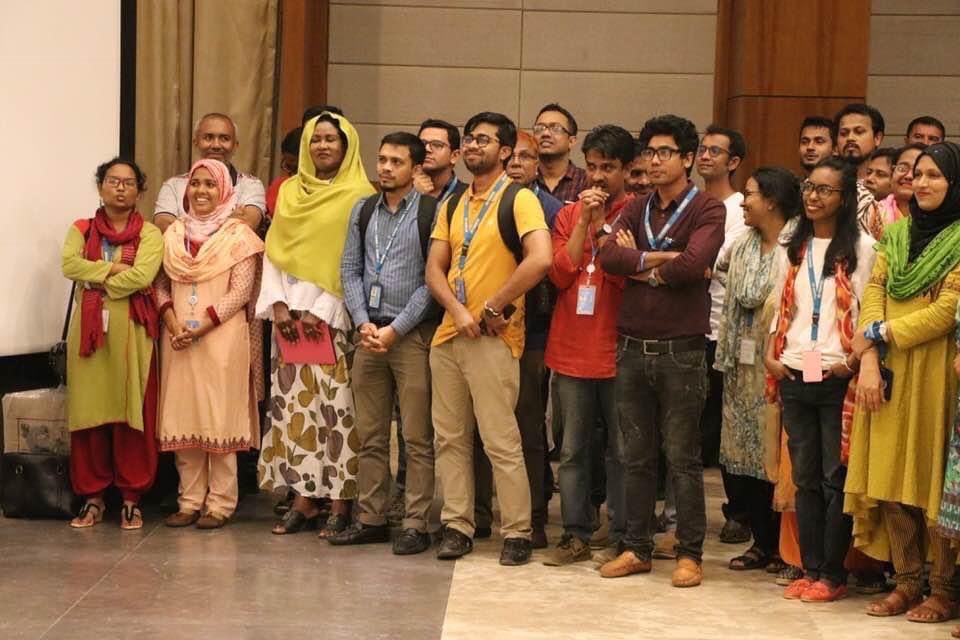
Along the way, her grounding in economics intersected with the concerns of women, refugees and displaced communities, as well as the responsibilities of international protection. Development, in her understanding, encompasses far more than economic indicators: it is about people’s ability to regain security, access opportunities and recover control over their lives.
Sudan Now spoke by telephone with Dr Sharif from her home in the Hashemite Kingdom of Jordan about her academic and professional journey, her experience in international humanitarian work, and her perspectives on women, refugees and internally displaced people.
From Omdurman to an International World of Scholarship
Born in Omdurman, Dr Sharif began her academic career in economics, earning a Bachelor of Science in Economics from Cairo University’s Khartoum Branch. She went on to obtain a Master of Public Administration from the American University in Cairo, followed by a doctorate from the Faculty of Humanities at the University of Amsterdam in the Netherlands in 2003.
This breadth of education laid the foundations for a career bringing together economics, public administration and the humanities. Her interests later expanded to encompass asylum, migration, displacement, memory, oral history, women’s studies and Muslim communities.
Women’s lives and experiences were an enduring concern from the outset. They featured prominently in her early research and international engagements, particularly in relation to Sudanese migrant and displaced women, and the effects of economic change and international policies on African women.
Displacement: More Than the Loss of a Home
During more than two decades with UNHCR, Dr Sharif worked in one of the most demanding areas of humanitarian practice: protecting people compelled to leave their homes by war, crisis and persecution.
Her experience encompassed refugees, asylum-seekers, internally displaced people, returnees and stateless persons, in settings shaped by both sudden emergencies and prolonged displacement.
She held leadership responsibilities in protection across several countries and duty stations, including Saudi Arabia, Malaysia, Sudan, Libya and Jordan, as well as Quetta in Pakistan, Gaziantep in Türkiye, and Dhaka and Cox’s Bazar in Bangladesh.
Her responsibilities covered a wide range of sensitive issues: refugee status determination, registration and resettlement; child protection; the prevention of and response to gender-based violence; legal assistance; education; field operations; and voluntary repatriation.
Women at the Centre
Displacement affects people differently. Women and girls often face particular challenges involving protection, personal safety, access to resources and opportunities to earn a livelihood.
Dr Sharif’s experience is especially relevant in this context, bringing together her research on women’s lives and her practical expertise in international protection.
Her early scholarship and conference contributions addressed Sudanese refugee women and their involvement in income-generating activities, African women’s migration, internally displaced Sudanese women, and the impact of international economic policies on African women.
These concerns reveal an early and sustained interest in the connections between gender, economics, migration and displacement—connections that continued to inform her subsequent professional work.
From Emergency Response to Lasting Solutions
Dr Sharif’s work extended beyond responding to crises as they unfolded. It also involved looking ahead, connecting immediate humanitarian action with the search for more sustainable solutions.
She developed expertise in crisis and risk management, adapting strategies to changing political and operational circumstances, and maintaining programmes through critical periods.
She also worked to strengthen the relationship between humanitarian assistance and development, integrating protection concerns into broader programmes in both fields.
Here, her economic training and humanitarian experience converge. Addressing displacement entails creating conditions in which affected people can rebuild their independence, support themselves and participate in the life of their communities.
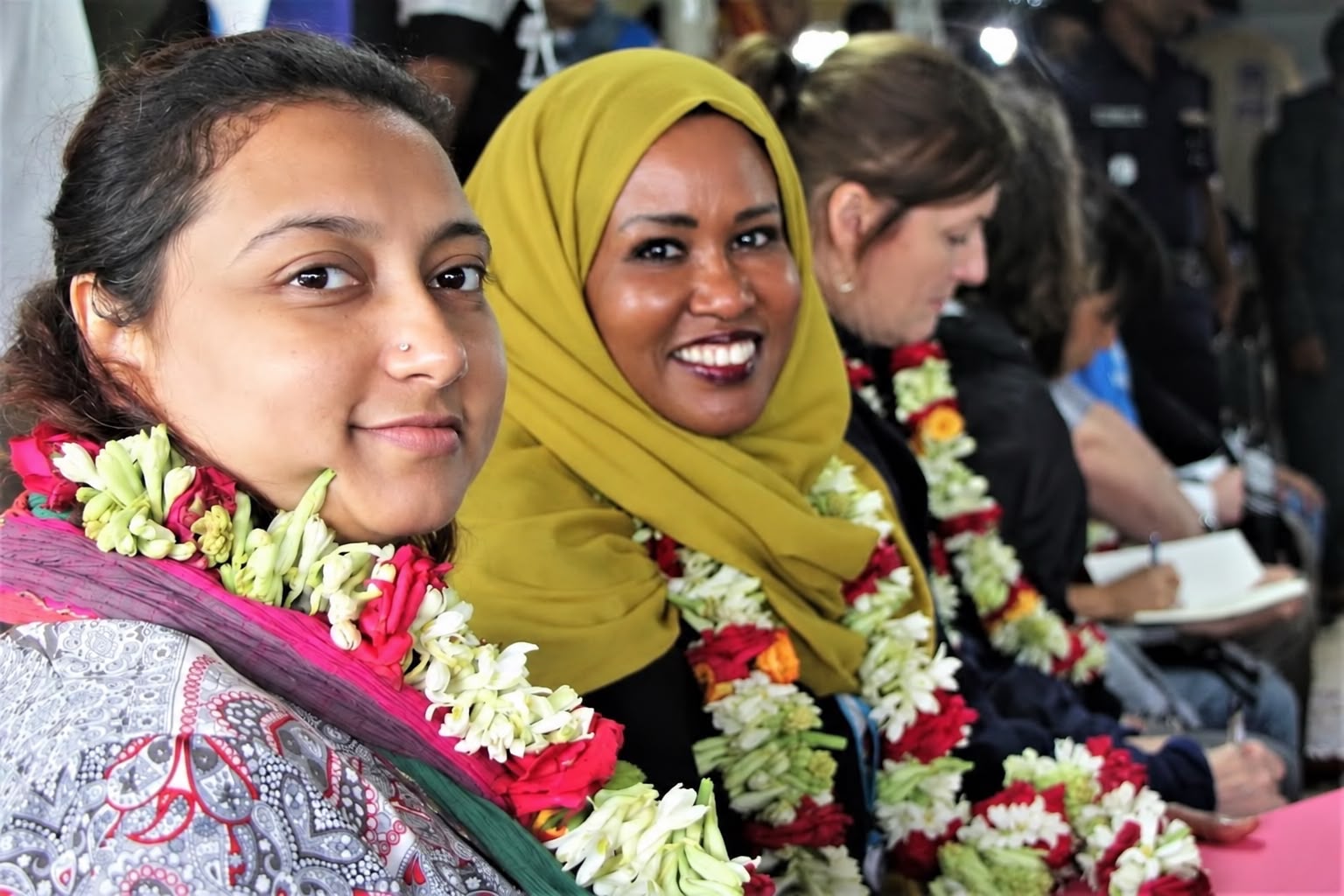
The Diplomacy Behind Humanitarian Work
International humanitarian work requires more than technical expertise. Refugee and displacement issues bring together governments, international organisations, donors and local communities, within the frameworks of national and international law.
Dr Sharif’s work involved engagement with a wide range of these stakeholders, drawing on her experience in negotiation, partnership-building and strategic planning.
Her responsibilities also engaged international refugee law, international human rights law and international humanitarian law—essential frameworks for protection, access to justice and legal assistance.
A Scholar in United Nations Service
Alongside her field responsibilities, Dr Sharif maintained an active commitment to scholarship and research.
Since the 1990s, she has participated in international conferences and forums addressing women, migration, displacement, global restructuring, social development and oral history.
Among her notable contributions was a paper on the impact of International Monetary Fund policies on African women, presented during the United Nations Fourth World Conference on Women in Beijing in 1995. Her other research contributions examined Sudanese refugee women in Egypt, African migrant women and internally displaced Sudanese women.
She also took part in the Peace Train organised by the Women’s International League for Peace and Freedom, travelling from Helsinki to Beijing. Representing Africa in its activities across 13 countries, she addressed the Romanian Parliament on behalf of the train’s delegation.
In oral history, she participated in the work of the International Oral History Association and served on its committees. This engagement reflects her longstanding interest in memory and in the lived experiences of individuals and communities undergoing profound change.
Research, Writing and Publication
Dr Sharif’s scholarly contributions have appeared in books and specialist journals. Her work has explored Iraqi Shi‘a women and sacred narratives, women in the Qur’an, women in the Prophet’s biography and Islamic history, and the international protection of refugees within human rights law.
Her writing has also examined assistance to refugees in Islam, and the relationship between Muslim refugee women and international law.
From March 2000 to December 2003, she worked as an editor of Women and Civilisation, a journal published by the Association for Women and Civilisation Studies in Cairo. She contributed to thematic issues on women and the Qur’an, the Prophet’s biography and Islamic history.
Women’s Memory as Part of Society’s Memory
Dr Sharif’s academic and professional career reveals a sustained concern with human memory: both as a record of the past and as a way of understanding social change, migration, uprooting and identity.
Through oral history, she has sought to understand people’s experiences as they themselves recount them. This approach has particular significance for the study of communities affected by displacement, war and migration.
A displaced person is more than a figure in a report, and a refugee more than a legal case. Behind every file lies a life story: memories, family relationships, loss and the effort to build a future.
A Sudanese Career with an International Reach
Dr Tayba Hassan Al Khalifa Sharif’s career brings together fields that may initially appear distinct: economics, public administration, the humanities, women’s studies, oral history, international law and humanitarian action.
Their connecting thread is a concern for people living through profound upheaval.
Her journey began in economics. Academic research broadened its questions, while United Nations service brought that knowledge into crisis settings, where protection, dignity and the restoration of everyday life became practical responsibilities.
Her experience stands among the Sudanese careers that have combined scholarship with international service. Over many years, she has contributed to work on refugees, displaced people and women through an approach informed by both research and practice.
As displacement crises grow across the world, such experience remains especially valuable. It places people at the centre of the response and recognises protection, development and empowerment as interconnected elements of rebuilding lives.
Post your comments
Photo of the Week

Sudanese Student Wins International Research Award and Presents Digital Nursing Project at Royal College of Nursing Conference in Britain Khartoum – Sudanow In a country where the healthcare sector is facing mounting crises and war has placed hospitals, healthcare workers, and patients under immense pressure, a Sudanese nursing student has chosen to begin with a question ...
More-

20 September, 2026
Stories from the Heart of the Battlefield Zainab: When Staying Becomes an Act of Courage
The Courageous Zainab: A Woman Who Stayed When Everyone Left — and Returned to Bring Life Back to Wad Nubawi From a home that opened its doors to displaced families, and a garden that flourished amid fear, to the homes of those who were away and the power stations she helped restore — the story of a Sudanese woman who shows how ordinary people can perform extraordinary acts during wartime. Khartoum – (Sudanow...

Contact Us

Address: Sudan News Agency (SUNA) Building, Jamhoria Street, Khartoum - Sudan
Mobile:+249 909220011 / +249 912307547