


Video Reopens Memories of Al-Fashir Atrocities
04 October, 2026
RSF in Umm Badr: Executions Carried Out Before the Cameras
23 Civilians Executed in What Is Described as a Terrorist Crime
Killings of Civilians Send a Message to the International Community
Military Expert: Army Advances Could Help Protect Civilians
A video showing the mass execution of around 23 civilians from the Umm Badr area of North Kordofan State has brought the issue of violations against civilians back into the spotlight.
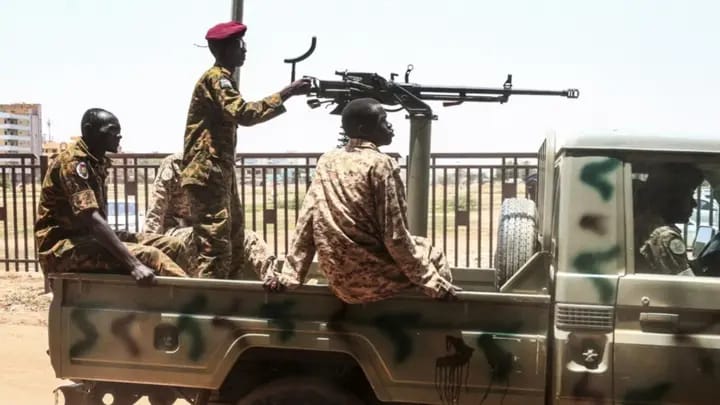
The victims appear in the footage blindfolded, with their hands and legs tied, before armed men identified as members of the Rapid Support Forces (RSF), belonging to the Ali Al-Balla group, open fire on them. The killings were filmed on camera, presenting a stark image of civilians facing death while unarmed, restrained and given no apparent chance to survive.
Brutality and Cruelty
Observers agree that the brutality of the Umm Badr video lies not only in the number of victims, but also in the manner in which the killings were carried out and filmed: blindfolded civilians, hands and feet bound, bodies lying on the ground, followed by gunfire at close range.
It is a disturbing scene that raises serious questions about the treatment of civilian life and about the transformation of killings themselves into material to be recorded and circulated.
A Memory That Has Not Faded
The Umm Badr execution video has revived memories of killings and field executions documented by UN and human rights bodies during the RSF assault on Al-Fashir in October 2025.
The United Nations' international fact-finding mission documented mass executions of civilians, including men whose hands were tied before they were taken away and killed. It also documented videos showing executions carried out by RSF members in and around Al-Fashir.
The United Nations reported that the assault on Al-Fashir involved thousands of killings, including summary executions and attacks against civilians, describing violations that could amount to war crimes and possible crimes against humanity.
Amnesty International also documented videos of mass executions allegedly carried out by RSF commander Al-Fatih Abdullah Idris, known as “Abu Lulu,” who was later listed for sanctions by the UN Security Council over his involvement in violence and human rights violations in Darfur.
The significance of the Umm Badr video therefore lies not simply in what it may establish on its own, but in the disturbing pattern it appears to bring back into view: civilians restrained, killings carried out in the field, and a camera present at the moment of death.
An Appeal to the United Nations
In light of the reported execution of 23 civilians in the Umm Badr area, the need for an international response that goes beyond documenting violations after they occur appears increasingly urgent.
Strategic experts argue that the United Nations, the Office of the UN High Commissioner for Human Rights and international organizations concerned with civilian protection should treat the Umm Badr video as material requiring investigation, documentation and accountability.
Pressure to protect civilians, they argue, should not become one-directional pressure targeting only the Sudanese Armed Forces and forces supporting them, while the RSF continues to commit violations against civilians in areas under its control without equivalent international scrutiny.
If justice is the objective, they contend, it cannot be based on double standards.
Military Resolution on the Ground
A military source said the developments in Kordofan and Darfur demonstrate that civilian protection is closely linked to the ability of the state, the armed forces and allied forces to retake areas controlled by the RSF.
The military source, who requested anonymity because he was not authorized to speak publicly, called on the Sudanese Armed Forces and their allied forces to continue advancing along the Kordofan and Darfur fronts, recapture additional areas and bring an end to the suffering of civilians.
He argued that keeping civilians under the control of armed groups prolongs the risks they face, while emphasizing that the protection of civilians and accountability for violations remain ongoing obligations and a challenge to impunity.
“If the international community continues to turn a blind eye to the documented and horrific crimes committed by the Janjaweed, the militia will not be deterred and will commit further violations,” the source said.
He added that international silence over these crimes amounts to “a blank cheque for more crimes.”
An Important Conclusion
Whatever the circumstances surrounding the Umm Badr executions, the documented video raises a critical question for the international community:
Who will protect these civilians before they become another video in Sudan's memory of bloodshed?
Sudanese civilians need more than statements that merely count the dead. They need measures capable of preventing new victims.
According to the military perspective presented in this report, such measures include continued advances by the Sudanese Armed Forces and allied forces to defeat the RSF and end its control over areas of Kordofan and Darfur, thereby bringing relief to civilians caught in the conflict.
The Umm Badr footage, however, also underscores a broader imperative: allegations of mass executions and other violations must be independently investigated, documented and subjected to accountability mechanisms, regardless of the identity of the perpetrators.
Post your comments
Photo of the Week

Sudanese Student Wins International Research Award and Presents Digital Nursing Project at Royal College of Nursing Conference in Britain Khartoum – Sudanow In a country where the healthcare sector is facing mounting crises and war has placed hospitals, healthcare workers, and patients under immense pressure, a Sudanese nursing student has chosen to begin with a question ...
More-

20 September, 2026
Stories from the Heart of the Battlefield Zainab: When Staying Becomes an Act of Courage
The Courageous Zainab: A Woman Who Stayed When Everyone Left — and Returned to Bring Life Back to Wad Nubawi From a home that opened its doors to displaced families, and a garden that flourished amid fear, to the homes of those who were away and the power stations she helped restore — the story of a Sudanese woman who shows how ordinary people can perform extraordinary acts during wartime. Khartoum – (Sudanow...

Contact Us

Address: Sudan News Agency (SUNA) Building, Jamhoria Street, Khartoum - Sudan
Mobile:+249 909220011 / +249 912307547