


From Hormuz to Bab el-Mandeb: Is a New Collective Security Architecture Emerging for the Red Sea and the Horn of Africa?
11 October, 2026
Khartoum (Sudanow) — A strategic assessment in light of the Saudi-led maritime coalition, the Saudi–Turkish–Pakistani alliance, the El Alamein Summit, and developments in the Strait of Hormuz and Bab el-Mandeb.
The security transformations unfolding across the Gulf, the Red Sea and the Horn of Africa are no longer merely a series of separate crises. The rapid developments stretching from the Strait of Hormuz to Bab el-Mandeb, and from the Gulf of Aden to East Africa, point to a gradual reshaping of the region’s security and political landscape.
For decades, Gulf security rested primarily on the security umbrella provided by major international powers. Recent developments, however, indicate a growing desire among regional states to redefine regional security as a collective responsibility shared by the countries concerned, rather than an exclusive function of external powers.
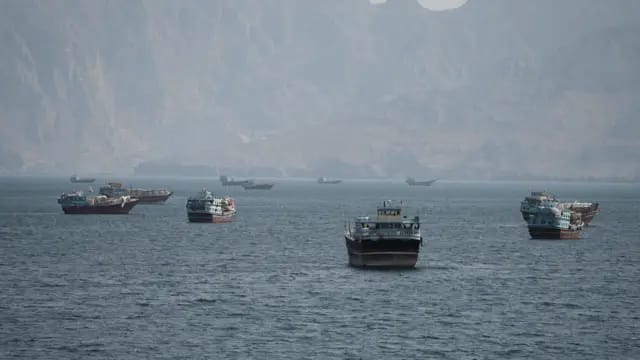
The most important question today is therefore not simply what is happening in the Red Sea or the Gulf, but rather: What strategic architecture is emerging from the convergence of these developments?
From Maritime Chokepoint Security to an Interconnected Regional Security System
On 30 July, fourteen countries supported a Saudi initiative to establish a multinational maritime defence coalition aimed at strengthening freedom of navigation and protecting trade and energy routes across the Red Sea, Bab el-Mandeb and the Gulf of Aden. The group comprises Saudi Arabia, Egypt, Sudan, Djibouti, Somalia, Yemen, Türkiye, Pakistan, Qatar, Kuwait, Bahrain, Jordan, Bangladesh and Nigeria. Military delegations from 43 countries and the European Union also participated in the initiative’s founding meeting.
What stands out is not merely the number of participants, but the coalition’s strategic geography. It brings together Gulf states, Arab countries bordering the Red Sea, states in the Horn of Africa and Asian regional powers. This configuration could transform the Red Sea from a maritime corridor into a shared security space extending from the Indian Ocean to the Suez Canal, reflecting increasingly interconnected economic interests.
More importantly, the initiative is not limited to protecting vessels. It also envisages intelligence and information sharing, operational planning, joint exercises and coordination of maritime operations. This suggests a shift beyond naval patrols towards building the institutional infrastructure of collective security.
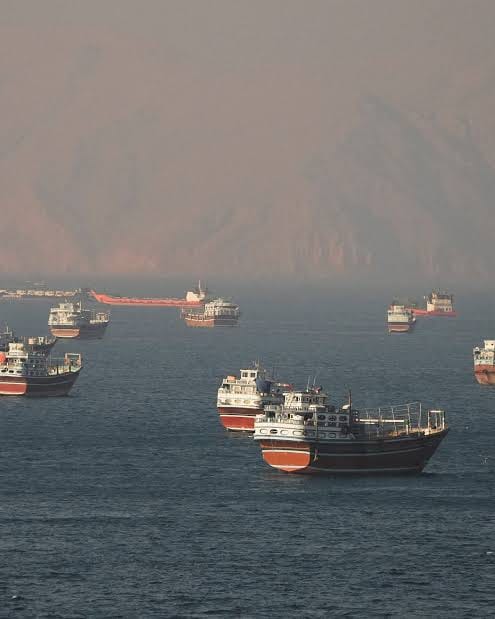
Here lies the qualitative change: the maritime corridor is no longer merely a trade route. It has become part of the national security equation for the countries bordering it and those that depend on it, particularly in light of developments in the Strait of Hormuz.
Hormuz and Bab el-Mandeb: Two Sides of One Strategic Equation
The US–Iranian escalation surrounding the Strait of Hormuz has clearly demonstrated the vulnerability of the global economic system to the closure or disruption of a single maritime chokepoint.
The paradox, however, is that pressure on Hormuz inevitably draws renewed attention to the strategic importance of Bab el-Mandeb.
If Hormuz represents the eastern gateway for Gulf energy supplies and supply chains, Bab el-Mandeb serves as the southern gateway to the Red Sea. Control over, or the ability to influence, one chokepoint can therefore alter the strategic importance of the other.
This helps explain why the Red Sea has become directly entangled in the repercussions of the Iranian–American–Israeli conflict. The waterway linking the Indian Ocean to the Mediterranean passes through a region marked by acute political and military fragility, while the Houthi movement possesses a demonstrated capacity to threaten maritime traffic around Bab el-Mandeb.
Recent developments reinforce this assessment. Saudi-backed forces are engaged in battles to regain strategic positions around Bab el-Mandeb and Yemen’s western coastline, while the Houthi movement has continued military operations against Saudi targets and interests associated with maritime navigation and energy. These developments strengthen the objective of removing Bab el-Mandeb from Houthi control.
For the first time with such clarity, a single geopolitical belt is emerging from Hormuz to Bab el-Mandeb.
The Saudi–Turkish–Pakistani Alliance: A New Military Layer
In August 2026, a more far-reaching development followed with the signing in Mecca of a mutual defence agreement between Saudi Arabia, Türkiye and Pakistan. The agreement stipulates that an armed attack against any one of the three countries will be considered an attack against all of them, while providing for expanded cooperation across multiple defence fields. Subsequent tensions have, in effect, underscored the significance and importance of this alliance.
Although Ankara has emphasised that the agreement is not directed against Iran or any particular country, its timing and geographical context give it implications that extend beyond the legal text itself.
Saudi Arabia brings strategic geography, resources and economic depth. Türkiye contributes an advanced defence industry, air power, unmanned aerial vehicle capabilities and operational experience. Pakistan, meanwhile, possesses substantial military strength and extensive experience in Gulf defence and military cooperation with Riyadh.
The trilateral arrangement therefore appears to reflect a strategic division of responsibilities:
Saudi Arabia: Financing, strategic location and economic depth.
Türkiye: Technology, defence manufacturing and operational capabilities.
Pakistan: Manpower, military capabilities and strategic deterrence.
According to recent Reuters reports, this partnership has already moved beyond the agreement itself towards practical support for Saudi Arabia in confronting Houthi escalation, with Türkiye providing technical, defensive and intelligence assistance.
The trilateral alliance can therefore be viewed as the hard military core that could complement the broader maritime framework comprising fourteen countries.
Sudan’s stability is therefore no longer solely an internal matter. Nor can the consequences of the war imposed on the country for more than three years be separated from Red Sea security and current developments in the Horn of Africa.
Sudan’s participation in the multinational maritime coalition, followed by its involvement in the El Alamein quadrilateral summit, reveals two parallel tracks:
A broader Arab–Islamic track led by Saudi Arabia.
An African–Red Sea track led by the coastal states themselves.
The real challenge is how to bring these two tracks together within a unified framework that ensures Sudan is not merely an arena for competing interests, but a partner in shaping regional security across its interconnected dimensions.
Egyptian, Sudanese, Eritrean and Somali coordination on the Red Sea and the Horn of Africa.
Fourth: Energy and maritime corridor security
The reassessment of alternative routes following the Hormuz crisis, linking the Gulf to the Red Sea, ports, pipelines and trade corridors through joint operational and monitoring mechanisms coordinated among the parties to this strategic equation.
Fifth: Political security
Defending the concept of the nation-state, territorial integrity and national institutions against the proliferation of parallel entities and cross-border militias.
If these five layers persist and develop, they could produce a new regional security architecture capable of safeguarding the region against emerging threats and destabilising developments.
The real test, therefore, lies not in the number of agreements signed, but in the ability to establish:
A unified regional information and early-warning centre.
A mechanism for maritime coordination.
A rapid-response force.
An integrated air-defence and unmanned aerial systems capability.
A system for combating piracy, terrorism and smuggling.
Arrangements to protect ports and critical infrastructure.
Above all, a political framework for managing crises before they escalate into wars.
Only then could one speak of the emergence of a genuine collective security architecture.
3. A joint maritime and air force with limited objectives: Protecting navigation and critical infrastructure rather than engaging in proxy wars.
4. Integrating security with development: Linking ports, roads, railways, energy and trade so that economic stability becomes an integral part of national security.
5. A political framework for conflict prevention: Addressing conflicts in Sudan, Yemen, Somalia and the wider Horn of Africa, because protecting maritime routes without tackling the sources of instability on land will remain a temporary solution.
6. A regional legal framework: Affirming state sovereignty, freedom of navigation, non-interference and the rejection of using ports, islands or armed groups to threaten regional states.
Conclusion: From Hormuz to Bab el-Mandeb—and from Bab el-Mandeb to Khartoum
The most important message conveyed by these developments is that the region’s geopolitical landscape is being reshaped.
The Hormuz crisis has prompted Gulf states to consider alternative routes and options. Threats to Bab el-Mandeb have encouraged the creation of collective maritime arrangements. The Saudi–Turkish–Pakistani alliance has added a layer of military deterrence. The El Alamein Summit has reaffirmed that Red Sea security should rank among the foremost responsibilities of its coastal states.
In the background, the crises in Sudan, Yemen, Somalia and the wider Horn of Africa remain direct sources of insecurity affecting maritime corridors.

At its core, therefore, the issue is not simply the creation of one new alliance or the signing of another agreement. It is an attempt to build an entirely new security architecture extending from the Gulf to the Red Sea and from Bab el-Mandeb to the Horn of Africa.
For Sudan in particular, the historic opportunity is to avoid becoming a passive recipient of security arrangements devised by others and instead assume the role of an active partner in shaping the regional equation.
Sudan is more than a country bordering the Red Sea. It is a geographical and political link between the Arab world and the Horn of Africa, between the Nile Valley and the Red Sea, and between East Africa and the African hinterland.
The strategic question of the future may therefore no longer be: Who controls the Red Sea?
It may instead be: Who participates in shaping its security architecture?
In my assessment, this is the real turning point: moving from the security of maritime corridors to the security of states, from the security of states to the security of the region, and from reacting to crises to shaping the future before escalating crises dictate its course.
Post your comments
Photo of the Week

Sudanese Student Wins International Research Award and Presents Digital Nursing Project at Royal College of Nursing Conference in Britain Khartoum – Sudanow In a country where the healthcare sector is facing mounting crises and war has placed hospitals, healthcare workers, and patients under immense pressure, a Sudanese nursing student has chosen to begin with a question ...
More-

11 October, 2026
Stories from the Heart of the Battlefield On World Teachers’ Day: The Sudanese Teacher — Achievements Against All Odds
Teachers carried their chalk through the rubble and kept working — Resilience War closed schools, but examinations continued — A Mission Low salaries and mounting hardships — The Price of the Profession Khartoum (Sudanow) — Teachers around the world are marking World Teachers’ Day this week, an occasion that carries messages of appreciation and gratitude for those who carry the torch of knowledge...

Contact Us

Address: Sudan News Agency (SUNA) Building, Jamhoria Street, Khartoum - Sudan
Mobile:+249 909220011 / +249 912307547