


Smart Food Security in Sudan: When Technology Becomes a Tool for Survival and Development
11 October, 2026
(Sudanow)
In Sudan, food security is no longer simply a question of how much food the land can produce. It has become a question of the ability of the state and society to protect people from hunger amid war, displacement, climate change, economic collapse, and market instability. Discussions of food security must therefore move beyond the traditional concept, which focuses primarily on increasing production, toward a more comprehensive and realistic approach: smart food security. This means building a food system capable of anticipating crises, responding to them, adapting to changing conditions, and minimizing losses through science, data, and technology.
The Sudanese paradox lies in the fact that the country is facing a severe food crisis despite possessing vast agricultural and livestock resources. Sudan has approximately 73.5 million hectares of land suitable for cultivation, while around 65% of its population depends on agriculture and agriculture-related livelihoods. The country also possesses an estimated 115.4 million head of livestock. Nevertheless, inadequate infrastructure, declining agricultural services, limited financing, war, and rising input and energy costs have prevented these resources from delivering the food security the population needs.
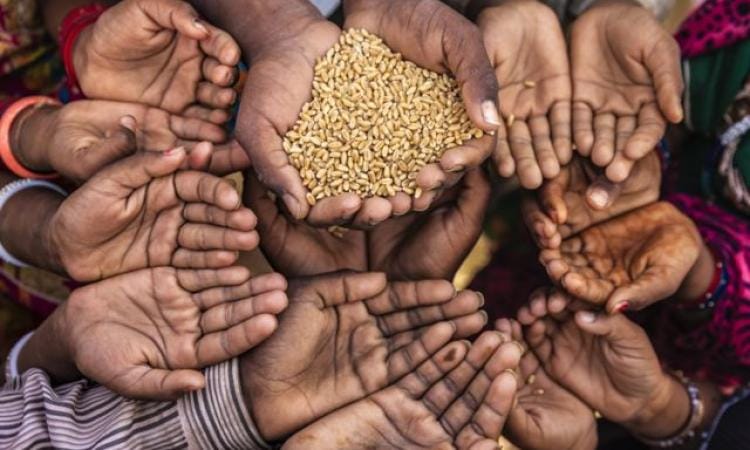
The figures clearly reveal the scale of the crisis. Sudan's cereal production in 2025 reached approximately 5.2 million tonnes, representing a decline of about 22% compared with 2024 and around 19% below the average of the preceding five years. Meanwhile, food security estimates indicate that approximately 19.5 million Sudanese people faced high levels of acute food insecurity during the early months of 2026. These are not merely statistical figures; they reflect a widening gap between Sudan's available resources and its actual capacity to transform those resources into food that is accessible, affordable, and safe.
The most dangerous mistake would be to view the crisis solely as a food shortage. Sudan needs more than additional food; it needs a smarter food system. Such a system would identify, before the beginning of each agricultural season, where crops should be planted, which crops are best suited to each region, how much water they require, the likelihood of droughts or floods, expected production levels, and the most effective ways to store and transport food to areas where it is needed.
This is where technology comes in. Satellites and remote sensing can help identify cultivated areas, monitor crop conditions, and estimate production before harvest. Artificial intelligence can also analyze rainfall, soil, market prices, and production data to provide early warnings about areas at risk. If we know several months in advance that a particular region is likely to experience a shortage of sorghum or millet, early intervention will be considerably less costly than waiting for the crisis to unfold and then searching for food in international markets.
Sudan urgently needs to establish a National Smart Food Security Platform, serving as a national information hub that brings together data on agriculture, water, climate, markets, food stocks, livestock, and population movements. Such a platform could answer seemingly simple but critical questions: How much land has Sudan cultivated? Where are the crops planted? How much food is expected to be produced? Where are the supply gaps? Where are food stocks located? Which states or regions require urgent intervention?
Water management is another central issue that cannot be overlooked. Sudan is a vast country with considerable variations in rainfall and faces the risks of both droughts and floods. Future agricultural expansion must therefore focus not only on increasing cultivated land but also on improving productivity per unit of water. This requires a transition from conventional irrigation to smart irrigation, using soil-moisture sensors, scheduling irrigation according to crop requirements, and making effective use of weather data and remote sensing.
Solar energy also emerges as an integral part of the food security equation. Rising fuel prices do not merely increase transportation costs; they also raise the costs of irrigation, production, storage, and processing. When operating a water pump becomes expensive, the additional cost is ultimately reflected in the price consumers pay for food. Using solar energy to operate irrigation pumps, wells, cooling facilities, and storage infrastructure can therefore reduce costs and provide farming communities with a more reliable energy source.
However, production alone is not enough. A substantial amount of economic value can be lost after harvest because of inadequate storage, transportation, and processing facilities. Sudan therefore needs a modern network of silos and strategic warehouses linked to a digital monitoring system that tracks quantities, moisture levels, quality, and spoilage. The country must also develop its domestic food-processing industries so that its economy does not remain trapped in a pattern of exporting raw materials while importing processed food products at high prices.
Agricultural financing must also be reconsidered. Sudanese farmers need more than seasonal loans; they need an integrated system encompassing finance, agricultural insurance, seeds, fertilizers, extension services, price information, and market access. Financial technology can play a significant role through digital payments, digital financing, and stronger connections between farmers, financial institutions, and markets.
Food security cannot succeed if farmers continue to bear the risks of climate change, war, and market volatility alone. The government, banks, insurance companies, international institutions, and private sector must share these risks. One possible approach is to develop agricultural insurance products based on rainfall and drought indices, enabling farmers to receive compensation quickly when climatic conditions cross predefined thresholds.
Nor should Sudan's livestock wealth be overlooked. The country's estimated 115.4 million head of livestock represent one of its most important economic and food assets. This resource offers significant opportunities for producing meat, milk, and hides, as well as expanding exports. Realizing this potential, however, requires modern management of grazing land, water, animal feed, and veterinary services. Digital systems can also be used to track livestock, record vaccinations, monitor diseases, and improve the management of herd movements.
Food security is also a macroeconomic issue. High inflation, currency depreciation, and rising fuel and agricultural input prices ultimately erode people's purchasing power. Food may be available in the market, yet consumers may be unable to afford it. Addressing food insecurity therefore requires coordinated policies to stabilize prices, reduce production and transportation costs, improve access to finance, and ease bottlenecks throughout supply chains.
It is a strategic mistake to allow humanitarian assistance to remain the primary instrument for addressing the food crisis over an extended period. Assistance is essential for saving lives in areas affected by famine and war, but it cannot, on its own, build a sustainable food future. The goal must be a gradual transition from feeding people to empowering them to produce their own food, and from distributing relief supplies to rebuilding production chains, markets, and livelihoods.
Post-war reconstruction should be an opportunity to rebuild Sudan's agricultural sector on new foundations. Rather than reproducing the old model with all its shortcomings, the rehabilitation of the Gezira, Rahad, New Halfa, and other agricultural schemes could provide an entry point for modern agriculture based on data, efficient irrigation, solar energy, and food processing. Sudan can draw on its previous experience without remaining constrained by it.
The real question we should be asking today is not whether Sudan can produce food. Given its natural and human resources, the answer is yes. The more difficult question is: Can Sudan manage its food resources intelligently?
This is where the real battle lies.
Smart food security means knowing where shortages are likely to occur before a crisis emerges, anticipating production declines before drought strikes, identifying supply-chain bottlenecks before prices rise, and detecting the spread of animal diseases before livestock begin to die. It also means using every drop of water efficiently, making better use of every hectare, reducing the cost of every unit of energy, and putting every piece of information to work at the right time.
Sudan needs less of a new slogan and more of a new model for food management. This model must integrate economics, agriculture, water, energy, technology, finance, and climate considerations, while placing people and farmers at the centre of the development process.
If Sudan succeeds in building such a model, the current crisis, despite its severity, could become a historic turning point. The country could seize the opportunity to move from recurring food shortages to a strong food-production base; from an economy dependent on exporting raw resources to one that adds value; and from managing crises after they occur to managing risks before they materialize.

Food security in Sudan will not be achieved through abundant land alone, abundant water alone, or humanitarian assistance alone. It will be achieved when knowledge, technology, and data become integral to every hectare, every drop of water, every market, and every agricultural decision.
This is the philosophy of smart food security: producing more, wasting less, planning ahead of crises, protecting farmers, using technology to serve humanity, and transforming Sudan's vast resources from untapped potential into genuine productive capacity.
Post your comments
Photo of the Week

Sudanese Student Wins International Research Award and Presents Digital Nursing Project at Royal College of Nursing Conference in Britain Khartoum – Sudanow In a country where the healthcare sector is facing mounting crises and war has placed hospitals, healthcare workers, and patients under immense pressure, a Sudanese nursing student has chosen to begin with a question ...
More-

11 October, 2026
Stories from the Heart of the Battlefield On World Teachers’ Day: The Sudanese Teacher — Achievements Against All Odds
Teachers carried their chalk through the rubble and kept working — Resilience War closed schools, but examinations continued — A Mission Low salaries and mounting hardships — The Price of the Profession Khartoum (Sudanow) — Teachers around the world are marking World Teachers’ Day this week, an occasion that carries messages of appreciation and gratitude for those who carry the torch of knowledge...

Contact Us

Address: Sudan News Agency (SUNA) Building, Jamhoria Street, Khartoum - Sudan
Mobile:+249 909220011 / +249 912307547