


Stories from the Heart of the Battlefield On World Teachers’ Day: The Sudanese Teacher — Achievements Against All Odds
11 October, 2026
Teachers carried their chalk through the rubble and kept working — Resilience
War closed schools, but examinations continued — A Mission
Low salaries and mounting hardships — The Price of the Profession
Khartoum (Sudanow) — Teachers around the world are marking World Teachers’ Day this week, an occasion that carries messages of appreciation and gratitude for those who carry the torch of knowledge and shape the future of generations.
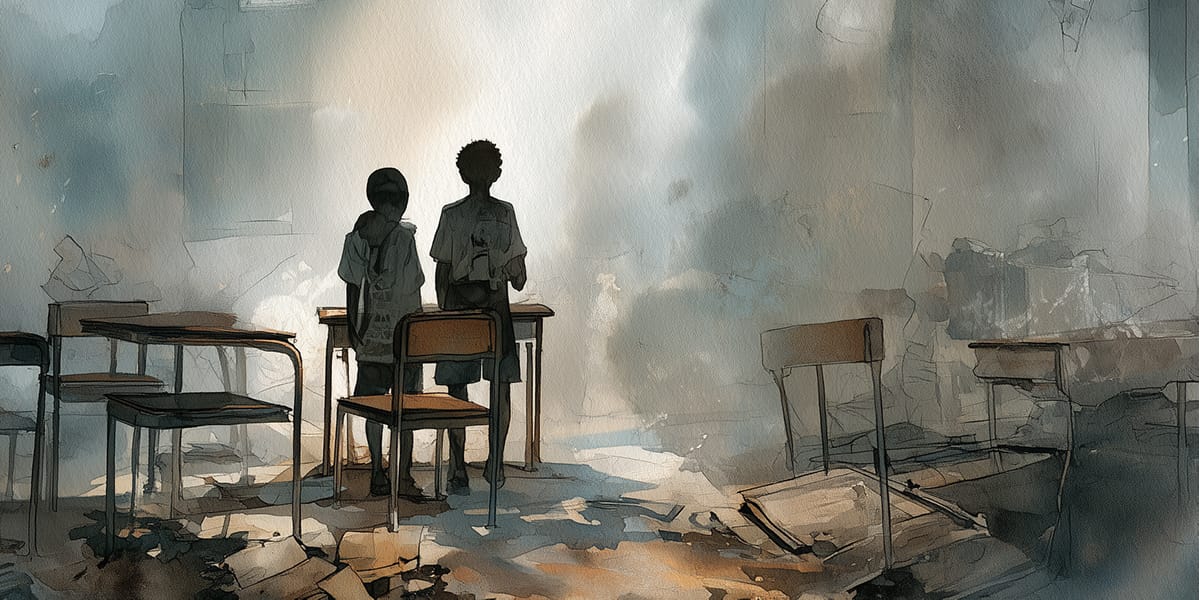
In Sudan, however, the occasion goes beyond traditional celebrations to reflect the story of teachers who have continued to fulfil their mission amid one of the harshest wars the country has witnessed. While the war has closed countless doors to education, schools and teachers have come under attack, and a number of teachers have lost their lives, thousands of Sudanese educators have chosen to carry on. Defying displacement, financial hardship and shortages of educational supplies, they have remained committed to the academic calendar, enabling pupils and students to sit for certificate examinations at various levels. Their remarkable results have demonstrated that the will to learn is stronger than the circumstances of war.
A Mission Without Borders
World Teachers’ Day is celebrated annually on 5 October. The occasion was established by the United Nations Educational, Scientific and Cultural Organization (UNESCO) in 1994 to commemorate the adoption, in 1966, of the UNESCO/International Labour Organization Recommendation concerning the Status of Teachers.
The recommendation addresses a range of issues affecting teachers, from recruitment policies, training and continuing professional development to working conditions and professional standing. It reflects a fundamental truth: the quality of education cannot be separated from the quality of teachers’ lives or their professional and social stability.
Stories of Resilience
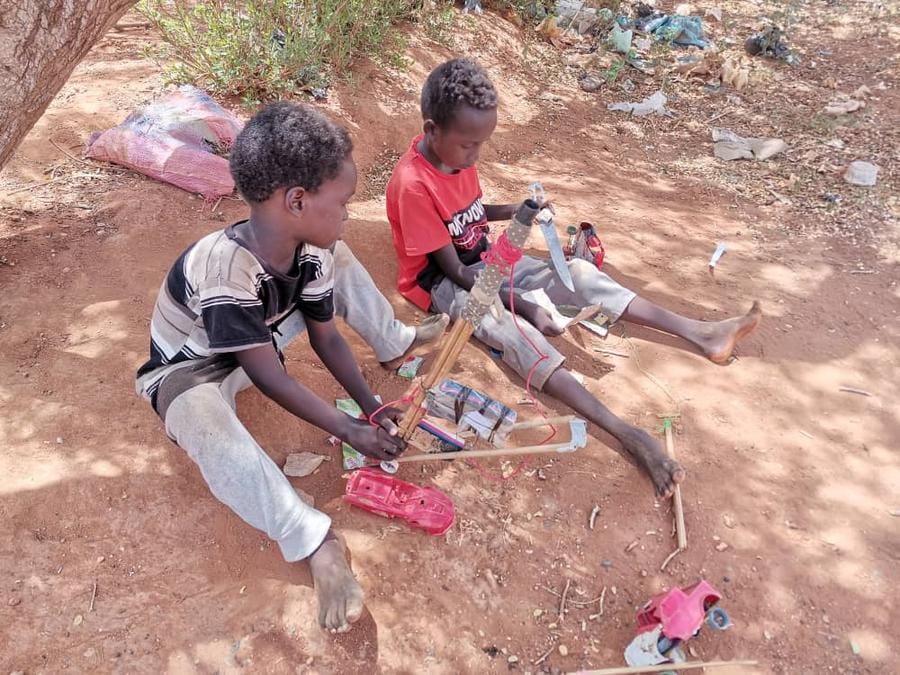
In Sudan, 5 October carries a much broader significance. The story of the Sudanese teacher unfolds along three distinct paths: the teacher who paid with their life for their commitment to the profession; the teacher who travels long distances every day to reach the classroom; and the teacher who stands before pupils with a smile that conceals the anguish of mounting living costs.
Sudanese teachers therefore deserve special recognition on this day, as their experience offers a compelling account of resilience. World Teachers’ Day provides an opportunity to look beyond the devastation of war and hear teachers reaffirm that education is not a luxury that can be postponed until crises end. It is one of the most important bridges through which societies can move from war to peace and from collapse to reconstruction.
An Idea That Cannot Be Killed
Sudanese teachers have been among the groups that have paid a heavy price for the war that erupted on 15 April 2023. Teachers have not been spared attacks attributed to the Rapid Support Forces (RSF) militia.
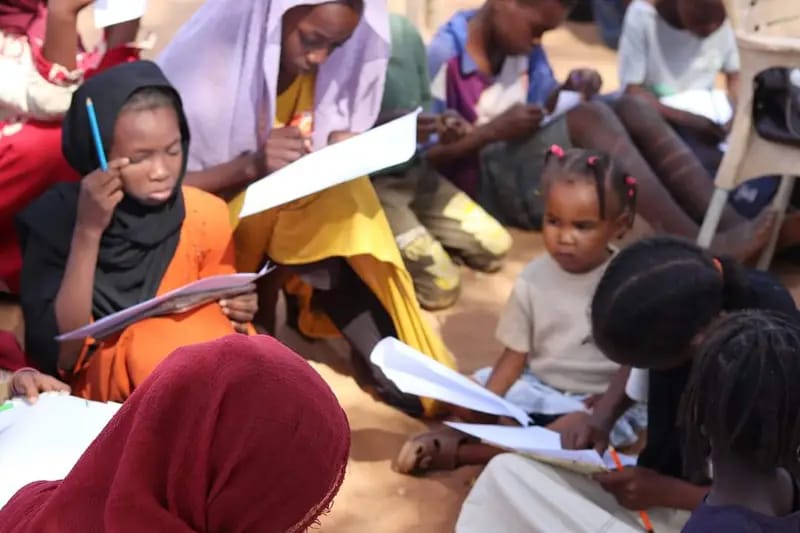
Losing a teacher means more than the absence of an individual from their family and students; it represents a loss for an entire community.
Yet the journey has continued. In cities, villages and displacement areas, other teachers have carried on with their duties, as if declaring that a bullet may kill a teacher, but it cannot kill the idea of education.
Examinations Amid War
Perhaps one of the clearest illustrations of the resilience of Sudan’s education sector during the war has been teachers’ determination to continue the academic year and adhere to the academic calendar, culminating in certificate examinations at various levels.
Behind every student seated before an examination paper was a teacher who had invested time and effort, sometimes overcoming extraordinary obstacles simply to reach school and deliver a lesson.
The remarkable results achieved by students stand as a silent tribute to teachers who worked under profoundly abnormal conditions. In a country where the war has disrupted vast sectors of society, teachers have remained determined to ensure that the future does not come to a standstill.
They have worked to instil perseverance in their students, provide them with a measure of psychological security in an unsettled environment, and reassure them that a better tomorrow remains possible.
An Unsung Fighter
Social activist and Chairperson of Al-Nada Development Association, Dr Nada Fadlallah Hassan, highlights an important dimension of the Sudanese teacher’s story. She believes that recognition must amount to more than passing words of praise.
In her statement to Al-Karama, Dr Nada said that the teacher who truly deserves recognition is the dedicated Sudanese educator serving in cities, villages, remote settlements and nomadic communities. These teachers travel long distances and reach their schools under difficult conditions, then enter their classrooms with a smile that instils hope in their students, despite their own financial and personal burdens.
She stressed that during the war, teachers had demonstrated exemplary patience, resilience and integrity. They have faced inadequate learning environments, shortages of educational materials and difficulties securing a stable livelihood, yet they have continued to perform their duties with dedication and honesty, driven by the conviction that education is a noble mission before it is a profession.
Dr Nada also observed that the teacher’s role is no longer exclusively academic. Teachers have become a source of psychological and educational support for pupils and students struggling with the consequences of war, displacement and instability.
She concluded that genuine appreciation for teachers must not remain confined to speeches and ceremonial occasions. It must translate into practical measures to improve salaries, working conditions and the availability of educational resources.
The Hardest Question
Education specialists raise a difficult question: How can teachers be expected to shape future generations when they themselves struggle to provide their families with basic necessities?
They stress that teachers’ salaries cannot be treated as a marginal issue in any effort to reform education. A teacher struggling with financial hardship and working in an environment lacking even the most basic resources is being asked to perform an enormous task with limited means.
Ensuring justice for Sudanese teachers must therefore become a clear policy priority. This should begin with reviewing salaries to reflect inflation and the cost of living, and extend to improving school environments, supplying textbooks and educational materials, and providing continuous professional development.
Areas affected by war and displacement also require special arrangements to protect teachers and encourage them to continue their work, alongside practical support that enables them to operate in the most challenging environments.
Investing in teachers is not a burden on the state; it is a direct investment in the country’s future.
A Meaningful Conclusion
Whatever the circumstances, the most sincere way to honour teachers on World Teachers’ Day is to turn appreciation into policy and words of gratitude into tangible improvements in their lives.
Sudanese teachers will remain among the enduring symbols of resilience in wartime. Some have fallen as martyrs, others have carried their wounds and pressed on, while many continue to stand before the blackboard each morning, writing in chalk what the war has failed to erase.
Post your comments
Photo of the Week

Sudanese Student Wins International Research Award and Presents Digital Nursing Project at Royal College of Nursing Conference in Britain Khartoum – Sudanow In a country where the healthcare sector is facing mounting crises and war has placed hospitals, healthcare workers, and patients under immense pressure, a Sudanese nursing student has chosen to begin with a question ...
More-
11 October, 2026
Stories from the Heart of the Battlefield On World Teachers’ Day: The Sudanese Teacher — Achievements Against All Odds
Teachers carried their chalk through the rubble and kept working — Resilience War closed schools, but examinations continued — A Mission Low salaries and mounting hardships — The Price of the Profession Khartoum (Sudanow) — Teachers around the world are marking World Teachers’ Day this week, an occasion that carries messages of appreciation and gratitude for those who carry the torch of knowledge...

Contact Us

Address: Sudan News Agency (SUNA) Building, Jamhoria Street, Khartoum - Sudan
Mobile:+249 909220011 / +249 912307547