




Sudan’s Forces of Freedom and Change (2019–2026): From a Revolutionary Alliance to the Fragmentation of a Political Proj
25 October, 2026
KHARTOUM (SUNAOW) — The Origins, Governance, Internal Disputes, and Realignment of Civilian Alliances
Introduction
Since the end of the Inqaz regime on 11 April 2019, the Forces of Freedom and Change (FFC), hereafter referred to as the FFC, have occupied a central position in Sudanese politics. The coalition evolved from an umbrella organization seeking to unite the opposition and lead the protest movement into the political coalition underpinning the transitional government. It subsequently faced successive internal divisions that weakened its cohesion and redistributed its constituent groups among competing alliances with differing visions and positions on governance, the war, and the future of the Sudanese state.
These transformations coincided with the difficulties of the civilian transition, the events of 25 October 2021, described by some as a coup and by others as a correction of the transitional process, the signing of the Framework Political Agreement in December 2022, and the outbreak of war on 15 April 2023. As the war expanded and political initiatives multiplied, the name FFC ceased to denote a cohesive entity or a unified decision-making centre. Instead, it increasingly came to represent a foundational political experiment that fragmented into multiple trajectories.
Documenting this experience requires more than recounting the coalition’s rise and subsequent divisions. It demands an examination of the circumstances in which it emerged, the nature of the project that united its constituent groups, its transition into government, the challenges it encountered, and the factors that contributed to its disintegration. It also requires distinguishing historical facts from competing political interpretations, separating the coalition’s responsibility for its own choices from the military, economic, and domestic conditions prevailing at the time, and accounting for the regional and international developments that constrained its room for manoeuvre.
First: Origins — From the Accumulation of Opposition Forces to a Revolutionary Alliance
The FFC did not emerge in a vacuum. Rather, it grew out of earlier experiences of opposition coordination, most notably the National Consensus Forces and the Sudan Call coalition, alongside the opposition Federal Gathering, the Sudanese Professionals Association, and other civil, professional, and political organizations that opposed the Inqaz regime, including some groups that had previously been associated with it.
On 1 January 2019, the Declaration of Freedom and Change was issued, bringing together political, civil, and professional forces around the demand to end Omar al-Bashir’s rule and establish a transitional authority to lead the country towards civilian democratic governance. This development coincided with the expansion of protests that had erupted in December 2018 amid an economic crisis, worsening living conditions, and international pressures. The protests subsequently evolved into a broader political movement demanding regime change.
In its original formation, the FFC was not a unified political party but an umbrella alliance encompassing groups with different ideological backgrounds, priorities, and approaches to political action. Long-established opposition parties joined professional and civil organizations, as well as political movements associated with armed conflicts. Meanwhile, the Sudanese Professionals Association, resistance committees, young people, women, and broad sections of the public played significant roles in mobilizing protesters on the ground.
The FFC’s strength therefore derived not merely from its organizational size but from its ability to provide a common political platform for a protest movement that extended well beyond the membership of its constituent parties and organizations. This gave it considerable negotiating leverage after the fall of the regime. However, it also created a gap between the political role the coalition assumed and the extent to which it actually represented all the forces that had participated in the revolution.
This distinction is fundamental to understanding subsequent developments. The coalition could unite diverse actors around the goal of overthrowing the regime, but it had not resolved, to the same degree, questions concerning the distribution of power, the administration of the state, the relationship between political leaders and grassroots constituencies, or the fulfilment of popular aspirations.
Second: The Political Project — Unity in Overthrowing the Regime and the Limits of Consensus
Ending Inqaz rule was the immediate objective that united the FFC’s constituent groups. Its broader ambition was to establish a political transition leading to a state founded on citizenship, the rule of law, and the peaceful transfer of power.
The Declaration of Freedom and Change reflected aspirations for civilian government, reform of state institutions, peace, and the restoration of rights and freedoms. However, agreement on general principles did not necessarily imply a shared, detailed vision of all the issues the country would face after the regime’s fall, or of the priorities of the transitional period.
The coalition’s constituent groups differed in their ideological and social backgrounds, their assessments of the balance of power, their views on relations with the military establishment, and their economic and social priorities. Their positions also varied regarding political settlements, peace arrangements, power-sharing, and the place of armed movements within transitional institutions.
The transition from opposition to government required a more clearly defined programme linking principles to practical objectives, establishing reform priorities, allocating responsibilities, and creating mechanisms for monitoring, accountability, and dispute resolution. Yet this dimension of the coalition’s work did not achieve the same degree of maturity and consensus as its campaign to overthrow the regime.
This does not mean the coalition should have been expected to formulate a detailed programme for every aspect of state policy before the revolution. Rather, once it became the political umbrella supporting the government, it was required to translate shared slogans into practical choices that could be implemented and evaluated.
The difference between unity in opposition and unity around a political project thus emerged early. It became increasingly apparent as the coalition moved from popular mobilization to participation in the administration of the state.
Third: Slogans and Popular Expectations
The slogan “Just Fall, That’s All” (Tasgut Bas) expressed a decisive popular determination to end the existing regime and successfully united protests around a direct and clearly defined objective. By its nature, however, it was not a programme for governing the state after the regime’s fall.
The slogan “Freedom, Peace and Justice” combined political and human rights demands with aspirations to end armed conflicts, becoming one of the most prominent expressions of the revolution’s spirit. Yet the transitional period demonstrated the need to translate these principles into more specific economic, social, and institutional policies.
Living conditions had been among the principal drivers of the protests. Alongside political freedoms, citizens expected improvements in the availability of food, medicine, electricity, transport, and employment opportunities, as well as reforms to public services and relief from the rising cost of living.
Protest slogans are not expected to provide detailed government programmes. Once their proponents assume power, however, their value increasingly depends on their ability to deliver tangible results. A gap consequently emerged between the high expectations generated by the revolution and the transitional government’s capacity to respond quickly to accumulated crises and urgent public needs.
Peace, which occupied a central place in the revolution’s slogans, was not simply a matter of reaching agreements between the government and armed movements. It also required addressing the root causes of conflict, improving development opportunities in war-affected regions, and building institutions capable of protecting civilians and preventing renewed violence.
The problem, therefore, lay not in the slogans themselves or their broad wording, but in the difficulty of moving from symbolic mobilization to institutional implementation and in the lack of clarity surrounding political responsibility for results before the public.
Fourth: Organizational Structure and the Crisis of Representation and Decision-Making
The FFC sought to establish structures governing relations among its constituent groups and defining mechanisms for leadership and coordination. In November 2019, organizational arrangements were announced that included a general consultative council for the forces that had signed the declaration, a central council responsible for political leadership, and a central coordination body tasked with following up on the implementation of decisions. In July 2021, proposals were introduced to restructure the coalition and broaden representation within its institutions.
These efforts reflected an awareness of the need to develop the coalition’s organizational framework and political umbrella. However, they did not definitively resolve questions of representation, authority, or the relationship between the political leadership, the government, and the social constituencies that had participated in the revolution.
The FFC remained an alliance of groups that retained their organizational independence, interests, and orientations, some of which conflicted with prevailing public sentiment. It was not a single party with a binding programme and unified internal discipline. Its cohesion therefore depended largely on consensus among political leaders and the ability of its structures to resolve disputes, rather than on stable institutional rules or responsiveness to the public’s genuine demands.
Questions of popular representation also became increasingly prominent. Resistance committees, the Sudanese Professionals Association, youth and women’s organizations, and sections of civil society had played influential roles in the protest movement. Yet relations between these constituencies and the coalition’s political leadership never settled into a formula guaranteeing their sustained participation in decision-making.
A dual dilemma consequently emerged. On the one hand, the coalition needed leadership capable of negotiating and making decisions amid complex political and security conditions. On the other, it needed to broaden participation to prevent political representation from becoming confined to agreements among a limited circle of leaders.
The multiplication of councils and organizational structures was insufficient to resolve this dilemma. Organizational effectiveness depends on clearly defined powers, transparent decisions, accountability, and agreed procedures for settling disputes—not simply on the number of offices and committees established.
Fifth: From Leading the Protest Movement to Assuming Responsibility for Government
The fall of Bashir’s regime on 11 April 2019 marked the major turning point in the FFC’s experience. The coalition now faced the challenge of moving from opposition to the establishment of a new political order, while the military, security agencies, and other centres of power retained considerable influence and competing agendas persisted.
Following months of negotiations and protests, the Transitional Military Council and the FFC signed the Political Agreement and Constitutional Declaration in August 2019. Together, these arrangements, particularly the Constitutional Declaration, established the constitutional framework for the transitional period and defined the structures and responsibilities of government.
The FFC became the political umbrella supporting the civilian side of the transitional arrangements and participated in selecting civilian representatives for governing institutions and forming the transitional government. However, the partnership with the military component operated in an environment in which the relationship between civilian authority and military, security, and economic power centres remained unresolved.
The government inherited a heavy legacy of economic and institutional crises, weaknesses in public services, external debt, armed conflicts, and declining confidence in state institutions. It also struggled to complete transitional institutions, particularly the legislative council. This weakened oversight and accountability and left some major decisions in the hands of a narrow circle, compounded by the absence of a sufficiently clear and coherent programme.
It would be inaccurate to hold the FFC solely responsible for every failure of the transitional period, since its capacity to govern was constrained by power dynamics and economic and security conditions. Nevertheless, it remained responsible for reviewing its political coordination, broadening participation, establishing priorities, managing relations among the political coalition, the military, and the executive government, and defining a coherent course of action.
Economic Reform and the Gains of the Transition
The transitional period witnessed greater international engagement and progress towards restoring cooperation with international financial institutions. In June 2021, Sudan reached the decision point under the Heavily Indebted Poor Countries (HIPC) Initiative, an important step towards reducing the burden of external debt, although it did not mean that the country’s debts had been fully cancelled.
This progress resulted from the interaction of government reforms with external financial and diplomatic support, the settlement of arrears, and the opening of a pathway towards debt relief. It should therefore be regarded as a gain for the Sudanese state and the transitional period, rather than attributed exclusively to the FFC or any single political actor. Important steps towards debt relief had also preceded the fall of the Inqaz regime.
However, these gains did not translate as quickly as hoped into tangible improvements in citizens’ lives. Some economic reforms increased the cost of living at a time when social protection networks were insufficient to compensate the most affected groups. The government also struggled to persuade broad sections of the public of the merits of its measures or to explain the relationship between their immediate costs and their anticipated benefits.
Consequently, the gap widened between progress in certain external economic indicators and citizens’ everyday experiences. Confidence in the transitional period’s ability to deliver rapid social benefits from political change declined, contributing to serious repercussions and crises that, in some respects, were more severe than the conditions that had preceded them.
Dismantling the Empowerment System and Reforming the State
Dismantling the structures of political empowerment and recovering public funds constituted one of the principal files of the transitional period. In November 2019, legislation was enacted to dismantle the structures of the 30 June 1989 regime and remove the legacy of political empowerment, with the aim of addressing the former regime’s control over state institutions.
Supporters regarded this policy as necessary to restore the independence and national character of the civil service and hold accountable those who had exploited state institutions for political or financial gain. However, its implementation generated controversy over the criteria for dismissals and appointments, safeguards of justice, integrity and the right to appeal, and the distinction between responsibility for misconduct and political affiliation alone. Weak legal safeguards and mechanisms, which were allegedly exploited in serious ways, further widened the divide between the FFC and political forces outside the coalition.
The objective standard for evaluating this policy is whether it complied with the law, relied on evidence, respected due process, and helped build independent institutions based on competence and accountability, rather than replacing old loyalties with new ones. The policy soon encountered judicial challenges, and courts ruled against many of its decisions, ordering the reinstatement of individuals to their former positions.
To the extent that participation in government gave the FFC an opportunity to influence the direction of the state, it also placed its internal cohesion under direct pressure. Decisions that could be postponed while in opposition became urgent, while differences in interests and priorities emerged that the coalition’s organizational structures could not consistently accommodate. These tensions were compounded by conflicting interests and allegations of corruption and violations outside established legal frameworks.
Sixth: The Civilian–Military Partnership and the Contest over Priorities
The FFC’s internal disputes centred on interconnected issues, foremost among them the nature and limits of the partnership with the military establishment, as well as disagreements over issues that many citizens did not consider priorities.
Some factions viewed negotiations and political settlements as necessities imposed by the existing balance of power. Others argued that political concessions risked weakening the civilian transition and granting military leaders influence beyond what the transitional period required.
This disagreement reflected a deeper question: could stable civilian government be achieved through a gradual partnership with the military, or would the continuation of its political, economic, and security influence prevent a genuine transfer of power?
The coalition’s responses were far from uniform. Nor was the disagreement merely theoretical. It affected assessments of when to confront the military politically, the limits of negotiations, the guarantees required, and the ability to mobilize the street against military decisions. These disputes unfolded against a background of declining political performance that fuelled public frustration and dissatisfaction.
Differences also extended to the Juba Peace Agreement, signed in October 2020. The agreement was regarded as a step towards addressing armed conflicts and incorporating armed movements into the political process. However, it also attracted criticism concerning power- and wealth-sharing arrangements, the breadth of political participation, and its impact on the balance of power within transitional institutions.
On economic policy, the coalition’s constituent groups failed to agree on the scope, pace, and social costs of reform. Political disputes also overlapped with competition for positions and representation, the selection of public officials, and the extent to which appointments should be based on competence and broader participation.
Disagreement itself was not unusual within a broad coalition. Indeed, diversity can be a source of strength when governed by effective institutions. The problem lay in the weakness of mechanisms capable of turning disagreements into binding settlements and in the erosion of trust among some constituent groups. Disputes consequently moved beyond internal institutional debate towards mutual accusations and the formation of competing political alignments.
The conflict thus expanded beyond the management of the transitional period to encompass competing definitions of the civilian political project itself, the limits of compromise with the military, and the question of who had the right to represent the revolution and speak in its name.
Seventh: From Internal Division to Multiple Political Alliances
1. The October 2021 Coup and the End of the Partnership Formula
On 25 October 2021, the military component seized power and removed the civilian side from the transitional governing institutions. The move was described by its proponents as a correction of the transitional process. Several civilian leaders were detained, including Prime Minister Abdalla Hamdok, who was reinstated under a subsequent agreement in November 2021 before resigning on 5 January 2022.
These events unfolded amid declining unity among civilian forces and escalating disputes over the partnership with the military. The divisions limited the ability of civilian forces to build a cohesive political front capable of defending the civilian transition or restoring popular support.
Two factors must nevertheless be distinguished. The FFC’s internal disputes contributed to weakening the civilian front, but they do not, by themselves, explain the military leadership’s decision to seize power, nor do they transfer responsibility for the military’s decision to the coalition.
The October events exposed the fragility of the transitional arrangements, including the Constitutional Declaration, power-sharing arrangements, and the FFC’s tendency to monopolize political authority. The coalition was accused of exercising power in an exclusionary manner without a serious, comprehensive vision. Political consensus had not been underpinned by stable institutions or sufficient expertise to protect the transition as the struggle for power intensified. This was compounded by measures that critics regarded as arbitrary, efforts to dismantle parts of the civil service, and departures from the principles of the rule of law and institutional governance.
2. The Framework Agreement and the Attempt to Restore the Civilian Transition
After leaving government, the FFC’s Central Council faction sought to restore the civilian transition through negotiations with the military component and other political forces.
On 5 December 2022, the Framework Political Agreement was signed. It proposed principles for establishing a new civilian transitional authority, reforming the security and military sectors, and addressing transitional justice, economic issues, the Juba Peace Agreement, and the question of peace in eastern Sudan, although arrangements for some of these issues remained vague.
The agreement received support from the United Nations, the African Union, and the Intergovernmental Authority on Development (IGAD), which regarded it as a first step towards restoring civilian rule. They also stressed the need to broaden consultations, resolve outstanding issues, and include forces that had not signed the agreement.
Nevertheless, the agreement faced opposition from political and civil groups and from the army leadership. Critics argued that its participation base was insufficiently broad or that it failed to address questions of legitimacy, representation, and the distribution of power in a balanced manner. Security and military sector reform, particularly the future of the Rapid Support Forces (RSF) and the arrangements for integrating them into the Sudanese Armed Forces, remained among the most sensitive issues.
These questions had not been resolved before the outbreak of war on 15 April 2023. Although the Framework Agreement formed part of the political landscape preceding the conflict, its chronological proximity to the outbreak of fighting is not sufficient to establish it as the direct or sole cause of the war. The conflict was also rooted in a broader struggle over power, military leadership, and the future of the state, including the RSF’s role, as subsequent events demonstrated. These tensions unfolded amid multiple armed power centres and the failure to reach an acceptable political and security settlement.
The agreement should therefore be assessed in terms of the exclusivity of participation, the risks its proponents anticipated, and its capacity to address military imbalances. Such an assessment must avoid reducing the war to a single narrative, including that advanced by a regional sponsor, or absolving the rebel RSF and its sponsors and supporters of their direct responsibilities for the outbreak of hostilities.
3. The War and the Emergence of Taqaddum
With the outbreak of war, priorities shifted towards stopping the fighting, protecting civilians, and responding to the humanitarian catastrophe.
In October 2023, the Coordination of Civil Democratic Forces, known as Taqaddum, was formed under the leadership of Abdalla Hamdok, bringing together political, professional, and civil forces, including groups that had previously been part of the FFC.
Taqaddum sought to establish a civilian front opposing the war, promote a ceasefire, facilitate humanitarian access, and restore the political process. Its unifying slogan was “No to War,” although critics argued that this position was not underpinned by a comprehensive vision for ending the conflict. The new coalition also faced challenges concerning representation, legitimacy, and its ability to maintain an even-handed political distance from the rebellion and the forces that had ignited the war.
The Addis Ababa Declaration, signed in January 2024 by Hamdok and RSF commander Mohamed Hamdan Dagalo, known as Hemedti, generated controversy over the limits of engagement with armed actors and Taqaddum’s ability to maintain an independent position.
Coalition leaders maintained that the contact was intended to help stop the war and protect civilians. Critics, however, argued that these communications created an impression of bias or weakened confidence in the coalition’s neutrality.
It is important to distinguish between political engagement undertaken as part of mediation and efforts to stop the fighting, on the one hand, and political subordination or alignment with a party to the conflict, on the other. Contact with an armed actor is not, in itself, sufficient evidence of subordination, just as declaring neutrality does not establish independence. The relevant criteria are actual conduct, the transparency of communications, and consistency with civilian protection, national unity, and the rejection of violations.
4. The Split within Taqaddum: Sumoud and Ta’sis
In February 2025, Taqaddum split over disagreements concerning the formation of a parallel government in areas controlled by the RSF.
Two distinct trajectories emerged. Forces opposed to establishing a parallel government moved towards founding the Sumoud coalition, while other groups pursued a course subsequently associated with the Ta’sis alliance, which participated in arrangements for a parallel authority linked to the RSF.
This division was not simply a change of name or a redistribution of organizational positions. It reflected fundamental disagreements over relations with the party that had ignited the war, the limits of political participation in areas under military control, the legitimacy of establishing a parallel authority, and the risk of entrenching geographical and political fragmentation.
Sumoud maintained its emphasis on ending the war and rejecting the establishment of a parallel government. The Ta’sis trajectory, by contrast, moved towards constructing governing arrangements in areas under RSF control. This development raised concerns about national unity, institutional legitimacy, and the prospect of entrenching two competing authorities on the ground—a risk that subsequent developments and practices appeared to reinforce.
Nevertheless, the various forces that emerged from the FFC should not be treated as a single entity, nor should their positions be assumed to be identical. Organizational and political differentiation has become a central feature of the reality that must be documented, alongside allegations that external sponsorship has encouraged a division of roles among these organizations.
5. Subsequent Developments: Attempts at Rapprochement and Their Limits
The emergence of multiple political trajectories did not prevent new attempts to build consensus around peace.
During consultations in Addis Ababa in June 2026, a group of political and civil forces, including Sumoud, the Democratic Bloc of the Forces of Freedom and Change, the National Umma Party, and other groups, announced agreement on a shared vision for launching a comprehensive peace process. However, a direct meeting expected to take place between Sumoud and Ta’sis did not occur, according to Sudan Tribune, because the two sides had not established communication.
These developments reveal an important paradox: political forces with sharply differing positions may agree on the need to end the war while remaining divided over the conditions for peace, the parties that should participate, questions of legitimacy, and the future of security and military arrangements.
Agreement on a broad objective such as ending the war is therefore insufficient to establish a sustainable political front. Consensus requires practical rules addressing civilian protection, accountability for violations, the prevention of competing authorities, the reconstruction of state institutions, and a political transition based on broader participation and genuine accountability.
Continued engagement with international and regional actors, although important to peace efforts, cannot replace the construction of an effective domestic social base. Ultimately, the legitimacy of any civilian project depends on its ability to represent Sudanese aspirations, listen to those affected by the war—including internally displaced people and refugees—and involve professional, youth, women’s, and local community organizations.
Eighth: The External Role in the Emergence and Consolidation of the FFC
The FFC did not take shape in isolation from external influences. The revolution and the sit-in coincided with growing diplomatic, regional, and international interest in Sudan’s future. Contacts took place between civilian actors and diplomatic missions, while external parties sought to influence the political transition and shape its direction.
However, a distinction must be made between routine diplomatic engagement and intensive external intervention that, according to critics, shaped the coalition’s political framework beyond established diplomatic norms. The latter was reflected in extensive interventions and political mediation, which the author argues point to direct sponsorship and coordination in the formation of the coalition and the management of the sit-in. He maintains that substantial evidence and credible testimonies support this claim.
The strategic question is not whether external actors were present, but how extensive their involvement was, how much influence they exerted over the coalition’s formation and choices, and whether that influence strengthened the independence of Sudanese decision-making or constrained its freedom of action. The question of continued external influence remains relevant.
Ninth: Outcomes — The Coalition’s Legacy and the Future of Its Constituent Groups
The experience of the FFC demonstrates the importance of broad alliances in confronting the Inqaz regime, as well as the difficulty of preserving their cohesion when they move from opposition to governing the state.
The coalition succeeded in bringing together diverse forces around the goal of political change. However, it encountered considerable difficulties in translating this consensus into a stable programme and institutional rules capable of managing disagreements and ensuring accountability.
Its contribution to political mobilization and the opening of a path towards civilian transition cannot be denied, although it claimed the political mantle of that transition without representing all those who had participated in the revolution. Equally, its shortcomings in managing the state cannot be overlooked. These included weaknesses in expertise, vision, and coordination, restricted participation in some decisions, and an inability to contain internal disputes.
Responsibility for these shortcomings must be assessed within a broader context that includes military influence, the legacy of the previous regime, the economic crisis, multiple centres of armed power, and the impact of external actors.
The deeper significance of this experience does not lie merely in the fact that the coalition emerged and later fragmented. Sudanese political history is full of alliances that united against a common adversary and subsequently diverged when confronted with the challenges of governing. The central issue is that the FFC failed to transform the revolutionary capital it had appropriated into a stable institutional framework for managing differences, sharing responsibility, and renewing its popular legitimacy.
The coalition’s unity rested largely on the overriding priority of removing the regime, while the slogans that sustained it proved difficult to translate into practice. Following the regime’s fall, differences over the nature of the state, relations with the military establishment, economic reform, and political representation assumed greater importance.
This exposed the gap between the ability to unite a protest movement and the ability to build a political authority founded on a shared programme, clear accountability mechanisms, and responsiveness to popular aspirations and everyday realities.
At the same time, the difficulties of the transition cannot be reduced to the coalition’s performance alone. Civilian forces operated in an environment characterized by the continuing influence of the military establishment, multiple centres of armed and economic power, the weight of the previous regime’s legacy, and worsening economic crises. Recognizing these constraints, however, does not eliminate the need for civilian forces to review their choices and distinguish between circumstances beyond their control and problems they could have addressed through broader consensus and better management of the transitional period.
The war subsequently deepened the crisis of the civilian political project. Disagreements shifted from competition over the management of the transition to divergent positions on the RSF, its responsibility for igniting the war and its consequences, the limited ability of civilian forces to influence developments, and the political role possible amid the collapse of state institutions and the expansion of the humanitarian catastrophe. The proliferation of civilian political trajectories became part of Sudan’s broader crisis rather than merely an internal organizational matter, compounded by the multiplicity of external initiatives and agendas.
By 2026, the FFC had fragmented. The central question was no longer whether its former constituent groups could be reunited under a single name, but whether Sudanese civilian forces could agree on a minimum set of practical principles: ending the war, protecting civilians, preserving national unity, rejecting parallel authorities, building professional institutions governed by law, and preparing for a political transition based on broad participation and genuine accountability.
The FFC’s legacy should not be reduced to the image of temporary revolutionary success, failed governance, or subsequent fragmentation. It was an influential part of a broad national movement, but it was neither the sole representative of that movement nor a coalition whose constituent groups agreed on a common path after the regime’s fall. Objective historical analysis requires distinguishing between the coalition’s role in mobilization, its responsibilities during its participation in government, and the positions adopted by its constituent groups after the split. It must neither attribute every failing of the period to a single entity nor exempt that entity from reviewing its choices.
The most important lesson of this experience is that political unity cannot be measured solely by the ability to overthrow an adversary or sign an agreement. It must also be measured by the ability to manage disagreements when interests diverge, subject decisions to institutional oversight, and renew legitimacy through participation and accountability. A revolution opens the door to change and progress, but state-building demands more than unity around a slogan. It requires a viable national project, institutions that protect pluralism, and a consensus that organizes differences rather than suppressing them.
The FFC began as an alliance united in opposition to an existing regime, advanced into participation in government, and subsequently fragmented as the transition faltered and its crises deepened. The war then redrew the boundaries of civilian alliances and raised new questions about legitimacy, representation, and national unity.
The question that remains extends beyond the fate of the coalition itself: can Sudanese civilian forces transform the experience of revolution and fragmentation into a national project founded on a clear programme, stable institutions, and a broad social base? Or will their unity remain dependent on the exceptional circumstances that brought them together, only for them to diverge when confronted with the first real test of political power?
That is the question the experience of the Forces of Freedom and Change leaves open for Sudanese history, the future of civilian governance, and the prospects of restoring the country’s democratic transition.
Post your comments
Photo of the Week
From Medical Research to the Advancement of Specialized Healthcare: A Scientific Career Bridging Knowledge and Community Service Gedaref – Sudanow Professor Saeed Mohamed Omar has achieved a notable scientific milestone by being included among the world’s top 2% of scientists for 2025–2026 in Clinical Medicine, under the General and Internal Medicine subfield,...
More-
25 October, 2026
Tales from the Battlefield “Rest Tonight, Mum”: A Compassionate Gesture That Moved Social Media and Wiped Away a Strugg
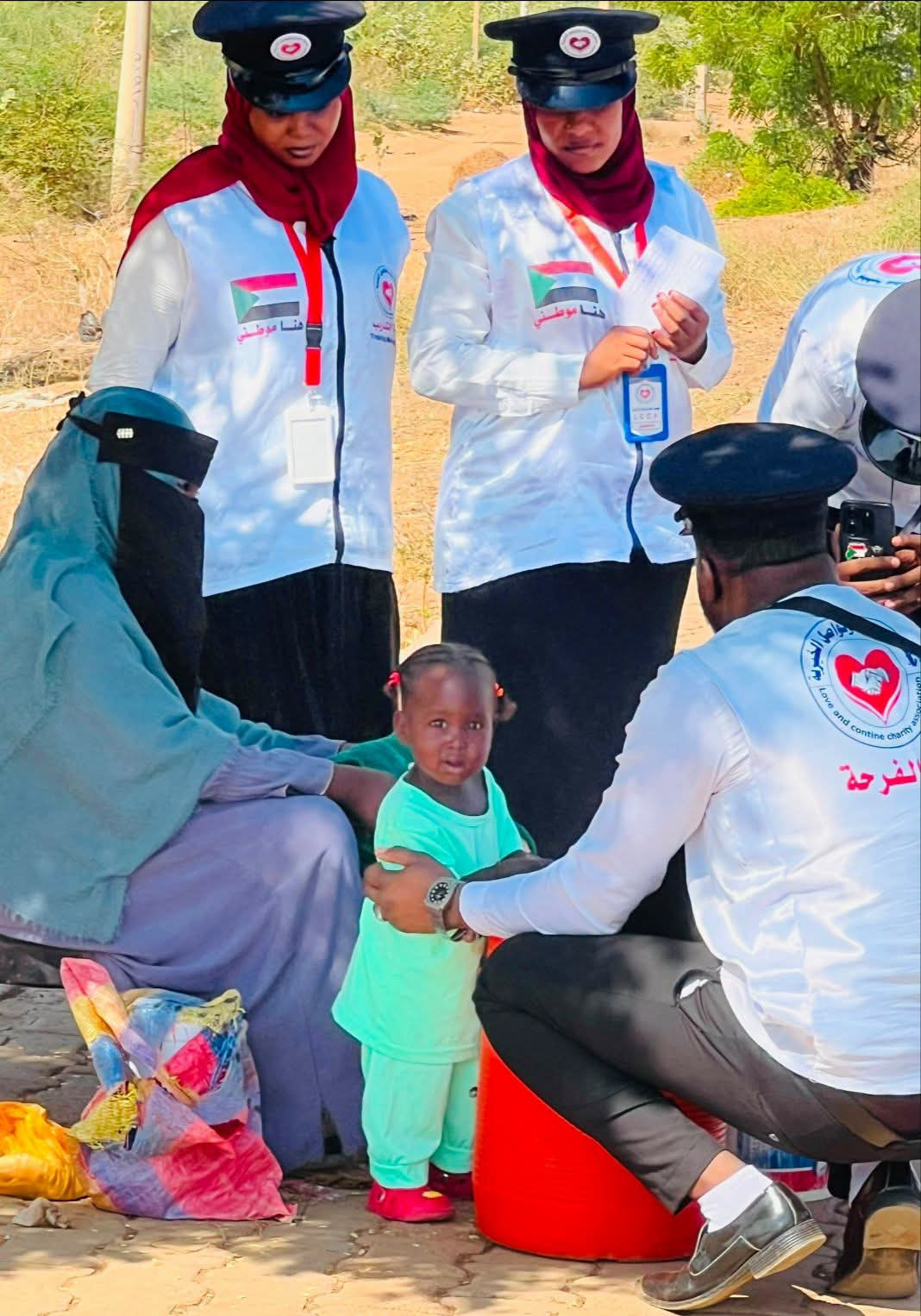
A humanitarian initiative goes beyond providing assistance to help build hope Dr Sarah: The war has driven mothers into the markets in search of a livelihood. A video shared on social media has touched the hearts of users, capturing a moving act of kindness by young volunteers from the “Rest Tonight, Mum” initiative. The group reached out to a Sudanese woman displaced from Darfur who struggles to support her family...

Contact Us

Address: Sudan News Agency (SUNA) Building, Jamhoria Street, Khartoum - Sudan
Mobile:+249 909220011 / +249 912307547