



October 25: Where Does Sudan Stand Today? From a Stalled Transition to a War Between State and Society… What Is the Way
25 October, 2026
Introduction: From the Promises of the Revolution to the Tragedy of a Nation
October 25, 2021, was not merely an incidental milestone in Sudan’s history of political transition. Nor was describing it as an attempt to “correct the course” sufficient in itself to establish that the course had indeed been corrected or that the country had been placed on a path to stability. History judges events not by the slogans that accompany them, but by their consequences and the changes they bring to people’s lives and the destinies of nations.
Today, years after that turning point, and amid the complex war ignited by the Rapid Support Forces (RSF) rebellion on April 15, 2023, with its devastating consequences of destruction, internal displacement, refugee flows, and the collapse of the basic conditions of life, the question has become more urgent than ever: Where does Sudan stand today? What remains of the December 2018–April 2019 Revolution and its aspirations for freedom, peace, and justice? What remains of the hopes invested in a smooth democratic transition that would end authoritarianism and repression and pave the way for a state founded on citizenship, institutions, and good governance?
Sudan moved from a faltering transitional partnership to the dismantling of the constitutional process, from political deadlock to war, and from competition over the administration of the state to a threat to its unity, institutions, and society. This transformation was neither the result of a single decision nor the responsibility of one party alone. Rather, it emerged from a cumulative set of interacting factors, including the failures of political forces, rivalries among other power centers, the absence of consensus on the future of the state, and external interventions intertwined with regional and international interests.
Yet, the multiplicity of causes must not become a means of dissolving responsibility or treating all parties as equally culpable in every respect. There is a difference between those who failed to manage a political opportunity, those who forcibly interrupted the constitutional process, those who ignited the war, those who committed violations, and those who helped finance, arm, or prolong the conflict. Each action carries political, moral, and legal responsibilities that must be established on the basis of facts and evidence.
In this context, the responsibility of the forces that led the revolution and the transitional period cannot be overlooked. Foremost among them were the components of the Forces of Freedom and Change (FFC) and their successive alliances. They failed to transform the popular momentum into an inclusive national project, to prioritize consensus over power-sharing arrangements, and to place the country’s interests above the gains of political organizations and their leaders. Their divisions, lack of an overarching vision, and reliance on external support contributed to eroding public trust and squandering part of a historic opportunity. None of this, however, absolves the military component of responsibility for its decisions or justifies the war and its continuing consequences.
The Sudanese tragedy is not simply that the revolution faltered or that the transition was interrupted. It is that a dispute over power culminated in a war in which the people are paying with their lives, their country, and their future—a conflict whose consequences may endure for decades.
Revisiting October 25 in light of everything that followed is therefore not an attempt to revive an old dispute between supporters and opponents of the revolution. It is an effort to understand how opportunities were squandered, how domestic failures interacted with external pressures, why political leaders failed to protect the state from sliding into war, and what must change to prevent Sudan from repeating its tragedy under new names and alliances.
First: October 25… Was the Course Corrected, or Did the Crisis Deepen?
The measures taken by the military establishment on October 25, 2021, emerged against the backdrop of a deepening crisis within the transitional partnership established after the fall of the Salvation Regime in April 2019. Relations between the civilian and military components were strained by conflicting powers, competing influence, and a lack of trust, as well as disagreements over the administration of state institutions and the country’s future. These tensions coincided with delays in completing transitional institutions and fulfilling the transition’s obligations.
The military justified its intervention at the time as an effort to correct the course and protect the country from political deadlock. However, no political action can be properly assessed solely on the basis of its proponents’ stated justifications. It must instead be judged by the stability it produces, the opportunities it creates for consensus, and the extent to which it safeguards citizens’ rights and the interests of the state.
By this measure, the October measures failed to address the roots of the crisis. The constitutional process was interrupted, relations with civilian forces deteriorated, and protests escalated. Prime Minister Abdalla Hamdok subsequently resigned in January 2022. Political deadlock persisted until a political process sponsored by domestic and international actors led to the Framework Agreement in December 2022, without resolving fundamental disagreements over power and security and military reform.
The war that erupted on April 15, 2023, then exposed the depth of the state’s institutional fragility and the weaknesses of its constituent structures, transforming a dispute over governance arrangements into a devastating war threatening the country’s unity, institutions, and society.
This does not mean that October 25 was the sole or inevitable cause of the war. Political, military, security, and external factors accumulated between the two events. Among the most significant were the existence of multiple centers of armed power, disagreements over integrating the RSF and reforming the security sector, and competition over influence and resources. Nevertheless, it is difficult to separate the interruption of the transitional process from the political environment in which these contradictions intensified and the prospects for building a national consensus capable of containing them diminished.
Herein lies the paradox: a move presented under the slogan of correcting the course failed to produce a stable alternative. Instead, it was followed by years of political deadlock that culminated in a war with enormous costs and consequences.
Political processes are not corrected by suspending them, but by addressing the causes of their dysfunction. Nor is the state protected by obstructing consensus; it is protected by building institutions capable of managing disagreements and preventing them from turning into armed conflict.
Second: The FFC and the Squandering of the Civilian Opportunity… When Political Gains Take Precedence over National Interests
A comprehensive assessment of October 25 requires revisiting the performance of the Forces of Freedom and Change, which dominated the political landscape after the December Revolution and possessed both popular legitimacy and a historic opportunity to help establish stable civilian rule.
However, revolutionary legitimacy does not automatically translate into the capacity to govern. Managing a transition requires an overarching vision, a clear program, agreement on priorities, the ability to accommodate differences, and an understanding of the nature of the state, the balance of power, and the challenges confronting the country.
The FFC experience revealed fundamental shortcomings in these areas. Instead of broadening the base of national consensus, divisions deepened within the alliance and between it and other political and social forces. Power-sharing arrangements and competition for positions took precedence, while the ability to formulate a common program for economic management, security and military reform, peace and justice, and the completion of transitional institutions weakened.
Some components of the alliance also treated their claim to represent the revolution as an almost exclusive political mandate, despite the fact that the revolution was broader than any single organization or coalition. The street that had placed its trust in civilian forces had not given them a blank cheque to monopolize decision-making or exclude dissenting voices.
Political responsibility, therefore, concerns not only what these forces did, but also what they failed to do despite the opportunities available to them. They did not succeed in building a broad civilian consensus capable of safeguarding the transition, presenting a national project acceptable beyond their own constituencies, or translating revolutionary slogans into institutions and workable programs.
More seriously, some leaders placed partisan gains and positions in government above the country’s interests. Domestic priorities were, at times, overshadowed by calculations involving alliances, political contacts, and external support. When retaining political office becomes the priority rather than building the state, leaders become less willing to make the concessions necessary for progress, and consensus becomes a burden rather than a prerequisite for a successful transition.
Perhaps the most revealing paradox is that some forces that championed civilian rule resorted, in their struggle for power, to exclusionary practices, political maneuvering, and the imposition of faits accomplis. Such practices appeared closer to the politics of domination that the revolution had sought to resist. In describing these practices—not their political identity—it is fair to say that some operated with a militarized mindset in the exercise of power, even while retaining a civilian label and revolutionary rhetoric.
This is not to equate the conduct of civilian forces with the military seizure of power, nor is it an attempt to justify the coup. Rather, it distinguishes between proclaimed legitimacy and actual practice. Democracy is not merely a slogan, and civilian rule is not a political credential. Both must be reflected in pluralism, tolerance, accountability, and acceptance of the peaceful transfer of power.
Likewise, reliance on external support through political promotion, sponsorship, and diplomatic pressure cannot substitute for building domestic trust. External actors may support a process or press for a settlement, but they cannot grant any political force a permanent popular mandate or compensate for the absence of an inclusive national project.
At the same time, the FFC should not be reduced to a single position, nor should all its components be assigned identical responsibility. Their orientations, positions, and alliances evolved over time. This diversity, however, does not remove the need for a serious assessment of the experience as a whole, identifying responsibility according to specific decisions, practices, and outcomes.
Those who place partisan gains above national interests, lose touch with domestic realities, and then rely on external actors to compensate for their failure to build consensus bear substantial political and moral responsibility when the opportunity they once led collapses.
Third: From Political Deadlock to the April 15 War… How Did Sudan Reach the Brink of a Fragmented State?
The war that erupted on April 15, 2023, was not an isolated incident disconnected from the transitional process. It broke out in a country struggling with multiple centers of power, security and military institutions whose relationship had not been resolved, and a political process that had failed to produce a sustainable agreement on the future of governance and armed forces.
The existence of the Sudanese Armed Forces and the RSF as separate formations, with distinct interests and chains of command, constituted a structural challenge to the state, despite the clear legal frameworks governing it. The integration of the RSF and reform of the security and military sector remained among the most contentious issues in the period preceding the war, amid disagreements over timelines, arrangements, command structures, and guarantees.
As tensions escalated, political efforts failed to contain the crisis. Armed conflict erupted between the two forces and rapidly developed into a widespread war that engulfed multiple cities and regions, plunging Sudan into one of its gravest crises since independence.
The war cannot be reduced to the mistakes of the FFC, the October coup alone, or rivalry among military leaders. Direct responsibility also concerns the decision to resort to arms; responsibility for violations committed during the war; and responsibility for supplying the parties with resources, weapons, and fighters, as well as obstructing opportunities for a settlement.
The experience nevertheless demonstrates that weakening politics, interrupting the transition, and failing to reach consensus on institutional reform left the country more vulnerable to the outbreak of conflict. When legitimate institutions capable of resolving disputes peacefully are absent, and armed force becomes an independent center of political and economic influence, the state’s ability to contain crises through peaceful means diminishes.
The war has caused widespread destruction of infrastructure, the collapse of major sectors of the economy and public services, the displacement and flight of millions of people, grave violations against civilians, and a decline in the state’s capacity to provide essential services. It has also produced shifting territorial control and competing centers of administration, threatening to turn military fragmentation into a prolonged political and administrative division.
The danger lies not only in current lines of control, but also in the emergence of economic and political interests that benefit from the continuation of the war. The country’s resources, border crossings, and commercial networks risk becoming sources of financing for competing authorities.
When armies multiply, decision-making centers fragment, and resources become instruments of conflict, the state is no longer merely a victim of war. Its unity and institutions themselves become the objects of the struggle.
Fourth: External Actors and Networks of Influence… From Political Intervention to Prolonging the War
Sudan’s crisis cannot be understood in isolation from the interests of regional and international actors that engaged with the transitional process and subsequently with the war. Different states and entities have sought to protect their security, economic, and geopolitical interests, adopting varying positions toward civilian and military forces. During the war, allegations and reports also emerged concerning the flow of weapons, fighters, financial assistance, and logistical support to the parties to the conflict.
International reports have pointed to the role of external networks in supporting the military capabilities of certain parties, including through supply, arms, and financing networks. However, determining the responsibility of any particular state, institution, or entity requires reliance on available evidence and a clear distinction between documented findings and competing allegations or political assessments.
It would be inaccurate to place all states and institutions in the same category. Equally, it would be unacceptable to disregard documented evidence of foreign intervention or minimize its impact on prolonging the war and complicating efforts to reach a settlement.
In this context, the relationships between some FFC components and regional and international actors warrant closer examination, including the meetings, contacts, and political and diplomatic support associated with them. Such an assessment should begin with a specific question: To what extent did these relationships serve Sudan’s national interests? To what extent did they help build domestic consensus, or instead intensify polarization among Sudanese political forces?
It should not be assumed that all FFC components shared identical relationships or positions. Nevertheless, the political intersections between some of its components and external actors may legitimately be examined and documented, with particular attention to their impact on the independence of national decision-making.
The role of the United Nations Integrated Transition Assistance Mission in Sudan (UNITAMS) also deserves an objective assessment. The mission was established to support the political transition, assist peacebuilding, and support peace processes and civilian governance. Its experience, however, generated extensive debate about the limits of international mediation, the relationship between a UN mandate and national decision-making, and the mission’s capacity to address internal divisions.
The mission’s mandate ended on February 29, 2024. Yet evaluating its experience remains important for understanding the limitations of international engagement when domestic actors are unable to build a sustainable consensus. External assistance can facilitate dialogue, but it cannot replace national will or manufacture genuine agreement among forces that disagree over the nature and future of the state.
Dependence on external actors becomes particularly dangerous when political or military forces rely on foreign sponsors for funding, political advocacy, and support instead of building legitimacy on a broad domestic base. The interests of states change, and their priorities may shift, while the costs of war and destruction continue to be borne by the Sudanese people.
External actors find the greatest room for maneuver when domestic forces are weak. Reclaiming national decision-making does not mean isolating Sudan from the world; it means engaging with it on the basis of Sudanese interests rather than dependence on competing geopolitical blocs.
Fifth: Where Does Sudan Stand Today? The State, Society, and the Cost of War
Sudan is facing a multidimensional crisis that extends far beyond the battlefield. On the security front, the continuing war and the risk of renewed fighting obstruct the restoration of stability. Politically, no comprehensive national consensus has emerged on governance arrangements or the future of military and security institutions. Economically, broad sectors of production, commerce, health care, and education have been damaged, while citizens bear the burdens of displacement, lost livelihoods, and rising living costs.
Socially, the war has inflicted deep wounds on relations between communities, damaged the national fabric, and widened grievances and mistrust. Disrupted education and health care, combined with declining employment opportunities, threaten the future of entire generations, not merely that of the current political period.
The territorial map has undergone significant changes since the war began. Yet the recapture of certain cities or institutions does not, by itself, signify that the state has fully recovered its unity or its capacity to govern and deliver services. State-building requires more than military victory. It requires unified institutions, economic recovery, the restoration of public trust, safe returns for displaced people and refugees, and the reconstruction of what the war has destroyed, even where some degree of recovery has begun.
The danger of de facto partition remains one of the most serious challenges. As centers of territorial control, administration, and resources multiply, the possibility of parallel authorities grows, making the unification of national decision-making increasingly difficult. If this situation persists, it could entrench a war economy benefiting local and external networks of interest that would have a stake in prolonging the division.
It is also essential to recognize that the consequences of war will not disappear simply because the guns fall silent. Rebuilding hospitals, schools, homes, electricity and water networks, and roads will require enormous resources. Communities will need years to rebuild trust and recover from trauma, bereavement, and the loss of property.
The present challenge, therefore, is not merely how to end the war, but how to end it without leaving behind conditions sufficient to trigger another conflict.
Sudan has lost more than buildings and institutions as a result of this war. It has lost years of development, economic opportunities, social security, and confidence in politics. These losses may continue to shape the country for decades unless they are addressed through a national project for rescue and reconstruction.
Sixth: Lessons Learned and the Path Out of the Impasse
The experience of recent years demonstrates that rescuing Sudan requires a review that goes beyond exchanging accusations and redefines national priorities on clear foundations.
First: The state must come before parties and alliances. State institutions must not become hostages to the political gains of parties or military power centers. The unity and sovereignty of the country and the safety of its citizens must serve as the reference point for any settlement or political project.
Second: Consensus must come before power-sharing arrangements. A successful transition cannot be built on the distribution of positions among political leaders. It requires a national agreement on the rules of governance, economic and service-delivery priorities, transitional justice, institutional reform, and relations between civilians and the military.
Third: There can be no democracy with multiple armies. Security and military sector reform, and the unification of command and weapons under the authority of the state and the law, are essential conditions for stability. These objectives must be pursued through clear, professional, and implementable arrangements, not deals that postpone the problem or reproduce it.
Fourth: National decision-making cannot be borrowed from abroad. International and regional relations are necessary, but they must be managed in accordance with Sudan’s interests. Any external assistance should be assessed by its contribution to peace and stability, not by the advantages it provides to one party against another. The contentious legacy of that period, including the disputes surrounding the revolution and the Framework Agreement, must also be addressed.
Fifth: Ending the war must not mean impunity. A sustainable settlement requires the protection of civilians, accountability for those responsible for crimes and violations in accordance with evidence and the law, reparations, redress for grievances, and rejection of collective punishment and revenge.
Sixth: A sustainable civilian transition requires a broad social foundation. Civilian forces must rebuild public trust, abandon claims to an exclusive mandate to represent the revolution, present realistic programs, embrace pluralism and the peaceful transfer of power, and submit to free and fair elections.
Seventh: Reconstruction is a political and social project, not merely a financial plan. Sudan needs a national vision for restoring public services and production, rehabilitating institutions, enabling displaced people and refugees to return, repairing community relations, empowering young people and women, and restoring dignity and opportunity to regions affected by marginalization and war.
These priorities cannot be achieved through a unilateral decision or a limited agreement among political leaders. They require a broad Sudanese political process involving civilian, community, and professional forces; native administration and grassroots representatives; people from affected regions; young people; and women. Such a process must place ending the war, preserving the unity of the state, and protecting citizens above competition for positions.
Conclusion: History Judges More Than Slogans
Years after October 25 and the war and destruction that followed, it is no longer sufficient for Sudanese people to trade accusations over who squandered the revolution or who bears primary responsibility for the tragedy. Political and historical accountability is essential, but it must lead to lessons learned rather than reproduce the same crises and divisions.
Civilian forces failed to build an inclusive national project. The interruption of the transitional process through the rupture of the partnership was followed by a war whose parties bear direct responsibilities for its outbreak, continuation, and accompanying violations. External interventions have also, where supported by evidence in individual cases, contributed to fueling the conflict and complicating efforts to end it. The mistakes of one party must never become a justification for the mistakes of another, nor should the grievances of the past become an open-ended mandate to destroy the present and the future.
One of history’s lessons from coups and the collapse of civilian opportunities is that forces which prioritize partisan gains and positions of power over national interests, and sideline domestic priorities in favor of alliances and external support, bear substantial political responsibility when the opportunity they led collapses. Responsibility must be measured by the extent of their influence, the opportunities available to them, the decisions they made, and the consequences that followed—not merely by the slogans they proclaimed.
Perhaps the greatest paradox in Sudan’s experience is that some forces expected to protect the civilian transition adopted exclusionary practices and imposed faits accomplis in their struggle for power, contradicting the very principles of civilian rule they claimed to uphold. In conjunction with other factors, these practices weakened the project they purported to represent. This does not mean equating their failures with the decision to stage the coup or with the responsibility of those who ignited the war.
The revolution was lost amid political failures and decisions that interrupted its constitutional course, followed by a devastating war that pushed the country from a faltering transition into a sweeping national and humanitarian tragedy. Sudanese people lost more than a political opportunity. They lost security, stability, and livelihoods, while their institutions, resources, and social fabric sustained damage that may take decades to repair.
What is required, therefore, is neither a return to the pre-October 25 situation as though time had stood still, nor acceptance of the realities of power imposed by the war. What is needed is a new national compact that incorporates the lessons of the revolution, the coup, and the war; restores the centrality of citizenship; safeguards Sudan’s unity; prevents the monopolization of power and arms; establishes genuine civilian governance; guarantees justice and accountability; and restores national decision-making to the Sudanese people.
Sudan does not need a victor imposing its will on a shattered nation, nor a political alliance seeking to reclaim lost positions. It needs a national project through which the country can overcome the forces that have brought it to the brink of collapse. Such a project must make ending the war, protecting civilians, unifying state institutions, reconstruction, and national reconciliation non-negotiable priorities.
History does not judge leaders solely by what they promised their people, but by what ultimately became of those people under their leadership.
If October 25 marked a decisive moment in the breakdown of Sudan’s transition, April 15 exposed the cost of allowing structural failures to persist without resolution. Between those two events, and in everything that followed, Sudan faces a historic test: either it transforms this catastrophe into a courageous national reckoning that lays the foundations for a state of citizenship, institutions, and law, or it remains trapped in a cycle of coups, political failures, and wars, while its people continue to pay the price for decisions they had little power to influence.
Sudan is greater than the FFC, greater than any party or political component, and greater than any geopolitical axis. A revolution that fails to produce a national project capable of protecting the state remains vulnerable to being hijacked. A state that cannot accommodate all its citizens remains vulnerable to fragmentation. And a nation in which the interests of its leaders take precedence over those of its people will ultimately make everyone pay the price for its ruin.
My purpose in writing this three-part series is to document this period and write for history, not to engage in the polemics of the moment; to do justice to the nation and its people, rather than to spare its leaders from criticism.
Post your comments
Photo of the Week
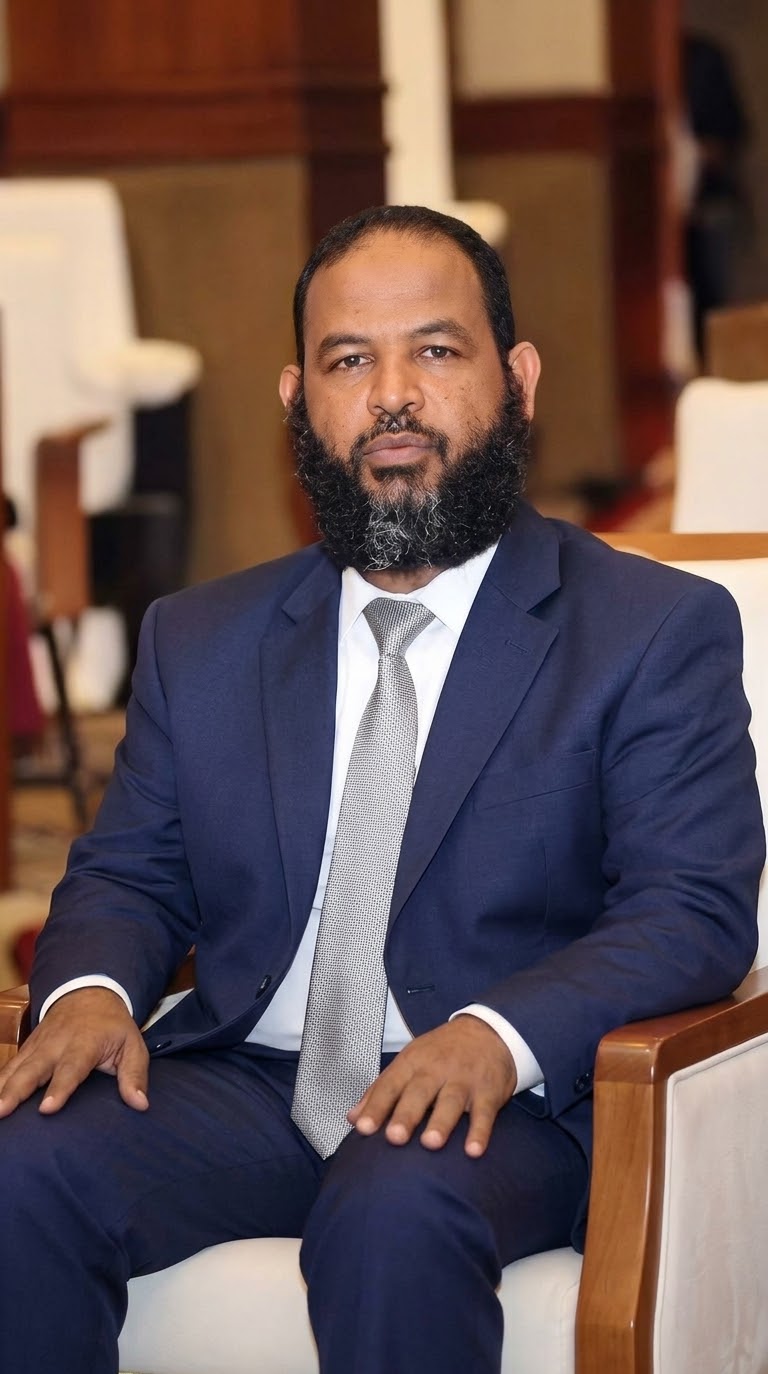
From Medical Research to the Advancement of Specialized Healthcare: A Scientific Career Bridging Knowledge and Community Service Gedaref – Sudanow Professor Saeed Mohamed Omar has achieved a notable scientific milestone by being included among the world’s top 2% of scientists for 2025–2026 in Clinical Medicine, under the General and Internal Medicine subfield,...
More-
25 October, 2026
Tales from the Battlefield “Rest Tonight, Mum”: A Compassionate Gesture That Moved Social Media and Wiped Away a Strugg
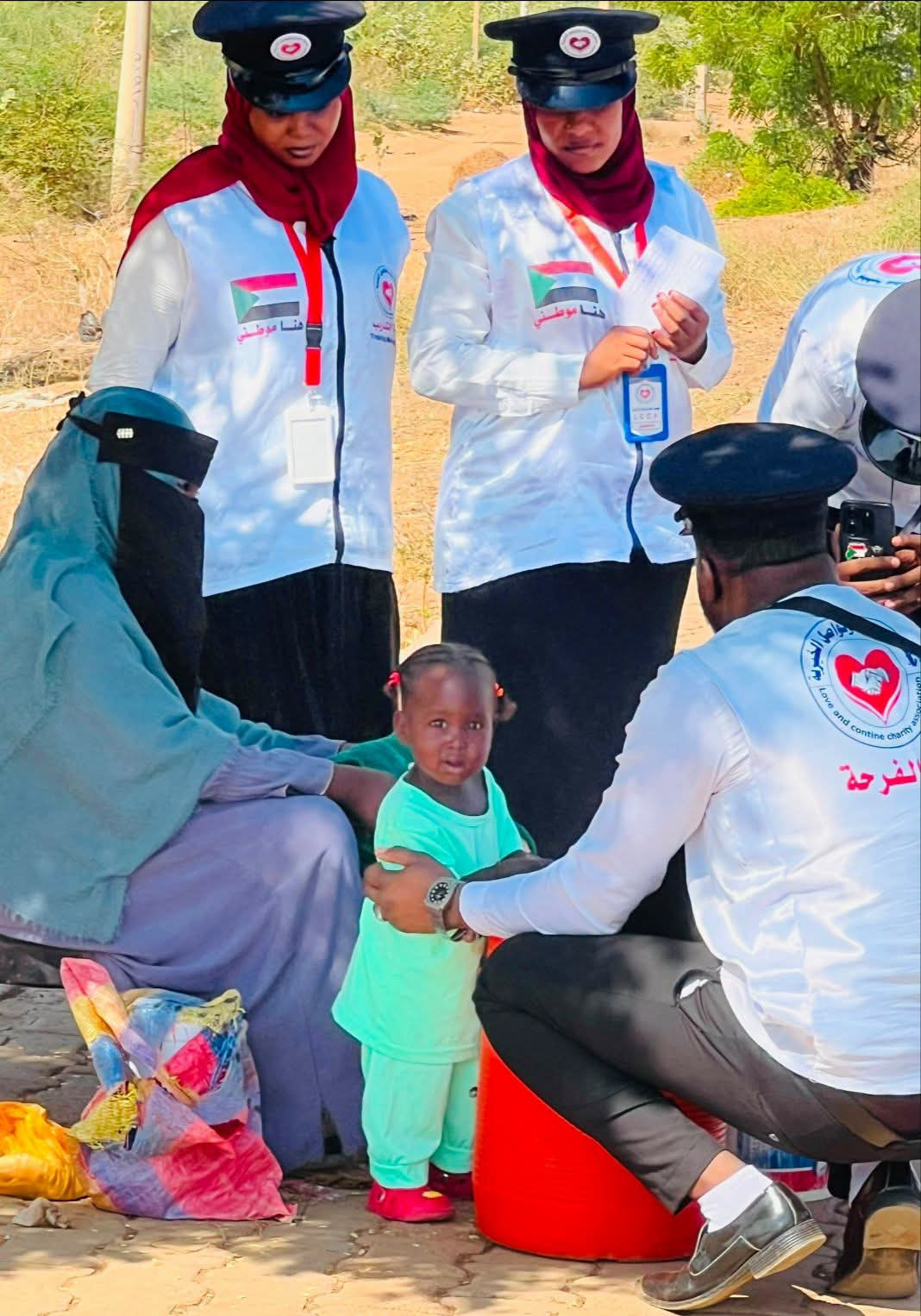
A humanitarian initiative goes beyond providing assistance to help build hope Dr Sarah: The war has driven mothers into the markets in search of a livelihood. A video shared on social media has touched the hearts of users, capturing a moving act of kindness by young volunteers from the “Rest Tonight, Mum” initiative. The group reached out to a Sudanese woman displaced from Darfur who struggles to support her family...

Contact Us

Address: Sudan News Agency (SUNA) Building, Jamhoria Street, Khartoum - Sudan
Mobile:+249 909220011 / +249 912307547