


Sudan and Russia: From Wagner’s Legacy to Red Sea Geopolitical Stakes
01 November, 2026
An Assessment of the Outcomes of Al-Burhan’s Visit to Moscow and the Prospects for Partnership Amid War and International Rivalry
Khartoum (Sudanow) —
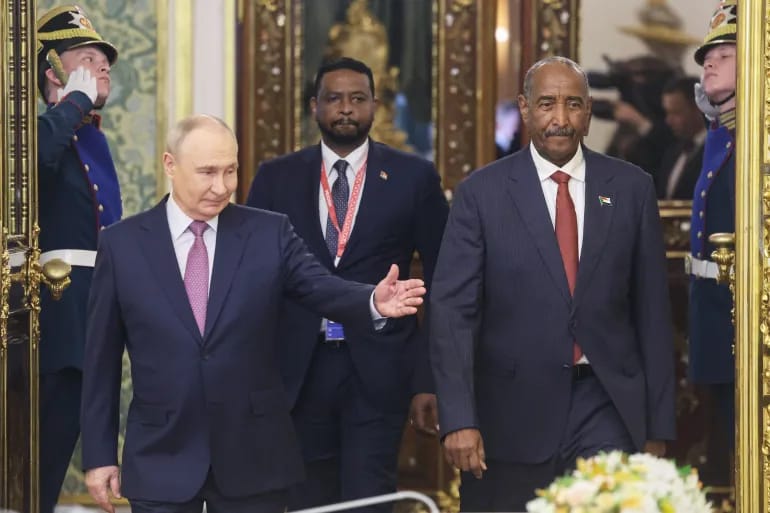
The visit to Moscow this week by the Chairman of Sudan’s Transitional Sovereignty Council, General Abdel Fattah Al-Burhan, and his participation in the Russia-Africa Summit, was far more than a protocol-driven engagement at a multilateral event or a passing milestone in bilateral relations. It took place against a highly complex regional and international backdrop, where African security considerations intersect with great-power competition, and military and economic interests converge with the strategic geography of the Red Sea and the Horn of Africa.
Although the Russia-Africa Summit provided the broader framework for the visit, its outcomes extended beyond the general agenda of Russia-Africa relations to address several key Sudanese issues. These included the ongoing war and its repercussions, military and security cooperation, the future of the Russian presence in the Red Sea, mining and natural resources, positions within the United Nations Security Council, and Sudan’s repositioning within the international system.
The visit came at a time when Sudan is seeking to broaden its strategic options and rebuild its foreign relations on foundations that safeguard its sovereignty and the unity of its state institutions. Meanwhile, Russia is seeking to strengthen its presence across Africa and expand its partnerships in a region of growing importance to international strategic competition.
Against this backdrop, the visit should be viewed as a milestone in the evolving relationship between the two countries, rather than merely an occasion for exchanging positions and reaffirming historical ties at a time of profound international transformation.
Seven Decades of Relations: The Historical Legacy Behind the Present
Diplomatic relations between Sudan and Russia date back to 1956, the year Sudan gained independence. Over the past seven decades, relations have passed through different phases of rapprochement and estrangement, yet they have retained a significant legacy of political, military, educational and economic cooperation.
During the Cold War, the Soviet Union contributed to the development of aspects of Sudan’s military and technical capabilities through arms supplies, training and technical expertise. Cooperation also extended to education, medicine, academic exchange, technical assistance and cultural relations.
Soviet- and Russian-origin military systems have historically formed part of Sudan’s defence arsenal. This has made technical cooperation, maintenance, modernisation and spare-parts supplies enduring components of the bilateral relationship, even as Sudan diversified its sources of military equipment over subsequent decades.
Moscow has also maintained links with Sudan’s economic sectors, particularly mining and gold, where commercial and investment interests have intersected with broader geopolitical considerations.
Developing relations today, therefore, does not begin from scratch. Rather, it builds on a long history of shared interests and accumulated experience, although the current war has introduced more sensitive and complex dimensions.
The Sudanese War and the Reshaping of Russian Calculations
Since the outbreak of war on 15 April 2023, Sudanese-Russian relations have entered a new phase, shaped by the nature of the conflict, the involvement of multiple external actors, and Sudan’s geopolitical significance in the strategic equations of the Red Sea and Africa.
Military cooperation stands at the forefront of these issues, given the Sudanese Armed Forces’ needs in weapons supplies, maintenance, rehabilitation, training and the development of defence capabilities, particularly as some of their military systems are linked to Russian and Soviet technology.
However, an assessment of this issue would be incomplete without examining the Wagner Group's experience, which represented one of the most complicated chapters of the Russian presence in Sudan.
Wagner maintained a presence in Sudan in the years preceding the war and was associated with close ties to the rebel Rapid Support Forces (RSF), as well as economic and security activities, a significant part of which centred on gold and mining. The group was also linked to logistical and military support, training, and the involvement of its personnel and affiliated networks in the conflict from its early stages.
This was not simply a conventional form of Russian economic engagement. Rather, it represented a model of influence exercised through irregular military and security formations operating outside the established frameworks of formal state-to-state relations.
Following the Wagner mutiny in June 2023 and the death of its leader, Yevgeny Prigozhin, in August of the same year, Russia began restructuring its external presence. Wagner's field presence in Sudan subsequently came to an end, with the departure of its remaining personnel or their relocation to other parts of the African continent.
This development opened the way to moving beyond an exceptionally complicated phase in Sudanese-Russian relations, particularly given Wagner's connections with the RSF and the overlapping economic and military interests that characterised its activities in the wartime environment.
Nevertheless, the group's departure does not mean that all its networks, interests and economic connections have disappeared, nor does it necessarily indicate a decline in Moscow's interest in Sudan.
The more important question now concerns the model Russia will adopt in the coming period: will it move away from the use of paramilitary formations and parallel networks towards direct government-to-government cooperation with Sudanese state institutions?
Sudan's interest lies in ensuring that future relations are clearer and more firmly regulated, based on transparent agreements and official institutions, away from parallel influence networks or arrangements that place economic interests above national sovereignty and the legitimacy of existing state institutions.
The Naval Base: Strategic Geography That Remains Central to Moscow and the West
The proposed Russian naval base in Port Sudan remains one of the most sensitive issues in bilateral relations, given its direct implications for Red Sea security, international maritime routes and the strategic calculations of other influential regional and international powers.
Sudan possesses a strategically important coastline along the Red Sea, close to one of the world's most significant commercial and maritime corridors. This gives the country geopolitical importance extending well beyond its geographical and economic boundaries, particularly amid developments affecting the Strait of Hormuz and the Bab el-Mandeb Strait and their implications for global supply chains and food security.
In recent years, discussions have taken place regarding the establishment of a Russian naval logistics centre in Port Sudan. The proposed arrangements reportedly envisaged a presence lasting up to 25 years, within a framework of military and technical cooperation.
However, the project has not developed into an operational Russian military presence on Sudanese territory. It has remained subject to negotiations and political and strategic assessments, while reports have indicated that it was suspended and not pursued during previous stages.
Yet the fact that the project has not materialised does not mean it has disappeared from international strategic calculations.
For Moscow, Sudan's coastline represents an opportunity to strengthen its naval presence in the Red Sea and the Indian Ocean and expand its strategic reach in a region where international competition is intensifying.
For the United States and Western countries, the possibility of a Russian base in Port Sudan is inseparable from their calculations concerning maritime security, the military balance in the Red Sea, and the distribution of international influence across the Horn of Africa and the Middle East.
Consequently, the proposed base is likely to remain on Russia's agenda and within American and Western strategic calculations, even if implementation is delayed or the project's original format changes.
This makes the issue far more than a bilateral military agreement; it forms part of a much broader geopolitical equation.
Sudan, however, must approach the matter primarily from the standpoint of its national interests, clearly defining the strategic, economic and security returns of any agreement, as well as its implications for relations with Red Sea countries and major international powers.
International experience, the requirements of national sovereignty and the national interest, together with geography, give Sudan important strategic cards. They also impose a responsibility to manage those assets wisely, ensuring that the country's strategic location does not become a burden on its sovereignty or an entry point for other countries' conflicts and renewed regional rivalries, with all their negative implications for Sudanese and regional security.
The UN Security Council: Moscow Between Defending Sovereignty and Pursuing Strategic Interests
The United Nations Security Council is one of the most important arenas in which Sudanese and Russian interests intersect, a dimension that has acquired exceptional significance since the outbreak of war.
On 18 November 2024, Russia exercised its veto against a British-Sierra Leonean draft resolution on Sudan, which called for a cessation of hostilities, enhanced civilian protection and improved humanitarian access.
The other 14 Council members voted in favour of the draft, making the Russian veto a significant diplomatic milestone in the course of the Sudanese crisis.
Moscow justified its position by expressing reservations about provisions it considered insufficiently attentive to the nature of the conflict and the position of the Sudanese government. It also objected to what it regarded as interference in Sudan's internal affairs.
Russia has likewise opposed extending the arms embargo imposed on Darfur to cover the entire territory of Sudan, maintaining that international measures should not become instruments for exerting pressure on the state and its national institutions.
The significance of Russia's position to Khartoum is therefore evident, particularly amid Western pressure related to the war, sanctions and efforts to influence the future of political authority and political arrangements in Sudan.
However, an objective assessment must also recognise that Moscow acts according to its own international calculations and interests, particularly in its confrontation with the United States and European countries.
The real value of Russia's position should therefore not be measured merely by its ability to block a draft resolution. Rather, it should be assessed according to Moscow's willingness to use its diplomatic weight to support Sudan's unity and sovereignty, prevent the fragmentation of its institutions and contribute to achieving sustainable peace.
Sudan's interests also require expanding areas of understanding within the Security Council and avoiding the reduction of its diplomacy to reliance on a single country's position, however important that position may be.
Nevertheless, Sudanese-Russian rapprochement aims to establish an international diplomatic safety net in the face of challenges and Western pressure, as well as the expansionist ambitions of certain influential parties within the Security Council.
Minerals and Gold: From a War Economy to a Development Partnership
If military cooperation represents one of the historical pillars of Sudanese-Russian relations, minerals constitute one of the most important drivers of their future economic engagement.
Sudan possesses diverse mineral resources, foremost among them gold, alongside copper, iron, chromium, manganese and other resources whose importance in the global economy continues to grow.
Russian activities in Sudan in recent years have been associated with the gold sector, whether through companies, investment arrangements or commercial networks. Some of these activities have raised questions concerning transparency, the relationship between mining and the parallel economy, and the financing of the war.
The current phase therefore presents an opportunity to reorganise this sector on a different basis.
Mining, energy and agriculture have emerged among the issues discussed during Al-Burhan's talks with the Russian leadership, with an expressed willingness to expand opportunities for Russian companies to invest in extracting gold, copper and other minerals.
However, the success of this approach requires moving beyond the mere extraction and export of natural resources towards an integrated productive and development-oriented partnership that enhances the capabilities of Sudan's mining sector.
Sudan does not simply need a buyer of gold or a company extracting minerals. It needs a partner capable of contributing to the establishment of processing industries, transferring technology, training national personnel and developing infrastructure related to mining, energy and transportation.
Investments must also be based on transparent agreements that safeguard the rights of the state and local communities, remain subject to financial and customs oversight, and help curb smuggling and the war economy.
Sudan's mineral wealth could become a major gateway to national economic reconstruction, provided the state manages its contracts and partnerships effectively and prevents natural resources from becoming the basis for disproportionate concessions.
Academic Recognition and the Kremlin Meeting: Messages Beyond Protocol
One of the notable developments during the visit was Al-Burhan's award of an honorary doctorate by a Russian public university, a step carrying academic, symbolic and diplomatic significance.
Although the honour was presented in recognition of efforts to develop bilateral relations, its significance extends beyond the individual holding the position of Chairman of the Sovereignty Council. It reflects Russia's interest in strengthening its relations with Sudan's leadership at this particular stage and its recognition of the leadership's achievements in addressing the war and containing its repercussions.
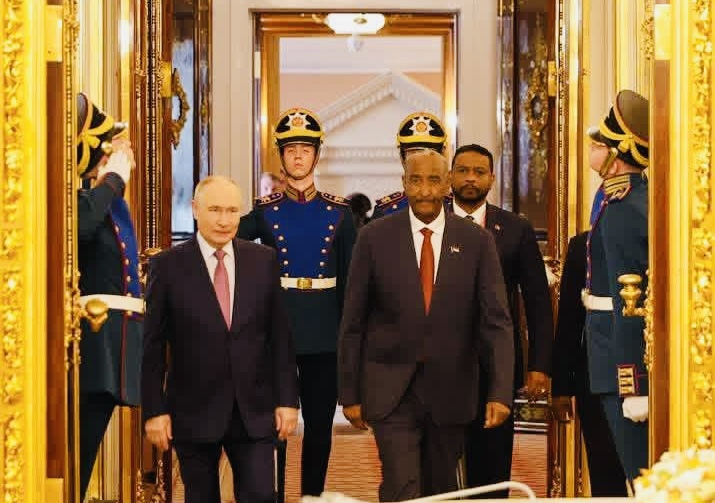
The direct meeting between Al-Burhan and Russian President Vladimir Putin at the Kremlin was the most prominent political event of the visit.
The discussions covered avenues for developing bilateral relations and cooperation in energy, mining, agriculture, education, healthcare and trade, in addition to the situation in Sudan and developments in the war.
The Russian side reaffirmed its interest in developing relations and contributing to stability, while Al-Burhan expressed Sudan's appreciation for Russia's position at the Security Council and Sudan's aspiration to elevate bilateral relations to the level of a strategic partnership.
These meetings assume particular significance in light of the composition of the Sudanese delegation, which included officials responsible for foreign affairs, finance, intelligence and defence industries. This composition indicates that the visit was not confined to a single issue but encompassed several spheres of political, security and economic decision-making.
Nevertheless, the true measure of its success will be the conversion of understandings into specific agreements and implementation programmes, rather than merely relying on statements and promises.
Ukrainian Snipers in Kordofan: The Sudanese War Within the Context of International Conflict
One development deserving particular attention was the announcement by Sudanese Foreign Minister Mohi-Eddin Salem that Ukrainian snipers and trainers had been arrested in the Kordofan region and weapons seized.
He also accused Ukrainian nationals of participating in training the rebel Rapid Support Forces to operate drones and target civilian facilities.
The significance of these statements lies in their timing and context. They came during the Moscow visit, against the backdrop of a war increasingly connected to military technology, intelligence operations, foreign training and cross-border supply networks.
Raising this issue before the Russian media also places it within a broader context involving the Russia-Ukraine war, international competition and the possibility that elements of that conflict's military capabilities and methods are being transferred to African theatres.
It is essential, however, to distinguish between the official Sudanese announcement, whose details require independent verification regarding the identities of those arrested and the nature of their involvement, and the presence of individuals holding a particular nationality on the one hand, and establishing the responsibility of the state to which they belong for their activities on the other.
Nevertheless, if the reported details are substantiated, the incident raises an issue of considerable importance concerning the internationalisation of the Sudanese war and the need to protect national territory from becoming an arena for settling international scores.
Sudan must not become a geographical or military extension of other countries' conflicts, whether those involving Russia and Ukraine or any other form of international rivalry.
The reported incident would also add to previous disclosures concerning foreign mercenaries, including Colombian nationals, and the externally supported war imposed on the country.
Sudan Amid US-Western and Russian Competition: Multiple Options, Not Multiple Dependencies
Russia's presence in Sudan cannot be understood in isolation from the broader international competition for influence in Africa.
Moscow is seeking to expand its political, economic and military partnerships and strengthen its presence in the Red Sea and the Horn of Africa, capitalising on the desire of several African countries to diversify their defence and economic relations.
Conversely, the United States and European countries view Russia's expansion in Africa as part of a broader strategic competition involving maritime security, natural resources, arms supplies and influence within international institutions.
Sudan occupies a distinctive position in this equation because of its geographical location, natural resources, the links between its military establishment and Russian weapons systems, and the nature of the ongoing war and the multiple external actors involved in it.
These developments are unfolding amid American and Western sanctions related to the war, political and diplomatic pressure on Sudan, and differences in international positions regarding the nature of the conflict, the future of political authority and the country's political arrangements.
However, Western positions should not be reduced to a single unified stance. Differences exist between Washington and European capitals in their assessment of priorities and policy instruments. Russia, for its part, is equally guided by its own calculations and strategic interests.
This makes it essential for Sudan to approach international competition from the perspective of sovereignty and national interest, rather than political alignment.
It would be unwise for relations with Moscow to automatically turn into a confrontation with Washington and European capitals, or for such an understanding to prevail. Equally, it would not serve Sudan's interests to deprive itself of opportunities for cooperation with Russia out of fear of Western reactions.
What is required is a multi-track foreign policy that maintains channels of communication with all parties and manages international contradictions in a manner that broadens Sudan's options rather than restricts them.
The Prospects for Relations: From Political Understanding to Strategic Partnership
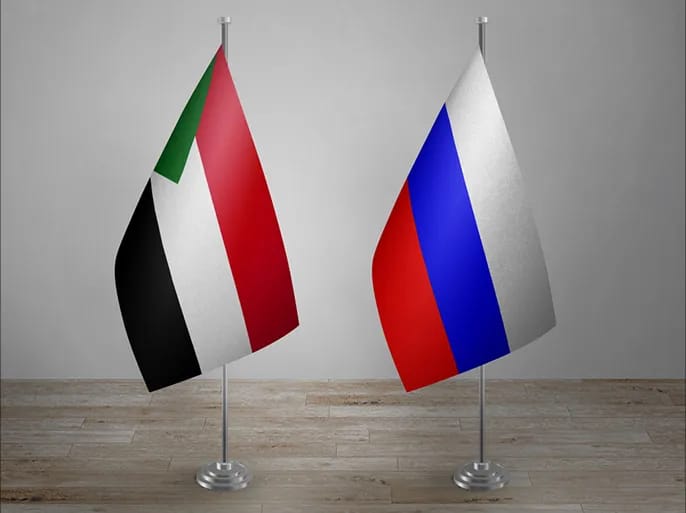
The outcomes of Sudan's participation in the summit and Al-Burhan's visit to Moscow open the door to a new phase in bilateral relations, but they also place significant responsibilities on Sudanese diplomacy.
The main priorities for the future can be identified across five areas:
First: Defence and Security Cooperation. Developing cooperation in arms supplies, maintenance, training and military manufacturing, while prioritising technology transfer and the development of national capabilities.
Second: Maritime and Strategic Cooperation. Reassessing the proposed Russian naval logistics centre in Port Sudan within a comprehensive Sudanese vision for Red Sea security, while safeguarding national sovereignty and balancing Sudanese interests with regional and international considerations.
Third: Economic Partnership. Moving beyond limited transactions in the gold sector towards productive investments in mining, energy, agriculture, transportation and infrastructure.
Fourth: Diplomatic Coordination. Building on Russia's position at the Security Council while expanding Sudan's international relations and diplomatic support networks, and developing common understandings on Sudan's unity and sovereignty and the rejection of external interference.
Fifth: Reconstruction and Capacity Building. Opening the way for Russian universities, research institutions and companies to contribute to rebuilding educational, healthcare and industrial institutions, while benefiting from Russian expertise in energy, technology and heavy industries.
All these areas require implementation mechanisms, institutional follow-up and clearly defined agreements to ensure that the concept of strategic partnership does not become a political label that exceeds its practical substance.
Conclusion: A Visit Within a Regional Context, with Outcomes Affecting the Core of Sudanese Issues
Al-Burhan's visit to Moscow and his participation in the Russia-Africa Summit represent an important milestone in Sudanese-Russian relations, not merely because of the high-level meetings, academic recognition and reciprocal political positions, but because several key Sudanese issues were placed at the centre of dialogue with an influential international power.
The visit was multifaceted in its context and implications: African in its broader framework, regional in its consideration of Red Sea and Horn of Africa security, and international in the context of Russian-Western competition. Yet its outcomes directly addressed a wide range of Sudanese priorities, including the war, military cooperation, the future of the proposed naval base, mining, positions at the Security Council, economic relations and reconstruction.
Perhaps the most important message emerging from the visit is that Sudan can no longer separate its domestic challenges from the international transformations surrounding it. The war itself has become intertwined with regional and international power balances, Sudanese resources are attracting growing interest, and the country's geographical position gives it strategic importance extending far beyond its borders.
From Wagner's legacy and its former connections with the rebel Rapid Support Forces to the future of Russia's official presence, and from the proposed naval base—which has not become an operational reality but has not disappeared from strategic calculations—to gold, minerals and Security Council positions, the picture is one of a relationship extending beyond conventional cooperation into a much broader geopolitical equation.
At the same time, Sudan must recognise that its strategic location does not automatically confer an advantage unless it possesses the capacity to manage it effectively. International partnerships should not be measured by the scale of political statements or symbolic gestures, but by their tangible contribution to the country's security, economy and stability, and to restoring peace throughout Sudan.
Sudan does not need to replace Western dependency with Eastern dependency, nor to import other countries' conflicts onto its territory. What it needs is to harness international competition to build balanced partnerships that safeguard its sovereignty, rebuild the state and strengthen its standing and legitimacy within the international community.
The real challenge is not for Sudan to choose between Moscow and Washington. Rather, it is to develop the strength of the state and the wisdom of its diplomacy to become a partner in shaping international balances, rather than an arena over which international powers and competing agendas struggle for influence.
Post your comments
Photo of the Week
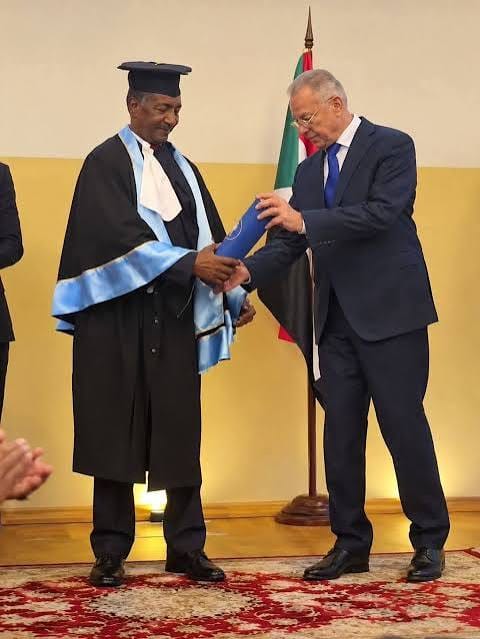
Moscow (Sudanow) — The Russian State University for the Humanities in Moscow has awarded Sudan’s Transitional Sovereignty Council Chairman and Commander-in-Chief of the Armed Forces, General Abdel Fattah Al-Burhan, an honorary doctorate in recognition of his efforts to strengthen Sudanese-Russian relations and promote cooperation between the two countries in the cultu...
More-
25 October, 2026
Tales from the Battlefield “Rest Tonight, Mum”: A Compassionate Gesture That Moved Social Media and Wiped Away a Strugg
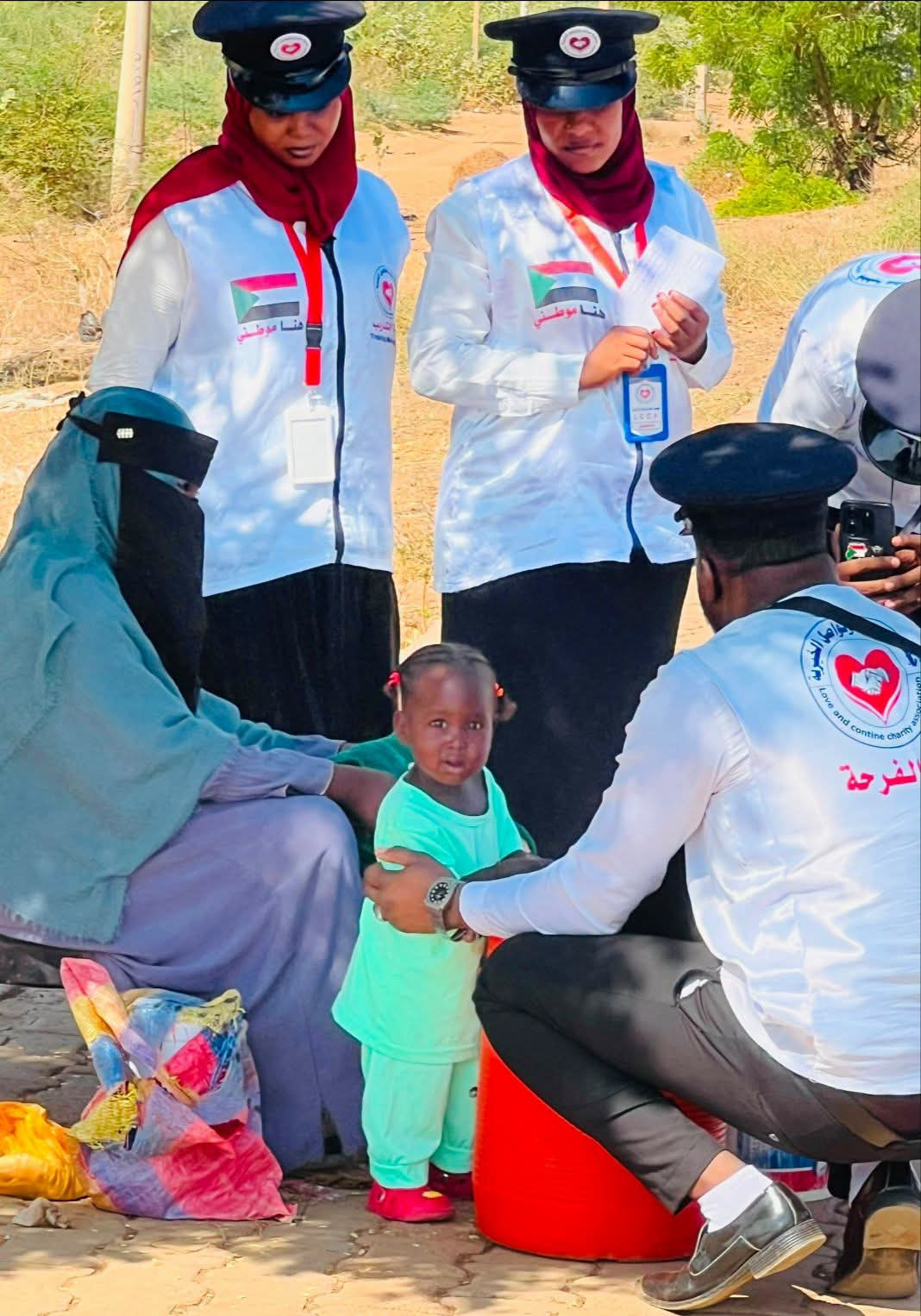
A humanitarian initiative goes beyond providing assistance to help build hope Dr Sarah: The war has driven mothers into the markets in search of a livelihood. A video shared on social media has touched the hearts of users, capturing a moving act of kindness by young volunteers from the “Rest Tonight, Mum” initiative. The group reached out to a Sudanese woman displaced from Darfur who struggles to support her family...

Contact Us

Address: Sudan News Agency (SUNA) Building, Jamhoria Street, Khartoum - Sudan
Mobile:+249 909220011 / +249 912307547