

Lana Nusseibeh and the UN Secretary-Generalship: Sudan at the Heart of the Battle for International Credibility and Legi
08 November, 2026
Between Human Rights Organizations' Objections, Security Council Calculations, and the Intersections of International Interests
Khartoum – (Sudanow)
The entry of Emirati diplomat Lana Zaki Nusseibeh into the race for the position of United Nations Secretary-General was no ordinary development in the process of selecting the world's foremost international official. Her nomination came at a time when the race appeared stalled, amid overlapping considerations of regional balance, aspirations for women's representation, the calculations of major powers, and a growing crisis of confidence in the United Nations' ability to uphold its principles and ensure respect for international law.
What made this nomination particularly sensitive, however, was that it brought the Sudan war back to the forefront of international debate, together with its devastating consequences and allegations of foreign intervention and military and logistical support for the rebel Rapid Support Forces (RSF). These allegations are linked to grave violations against civilians, including the atrocities witnessed in El Fasher in October 2025, as well as earlier events in El Geneina and numerous other Sudanese cities and rural communities affected by the war.
The question being raised within UN circles is therefore no longer limited to the candidate's diplomatic experience or her ability to manage international relations. It has extended to a more fundamental issue: Can a figure who was at the forefront of diplomatically defending her government's policies in an exceptionally complex international conflict, and who justified the resulting tragedies and narratives advanced by her country, subsequently lead an organization whose credibility depends on integrity, independence, impartiality, and accountability?
First: From Diplomatic Nomination to Human Rights and Media Confrontation
Since the UAE announced Lana Nusseibeh's nomination on October 21, 2026, a wave of reservations and criticism has emerged. It has not been confined to Sudanese circles or opponents of Emirati foreign policy, but has extended to major Western newspapers, international human rights organizations, and prominent figures in international justice and human rights advocacy.
The British newspaper The Guardian has been among the leading critical voices. On October 25, it published a report examining the candidate's background and the objections surrounding the UAE's record in Sudan. On October 26, it published an article by Nesrine Malik linking Nusseibeh's nomination to the crisis of accountability over the Sudan war. The article argued that the issue extends beyond the individual candidate to the implications of appointing someone associated with defending her government's policy on a matter involving substantial and difficult-to-dismiss evidence.
The Associated Press, in a report published on October 23 and updated on October 29, placed allegations of Emirati support for the Rapid Support Forces at the forefront of the challenges facing the candidate. It noted that these allegations were not based solely on Sudanese political rhetoric, but also on UN reports, field research, expert testimony, and assessments by influential research institutions monitoring the war and its arms supply networks.
Similarly, Reuters addressed the criticism directed at the candidate by human rights observers in its October 27 report. It cited the views of Kenneth Roth, former Executive Director of Human Rights Watch, who argued that Nusseibeh's defence of the Emirati position and repeated denials of allegations of support for the rebel forces raised questions about the ethical standing required of anyone seeking to become Secretary-General.
The Washington Post also joined the debate, examining questions surrounding the relationship between the candidate and her country's foreign policy, and whether this could create a conflict of interest when addressing the Sudan file.
What is particularly noteworthy is that these reports did not frame the issue as a bilateral dispute between Khartoum and Abu Dhabi. Instead, they treated it as a test of the credibility of the international institution itself, and of the willingness of the country and its candidate to confront the implications of this record.
Second: What Do International Documents Say About External Support for the War?
It is important to distinguish political allegations from what has been documented by international institutions.
In this context, particular attention should be given to reports by the United Nations Panel of Experts on Darfur, especially its January 2024 report, which described allegations concerning the transfer of weapons to the Rapid Support Forces through Amdjarass in Chad as credible. The report examined supply routes and allegations of external support, including through Libya.
This was followed by the September 2026 report of the Independent International Fact-Finding Mission for the Sudan, entitled Fanning the Flames of Conflict in Sudan: Weapons, Fighters and External Support Networks, which provided more detailed information about the cross-border structures contributing to the continuation of the war.
The report documented networks involved in recruiting, financing, transporting, and deploying foreign personnel in support of the Rapid Support Forces, as well as the transfer of weapons, ammunition, military technology, and logistical assistance.
It specifically indicated that individuals and entities operating from the UAE, registered there, or associated with it had played an important role in networks involved in recruiting, financing, transporting, and deploying foreign military contractors, as well as providing support related to military operations in favour of the Rapid Support Forces.
This is an important UN formulation that requires precision. The report refers to individuals, entities, and networks associated with the UAE. Such findings provide additional evidence that may contribute to establishing a legal case, but they do not, in themselves, constitute a final judicial determination of the responsibility of the Emirati state.
The report also addressed other forms of external support.
Nevertheless, the inclusion of UAE-linked networks in the context of support for the rebel forces, particularly in light of the extensive violations committed by those forces, places Abu Dhabi before international questions that cannot be dismissed through diplomatic denials or avoidance of responsibility.
These questions acquire even greater significance when considering the events in El Fasher in October 2025. The United Nations spoke of indicators bearing the hallmarks of genocide, while international reports documented mass killings, rape, forced displacement, and ethnically motivated violations both within El Fasher and in other Sudanese cities and rural areas.
The Sudanese tragedy is no longer simply a struggle for power or a conflict between two military formations, as the UAE portrays it. It has become an issue involving civilian protection, the unity of the state, and the prevention of Sudanese territory from being transformed into an arena for settling regional and international scores.
Third: Human Rights Watch and Prominent Figures in International Justice
The criticism became more direct following the statement issued by Human Rights Watch on October 28, 2026, entitled UAE Candidate for UN Secretary-General Whitewashes Abuses.
The organization criticized Lana Nusseibeh's record of defending Emirati policies, specifically highlighting her repeated denials of Emirati support for the Rapid Support Forces, despite what the organization describes as documented evidence in UN reports concerning the links and networks that contributed to supporting those forces.
The statement quoted Bruno Stagno Ugarte, the organization's Advocacy Director, who strongly criticized what he described as misleading the public about the UAE's human rights record, particularly the downplaying of UN reports concerning Sudan.
Kenneth Roth's position also attracted attention. He did not treat the matter as merely a disagreement over diplomatic assessments, but instead connected it to the capacity to exercise the ethical leadership expected of a UN Secretary-General.
On the Sudanese side, media coverage quoted activist Hala Al-Karib, Regional Director of the Strategic Initiative for Women in the Horn of Africa, expressing concern over the absence of an independent record demonstrating the candidate's ability to distance herself from her government's role in Sudan.
Sudanese activists and representatives of Sudanese communities abroad have likewise expressed fears that her appointment could undermine prospects for accountability and justice for innocent civilian victims.
These objections have extended beyond conventional statements to international platforms and seminars involving experts, human rights advocates, and survivors of the atrocities in El Fasher, giving the issue a humanitarian dimension that goes beyond diplomatic controversy and directly addresses justice.
The essence of the objection is not that the candidate is Emirati, nor that she has previously held political positions. Rather, it is that her public record of defending her country's policies on an issue involving serious allegations and documented atrocities raises legitimate questions about her future independence.
Fourth: The Contradiction Between the Candidate's Statements and the Demands for Accountability
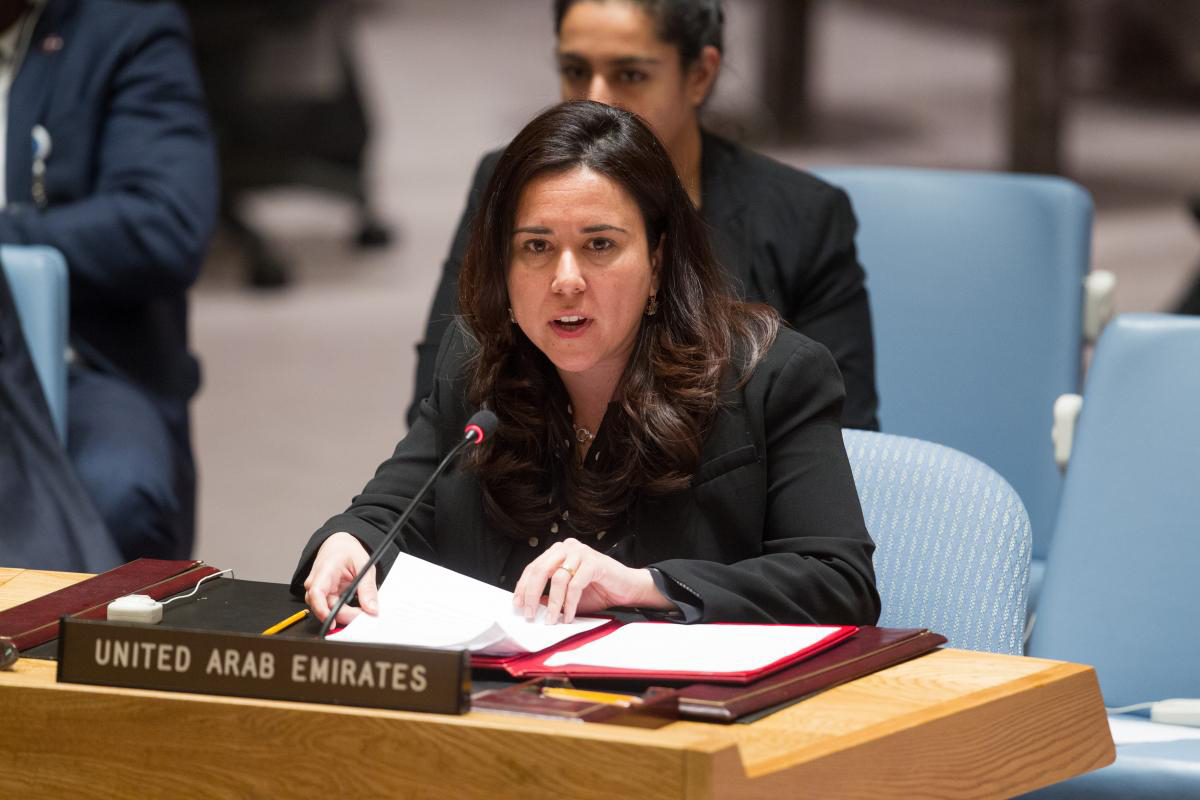
During her interactive dialogue with UN General Assembly member states on October 27, Nusseibeh faced direct questions about allegations that the UAE had supported the rebel forces.
Her response was that she had taken leave from her Emirati ministerial position and that questions concerning state policy should be directed to the UAE's permanent mission to the United Nations. This appeared to reflect her desire to distinguish between her previous government position and her potential responsibilities within the UN Secretariat.
At the same time, she affirmed that Sudan would be among her foremost priorities if appointed. She referred to the gravity of the violations committed by the Rapid Support Forces and expressed support for the work of fact-finding missions, accountability mechanisms, transitional justice, ceasefire efforts, and an inclusive political process.
Here lies the contradiction that will continue to accompany her nomination: she must convince the international community that she can remain independent of policies she defended for years, while the war and its far-reaching consequences continue to dominate the Sudanese landscape. She must also demonstrate that she can manage a file that may require accountability for parties and support networks linked to her own country, potentially placing her personal record under scrutiny.
In this context, merely declaring functional independence or invoking Article 100 of the UN Charter is insufficient. That article establishes the independence of the Secretary-General and UN staff from instructions by governments.
Institutional independence is not limited to legal compliance after appointment. It also depends on the confidence of states and peoples in the candidate's ability to exercise that independence without conflicts of interest or selective application of principles.
Fifth: The Security Council – Where Political Interests Sometimes Override Ethical Considerations
Moving from media and human rights criticism to the arena of political decision-making makes the picture considerably more complex.
The selection of the Secretary-General is not an open electoral process in the conventional sense. Rather, it is governed by Article 97 of the UN Charter, under which the Security Council recommends a candidate, after which the General Assembly makes the appointment.
This is where the positions of Security Council members become particularly important, especially since the five permanent members possess veto power. A candidate therefore needs at least nine votes while avoiding opposition from any permanent member.
The seventh round of informal voting, held on 30 October 2026, produced results worth examining closely. Rebecca Grynspan of Costa Rica received 11 votes in favour, four against, and no abstentions or members expressing no opinion.
Rafael Grossi of Argentina secured nine votes in favour, four against, and two members expressing no opinion. Carolyn Rodriguez of Guyana received eight votes in favour, six against, and one member expressing no opinion.
Lana Nusseibeh of the United Arab Emirates received seven votes in favour, six against, and two members expressing no opinion.
These results reveal that Nusseibeh entered the competition with a relatively strong position, but has not yet reached the leading position. She ranked fourth in this round, behind the Latin American candidates, whose region has a longstanding claim to the next turn in the geographical rotation for the position.
More importantly, the seventh round used ballots that did not distinguish between the five permanent members and the ten elected members of the Security Council. It is therefore impossible to determine from these results alone the positions of the United States, Russia, China, the United Kingdom, or France regarding the Emirati candidate.
This is an important distinction. The six votes against Nusseibeh do not necessarily represent six objections from major powers, just as the seven votes in her favour do not establish the support of any particular permanent member.
The previous round, which used coloured ballots to distinguish the votes of the five permanent members, had revealed that no candidate had managed to overcome objections from the permanent powers.
Consequently, the competition remains open to several possibilities.
Regional Divisions and Diverging International Calculations
Three levels of consideration should be examined in this context:
First: The Gulf Position
Nusseibeh received unanimous support from the six Gulf Cooperation Council (GCC) states. This reflects a regional desire to present a Gulf candidate for a position of such international significance and gives her nomination considerable diplomatic and regional weight.
However, the implications of this nomination for a country the size of Sudan, whose infrastructure has suffered massive destruction and whose people have endured killings and grave violations, cannot be overlooked.
Regional support, however, does not automatically translate into guaranteed backing within the Security Council, where the calculations of major powers differ from those of regional solidarity, which is shaped by intergovernmental considerations.
Turkey has also put forward a candidate, a development that could alter part of the equation and influence the dynamics surrounding the position.
Second: The Latin American and Caribbean Position
Objections have emerged from the Community of Latin American and Caribbean States (CELAC), which has maintained that its region has a legitimate claim to the position under the informal principle of geographical rotation. It has also expressed reservations about the entry of a candidate from outside the region at an advanced stage of the race.
This position is not related to Sudan alone. Rather, it reflects competition over geographical representation and resistance to late nominations changing the direction of a contest in which other candidates have already made significant progress.
Third: The Calculations of the Five Permanent Members
This remains the most important and least transparent dimension.
The United States, Russia, China, the United Kingdom, and France do not assess candidates from a single perspective. Their calculations involve regional influence, bilateral relations, the future of UN reform, and candidates' positions on international conflicts.
The UAE's position carries additional significance because of its extensive international relationships, economic and strategic standing, and ties with several major powers, as well as its influence, which is being used in ways that contribute to the destruction of an Arab state and the suffering of its people.
It is therefore incorrect to assume that human rights criticism will necessarily translate into political rejection within the Council. Equally, it would be wrong to regard the UAE's international relationships as a guarantee that objections will be overcome.
The real test is whether these powers will treat Sudan as an issue affecting the credibility of the United Nations or allow considerations of partnerships and mutual interests to take precedence.
Sixth: The International Court of Justice Case – What Has Been Decided and What Remains Unresolved?
The judicial proceedings initiated by the Sudanese government before the International Court of Justice in March 2025 cannot be overlooked.
At that time, Sudan filed a case against the UAE under the Convention on the Prevention and Punishment of the Crime of Genocide, accusing it of complicity in violations linked to support for the Rapid Support Forces.
On May 5, 2025, the Court rejected Sudan's request for provisional measures and ordered the removal of the case from its General List because it lacked jurisdiction to hear the matter in light of the UAE's reservation to Article IX of the Convention.
It is essential to clarify that the Court did not rule on the merits of the allegations and did not issue a judgment either establishing or dismissing the UAE's responsibility for the events at issue. Rather, it concluded that it lacked jurisdiction because of the aforementioned reservation.
Nevertheless, the existence of this case, together with the pleadings, documents, and legal positions associated with it, adds another dimension to the debate surrounding the nomination of a figure who occupied a prominent diplomatic role in defending her country's position on the Sudanese allegations.
This is in addition to Sudan's two complaints against the UAE before the UN Security Council.
The issue is therefore no longer confined to a media dispute. It has become part of an international legal and political record with which the candidate must engage clearly and transparently.
Seventh: Neighbouring Countries and Regional Support Networks
One of the most dangerous dimensions of the Sudanese war is that it has not remained confined within national borders. Instead, it has become intertwined with cross-border regional networks involving arms transfers, the movement of fighters, logistical facilitation, financing, media sponsorship, and the use of media platforms to advance particular narratives.
The 2026 UN Fact-Finding Mission report referred to networks operating across several countries, including the UAE, Chad, Libya, and Somalia, in activities associated with recruiting, transporting, and financing individuals and providing military support to the Rapid Support Forces.
This raises a broad regional question concerning the responsibility of states whose territories, or networks operating within them, have been used to facilitate the movement of supplies or fighters. It also raises questions about the extent to which the relevant authorities were aware of these activities and their ability to prevent them, as well as the monitoring of numerous Emirati flights to countries neighbouring Sudan.
There have also been extensive allegations that the UAE has sought to influence certain neighbouring countries or use them to prolong the war. Such allegations must be examined through reports and specific evidence relating to each country, rather than treated as a general judgment on all of Sudan's regional relationships.
The deeper strategic issue is that the continued flow of weapons, mercenaries, and financing across borders is transforming the Sudanese war into a regional conflict system. This threatens the security of the Red Sea, the Horn of Africa, and the Nile Basin, while placing neighbouring countries under direct responsibility to respect Sudan's sovereignty and territorial integrity, particularly in light of the destruction, devastation, and impoverishment inflicted upon the country.
The next Secretary-General will therefore face more than a humanitarian crisis. The challenge will involve the UN's ability to dismantle external support networks, hold those responsible accountable, and prevent the internationalization of the war at the expense of the Sudanese state and its people.
Eighth: Where Is the Campaign Against the Nomination Heading, and What Are Its Possible Outcomes?
The current campaign can be understood through four interconnected trajectories:
1. The Issue Has Expanded from a Sudanese Objection into a Matter of International Debate
The issue is no longer merely a position expressed by the Sudanese government or forces opposed to the Rapid Support Forces. It has become a subject of discussion in international newspapers, human rights organizations, and among prominent figures in academic and human rights institutions, as well as activists and survivors of violations.
This shift increases the political cost of ignoring the questions being raised and requires the candidate to provide answers that go beyond general political denials.
2. The Possibility of Continued Human Rights Pressure Throughout the Selection Process
The Sudan file is expected to remain prominent in discussions surrounding the candidate, particularly in light of the Fact-Finding Mission's reports and criticism from Human Rights Watch, prominent human rights figures, activists, and influential commentators.
However, the impact of this pressure will not be automatic. The Security Council is a political institution whose decisions are shaped by multiple balances of power. Human rights criticism can coexist within the Council with calculations involving interests and alliances.
3. The Nomination as a Test of the Relationship Between Influence, Accountability, and International Justice
The UAE possesses an extensive network of diplomatic and economic relationships, a factor that gives its candidate a significant presence in the competition.
Yet this very advantage may expose the nomination to greater scrutiny and debate, because the central question is whether economic and political influence can overcome objections relating to a state's record in an exceptionally serious international conflict, alongside similar issues elsewhere in the region.
4. The Possibility of Reshaping the Competition
The absence of consensus within the Security Council, Rebeca Grynspan's lead in the seventh round, and objections from Latin American and Caribbean countries to bypassing their region's turn all create conditions for further developments and new nominations.
It is therefore impossible to conclude that the human rights campaign will necessarily defeat Nusseibeh's nomination. Equally, her seven votes in favour cannot be regarded as evidence that she is capable of securing the position.
Informal voting alone does not reveal the positions of the permanent members. The final decision remains dependent on agreements within the Council and the avoidance of a veto.
Ninth: Sudan Between the Battle Over the Nomination and the Battle to Restore the State
For Sudan, the significance of this issue should not be reduced to accepting or rejecting a particular candidate, nor should it become a personal confrontation with the Emirati diplomat. The matter is considerably broader.
It represents an opportunity to restore the Sudanese war to the centre of international attention, link crimes committed against civilians to the responsibility of their perpetrators, and address the responsibility of external support networks that have contributed to prolonging the conflict.
It also requires scrutiny of the Emirati narrative promoted during Nusseibeh's tenure as her country's representative.
Sudanese diplomacy must therefore distinguish between three distinct tracks:
The Legal Track: Presenting evidence and documentation concerning the sources of weapons, financing, recruitment, and logistical support, while pursuing international investigation and accountability mechanisms.
The Diplomatic Track: Engaging Security Council and General Assembly member states, presenting documented facts, and explaining the implications of the continued war for regional and international security.
The Human Rights and Media Track: Documenting crimes and violations, making victims' testimonies accessible, and cooperating with independent organizations and international media, while avoiding exaggeration or conflating allegations with established legal findings.
The issue is not simply a disagreement over an individual candidate. It concerns the future of confidence in the international organization and its ability to apply the same standards to influential states, without double standards or selectivity.
Conclusion: Can the United Nations Serve as an Impartial Referee When Its Own Credibility Is Under Scrutiny?
Lana Nusseibeh's nomination has placed the United Nations before a debate that extends far beyond the competition for the position of Secretary-General. It has revived an old but increasingly urgent question concerning the relationship between power and justice, political influence and international responsibility, and the persistent problem of double standards.
The Secretary-General is not the representative of the state that nominated him or her, nor an agent of a regional alliance or an international interest group. Rather, the Secretary-General is the chief administrative officer of an organization whose legitimacy rests on sovereign equality, respect for international law, the maintenance of international peace and security, and the protection of peoples from the devastation of wars and conflicts.
Accordingly, the essence of the debate should not concern the candidate's origin or nationality, nor should it turn into a premature political trial. It should instead focus on her professional record and her ability to convince the international community of her independence from the policies she has defended, as well as her willingness to address the Sudan file without selectivity, including holding accountable anyone proven responsible for fuelling the war or committing violations.
At the same time, the Security Council must answer an equally important question: Will the principles of integrity, independence, and the ability to uphold the UN Charter remain central to the selection of the Secretary-General, or will they give way to calculations of influence and political interests?
In this contest, Sudan is not defending a temporary political position. It is raising an issue involving the sovereignty of a state, the legitimate rights of its people, and the dignity of the victims of a devastating war.
Whatever the outcome of the race, the real test for the United Nations will not be the identity of the person occupying the Secretary-General's office, but its ability to demonstrate that international law does not change according to the identity of the accused or the extent of their influence and resources, regardless of ethical considerations or the human conscience, and without regard for established UN principles and the devastating human cost of war.
Post your comments
Photo of the Week
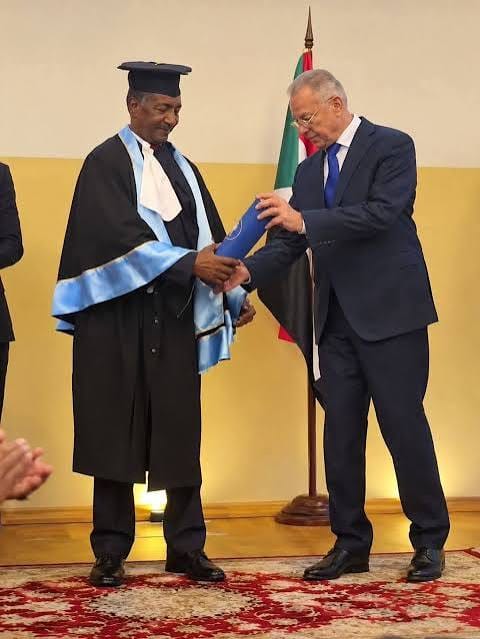
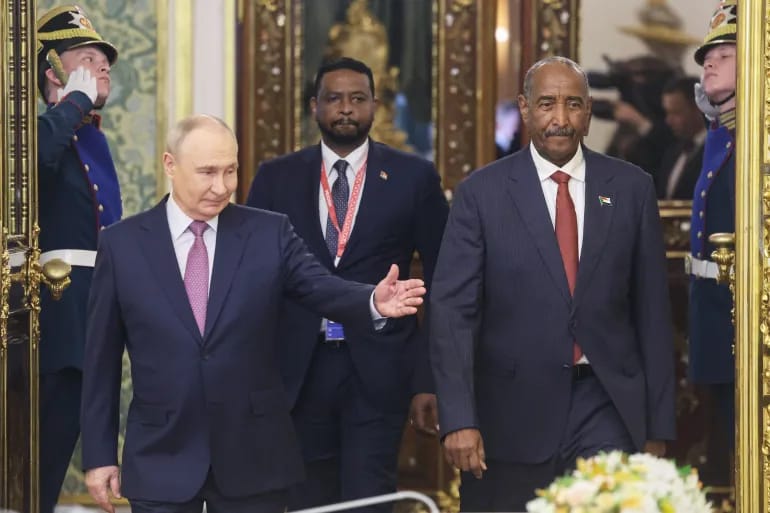
Moscow (Sudanow) — The Russian State University for the Humanities in Moscow has awarded Sudan’s Transitional Sovereignty Council Chairman and Commander-in-Chief of the Armed Forces, General Abdel Fattah Al-Burhan, an honorary doctorate in recognition of his efforts to strengthen Sudanese-Russian relations and promote cooperation between the two countries in the cultu...
More-
25 October, 2026
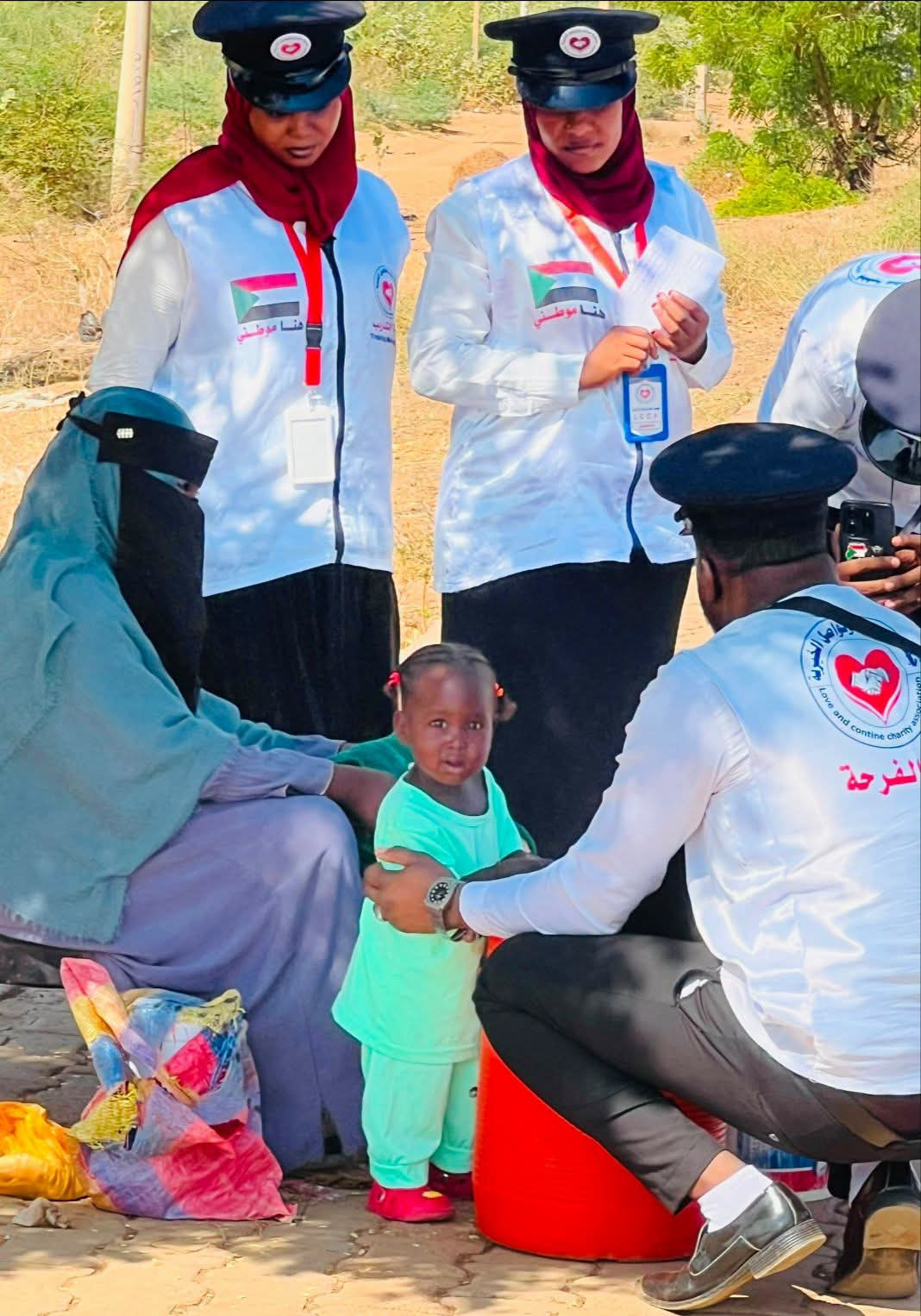
Tales from the Battlefield “Rest Tonight, Mum”: A Compassionate Gesture That Moved Social Media and Wiped Away a Strugg
A humanitarian initiative goes beyond providing assistance to help build hope Dr Sarah: The war has driven mothers into the markets in search of a livelihood. A video shared on social media has touched the hearts of users, capturing a moving act of kindness by young volunteers from the “Rest Tonight, Mum” initiative. The group reached out to a Sudanese woman displaced from Darfur who struggles to support her family...

Contact Us

Address: Sudan News Agency (SUNA) Building, Jamhoria Street, Khartoum - Sudan
Mobile:+249 909220011 / +249 912307547