


Dr. Haidar, A Born Artist
18 February, 2018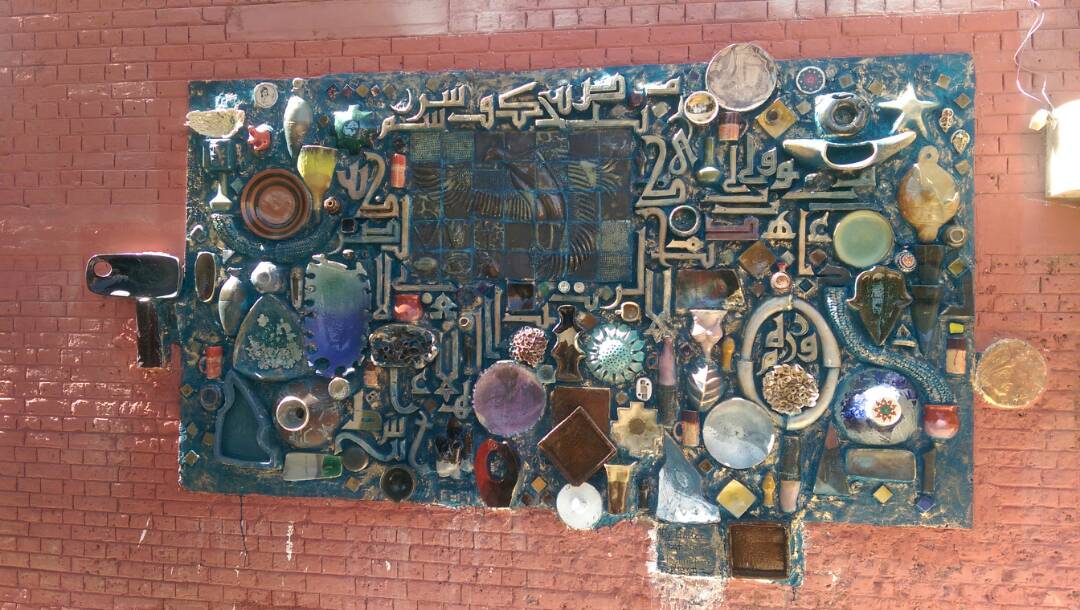
KHARTOUM (Sudanow) - He stated his artistic career as a young boy when his diverse talents started to bloom up, receiving encouragement and support from his family. And when he started his primary education his tutors noticed his great abilities and gave him special attention. He used to collect all he school’s weekly arts awards. At that age he also started his own weekly wall magazine. His talents continued to flourish at the intermediate school and when he moved to the secondary school he issued a social and cultural magazine in his neighborhood in the town of Zalengi, West Darfur, in collaboration with three of his peers.
That is Doctor Haidar Abdelgadir Abbakar, Lecturer and Head-Section of Ceramics at the College of Fine and Applied Arts, the Sudan University of Science and Technology.
Born in the North Darfur City of al-Fashir in 1970, Dr. Haidar noticed ever since his early days at college that a lot of expensive imported substances were used in pottery and painting. He started to try some locally available natural materials. For instance, the materials used in pottery glaze used to be imported at high cost from Britain. After a lot of experiments he has succeeded in producing the required alternative. The new substance was applied and adopted by the University in the labs and teaching instead of the imported material.

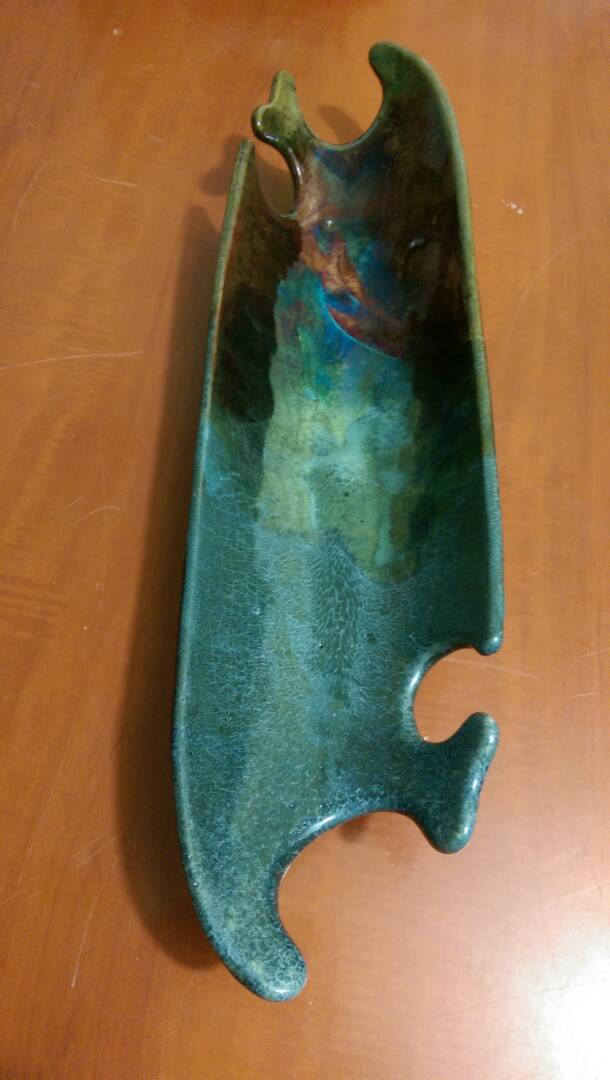


He also designed and manufactured spare parts for some strategic institutions and after a lot of experiments the required parts were devised and are now manufactured locally according to standard specifications.
Dr. Haidar has also devised 2 thermal pottery kilns for the University at a humble cost of SDG100 million instead of the imported kilns that cost SDG 950 million. The two kilns were made from local materials. In addition, Dr. Haidar made a number of small thermal furnaces for domestic use, as part of his private business.
“There are lots of locally available substances which are exported raw. If these substances are manufactured locally, they can satisfy the country’s needs,” he said.
One example of these materials the black sand which is rich in minerals and which is used in the coating of pottery and glass to give them a good shape, touch and color. It is imported from China and Italy. Dr. Haidar has extracted this sand locally and presented it to a local giant iron firm that applied it and stopped its imports.
Many of Dr. Haidar’s students have also used the locally produced black sand in their workshops and businesses.
Another of Dr. Haidar’s big achievements was when he recycled solid waste represented in iron filings and glass fragments into painting materials and ornaments. These solid substances are difficult to get rid of and thus constitute a hazard to the environment.
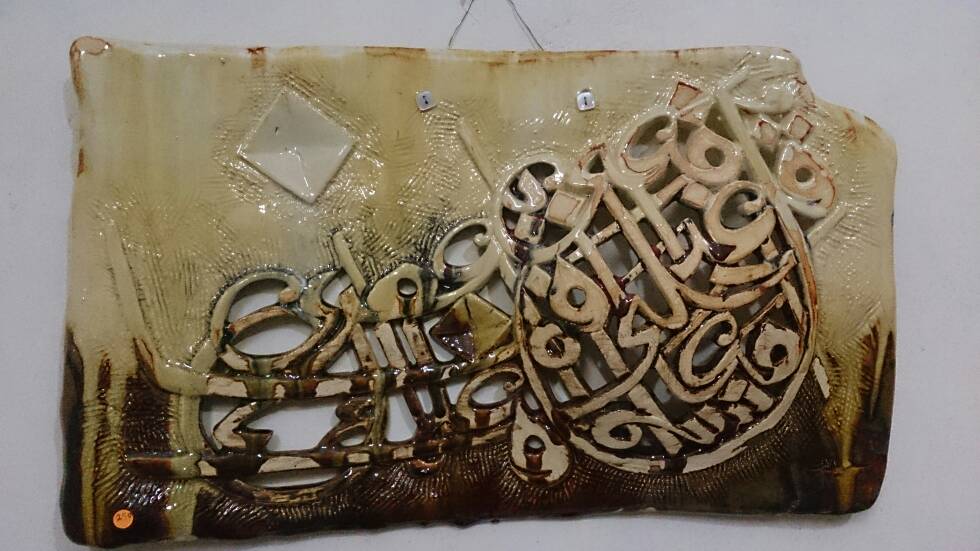

He has made a lot of magnificent touches at a lot of conference halls and in government and private institutions and in some embassies.
He had served as a fine arts lecturer for four years at al-Baha University in Saudi Arabia where he drew a wall portrait for the Emirate of Aseer Province that is still viewed with admiration in the district.
Dr. Haidar is a dedicated professor who presents the gist of his experience to his students. He has obtained patents for his works from the Intellectual Property General Registrar.
E N D
YH/AS
Post your comments
Photo of the Week

Sudanese Student Wins International Research Award and Presents Digital Nursing Project at Royal College of Nursing Conference in Britain Khartoum – Sudanow In a country where the healthcare sector is facing mounting crises and war has placed hospitals, healthcare workers, and patients under immense pressure, a Sudanese nursing student has chosen to begin with a question ...
More-

11 October, 2026
Stories from the Heart of the Battlefield On World Teachers’ Day: The Sudanese Teacher — Achievements Against All Odds
Teachers carried their chalk through the rubble and kept working — Resilience War closed schools, but examinations continued — A Mission Low salaries and mounting hardships — The Price of the Profession Khartoum (Sudanow) — Teachers around the world are marking World Teachers’ Day this week, an occasion that carries messages of appreciation and gratitude for those who carry the torch of knowledge...

Contact Us

Address: Sudan News Agency (SUNA) Building, Jamhoria Street, Khartoum - Sudan
Mobile:+249 909220011 / +249 912307547